Summary
Headache is childhood's most common recurrent pain. Most are primary: tension-type (bilateral, dull, stress-related, analgesic-responsive), migraine (often bilateral/bifrontal and shorter than adults; with nausea, vomiting, photophobia, phonophobia; or as equivalents—cyclic vomiting, abdominal migraine, benign paroxysmal vertigo), or cluster (rare before 10; excruciating one-sided orbital pain with autonomic signs). All are clinical diagnoses. Treatment: ibuprofen/acetaminophen first-line; triptans for migraine; oxygen/triptan for cluster attacks; verapamil for prevention. Red flags requiring brain MRI: headache waking child, early-morning vomiting, pain worse with cough/straining, papilledema, or abnormal neurologic signs (raised intracranial pressure).
Overview
Definition and groups
- Headache is the most common recurrent pain syndrome in children; most cases are benign.
- Two main groups:
- Primary headache disorders: tension-type, migraine (and its equivalents), cluster. No underlying structural or systemic disease.
- Organic (secondary) headache disorders: headache is a symptom of another process (infection, mass, bleeding, toxin, hypertension).
- Which is most common? Tension-type headache is the most common headache overall. Migraine is the most common acute recurrent, disabling primary headache that brings children and adolescents to medical attention.
Epidemiology
- Average age of onset: 7 years.
- The sex ratio changes with age:
- <7 years: somewhat more common in boys.
- 7–11 years: equal in boys and girls.
- Adolescence: far more common in girls.
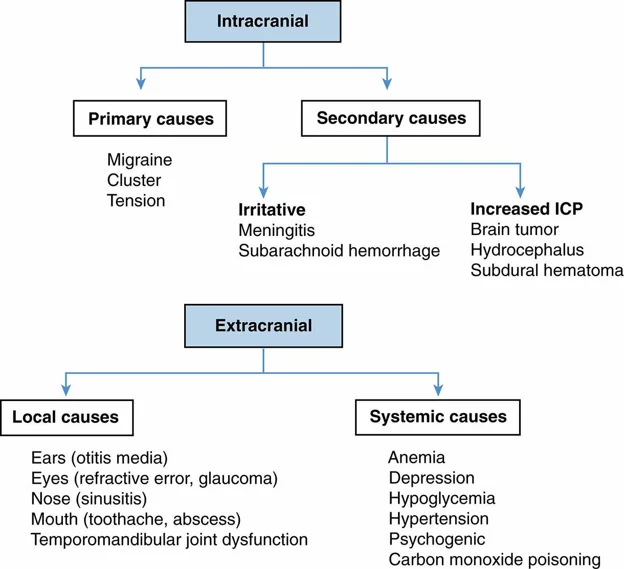
Common triggers and secondary (organic) causes to exclude
- Benign systemic or extracranial infections: pharyngitis, otitis media, sinusitis, viral meningitis, or fever alone (headache from vasodilation).
- Life-threatening CNS infections and space-occupying lesions: viral encephalitis, bacterial meningitis, orbital abscess; intracranial tumors (chronic, progressive headache).
- Acute vascular and toxic emergencies: intracranial hemorrhage, either traumatic (subdural or epidural hematoma) or spontaneous (usually subarachnoid hemorrhage); carbon monoxide poisoning; hypertensive encephalopathy (rare in children and adolescents).
The features that separate these organic causes from a primary headache are listed under Red Flags of Headache in Pediatrics.
Tension Headache
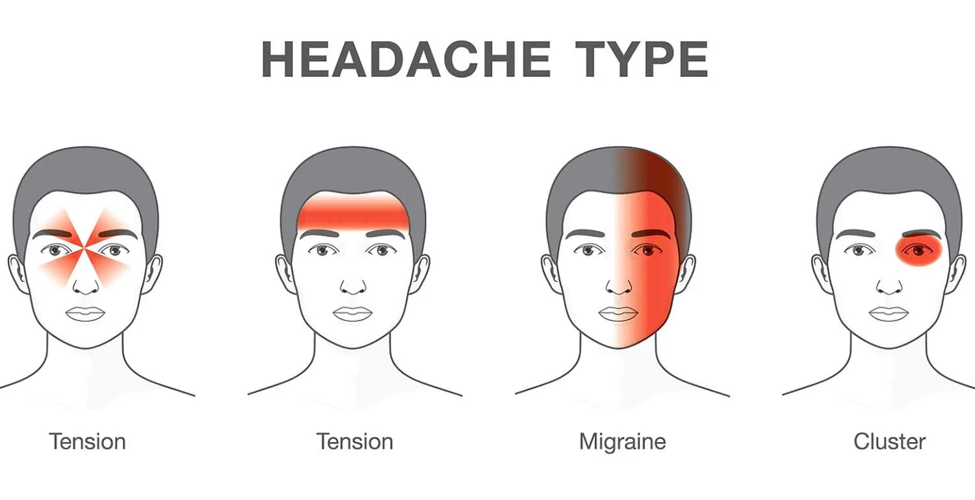
- Mechanism: classically blamed on sustained contraction of the scalp and neck muscles, hence the names "tension" or "stress" headache.
- Timing: rarely present in the morning; gets worse as the day goes on; often brought on by stress.
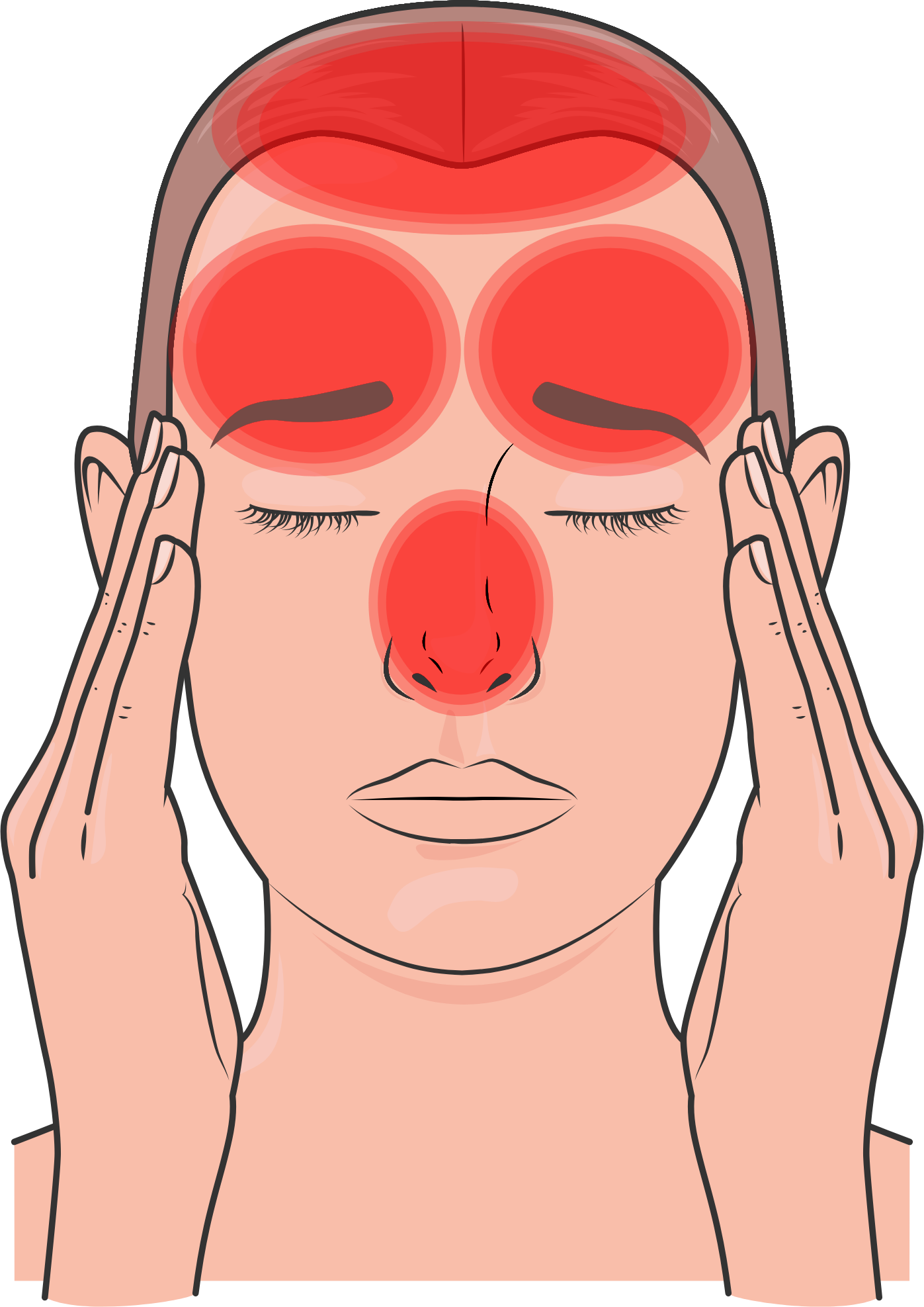
- Character: pressing, dull, persistent tightness, like a band around the head.
- Location: usually bilateral, most often frontal.
- Duration: may settle within 30–60 minutes or last for several days.
- Useful negatives: no aura, no vomiting, not worsened by routine activity, does not wake the child from sleep; the neurologic examination is normal.
- Management:
- First-line: reassurance plus as-needed simple analgesia with acetaminophen or ibuprofen.
- Use analgesics on no more than about 3 days a week to avoid medication-overuse headache.
- Long-term relief: reducing stress and anxiety.
| ملاحظة سريرية | |
|
Tension headache is bilateral and resembles tightness or a band around the head; it worsens toward the end of the day with fatigue and stress but does not wake the child from sleep. |
ملاحظة |
Migraine Headaches
Epidemiology
- The most common acute recurrent, disabling headache in children and adolescents.
- Equal in boys and girls until puberty; higher risk in adolescent girls.
- A family history of migraine is common.
Pathophysiology
- Migraine was once thought to be purely vascular. It is now seen as a primary neuronal dysfunction with abnormal neurotransmitters, chiefly serotonin and calcitonin gene-related peptide (CGRP).
- A spreading wave of cortical depolarization produces the aura and then activates trigeminal nerve endings, which release CGRP, causing vasodilation and neurogenic inflammation. Triptans block this through 5-HT1B/1D receptors.
Triggers
- Attacks may come on spontaneously or be triggered by psychological stress or foods (chocolate, cheese, monosodium glutamate).
Aura
- Aura in children is usually visual (flashing lights, scintillating scotoma), sensory (one-sided tingling), or a speech disturbance.
Classification
- Migraine without aura: the most common form.
- Migraine with aura: the headache follows transient visual changes or one-sided paresthesias or weakness.
- Migraine equivalents and migraine with focal neurologic signs are covered in the next section.
Clinical features
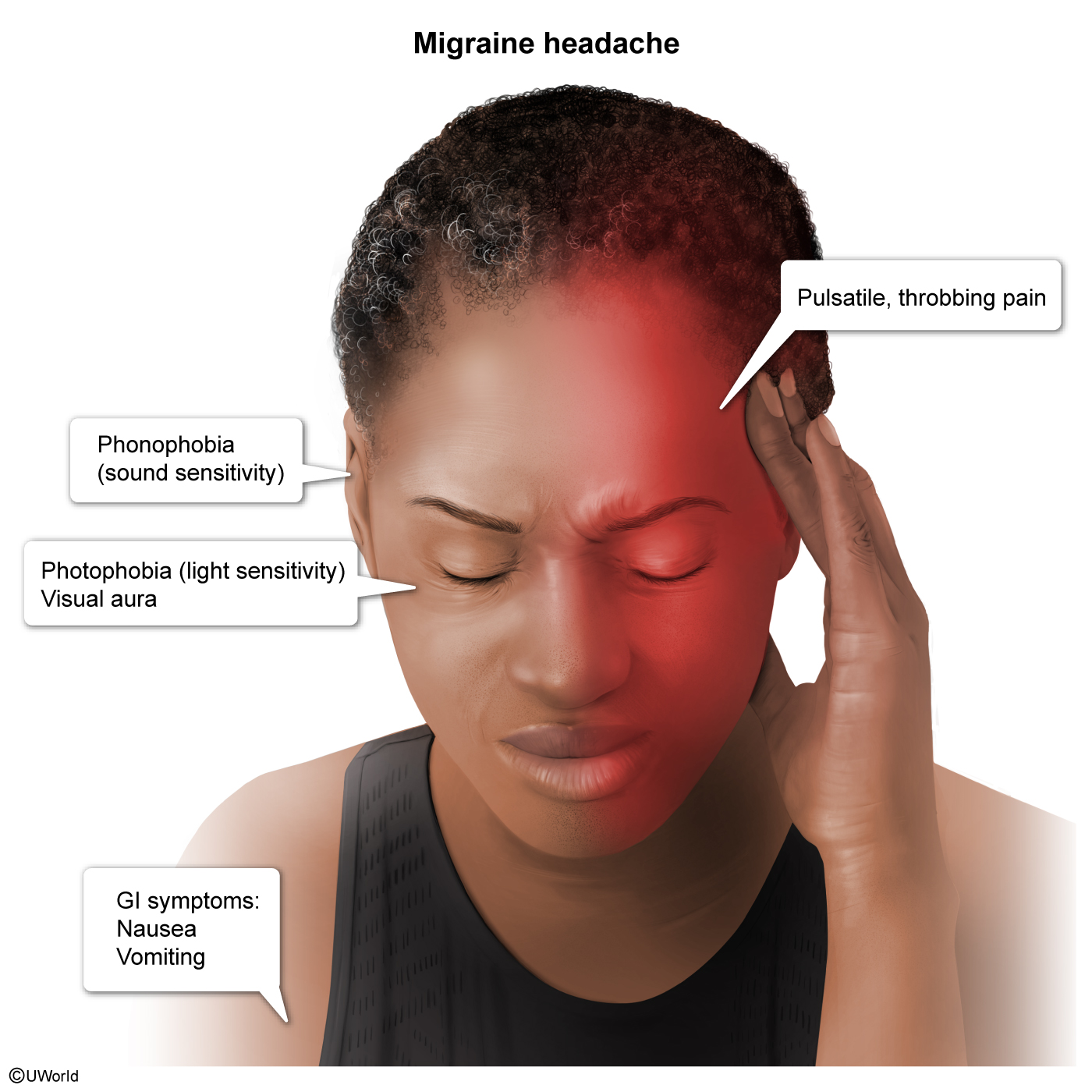
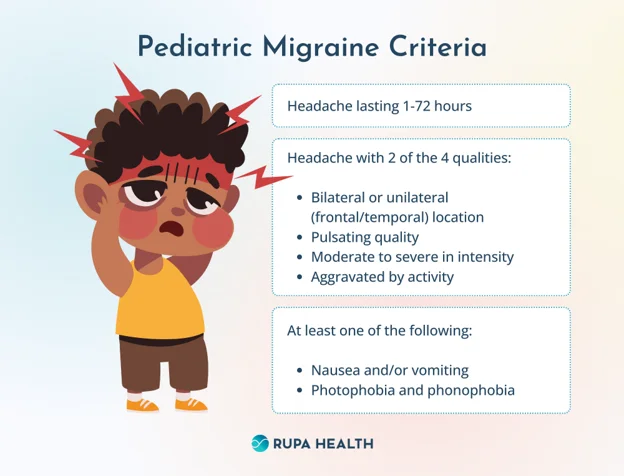
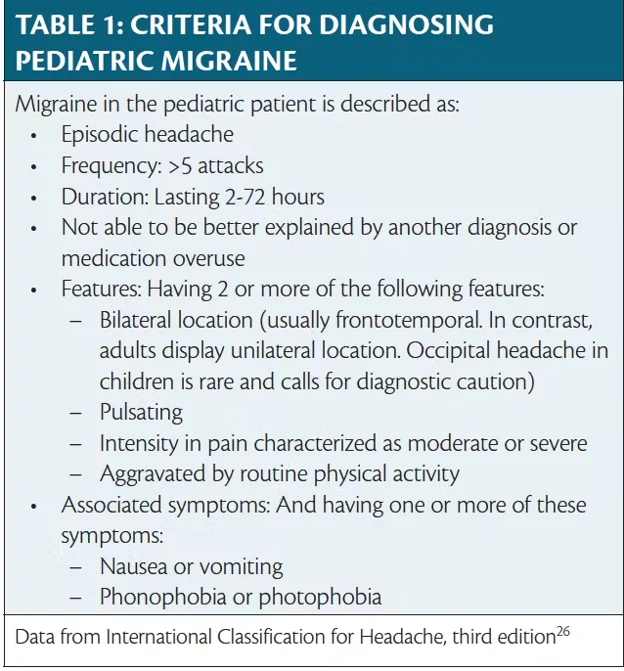
- Pulsatile or throbbing moderate-to-severe headache lasting hours (about 2–72 h in children, shorter than in adults).
- Bilateral (bifrontal) or unilateral: bilateral pain is common in children.
- Associated symptoms: photophobia and phonophobia (young children show them by seeking a dark, quiet room) and nausea or vomiting. Children may also have mild autonomic symptoms (facial sweating, tearing, nasal congestion), but these are not prominent.
- An aura may come first.
- Worse with routine activity; relieved by sleep.
- Normal neurologic examination: the diagnosis is clinical, and no imaging is needed unless a red flag is present.
| فخ امتحاني | |
|
Unlike adults, migraine in children can frequently be bilateral, so do not exclude the diagnosis if the child has not complained of clear unilateral pain. |
تذكر |
Abortive (acute) treatment
- Step 1: Rest in a dark, quiet room and remove known triggers.
- Step 2 (first-line): ibuprofen 10 mg/kg PO (or acetaminophen 15 mg/kg PO), taken at the very start of the attack.
- Step 3 (second-line): triptans (selective 5-HT1B/1D agonists) if simple analgesics fail. FDA-approved for youth: rizatriptan (6–17 years); almotriptan, sumatriptan/naproxen and zolmitriptan nasal spray (≥12 years). Use a nasal spray if the child is vomiting or the pain peaks quickly; add an NSAID if a triptan alone gives only partial relief.
- Step 4 (nausea and vomiting, or emergency department): antiemetics such as promethazine or prochlorperazine.
- Step 5 (refractory): ergots (dihydroergotamine).
- Medication overuse: ibuprofen or acetaminophen on no more than 14 days/month; triptans on no more than 9 days/month.
- Contraindicated: triptans in cardiovascular disease or accessory conduction pathways (eg, Wolff-Parkinson-White); never within 24 hours of an ergot.
The abortive and preventive migraine drug classes are summarized side by side.
| Abortive vs preventive in a child with typical migraine | |
|
تذكر |
Preventive treatment
- Indications: frequent (eg, >4 attacks/month) or disabling attacks (eg, missed school), or abortive drugs that fail or are overused.
- Agents: propranolol, amitriptyline, topiramate, valproic acid, cyproheptadine. Amitriptyline works best combined with cognitive behavioral therapy (CBT).
- Give each drug a trial of about 2 months before judging it.
| Preventive drugs for pediatric migraine: PAT-VC | |
|
جملة تذكرية |
Prognosis
- Migraine can be a lifelong disorder that waxes and wanes.
Migraine Equivalents & Focal Neurologic Variants
Pediatric migraine falls into four categories:
- Migraine without aura (the most common).
- Migraine with aura.
- Migraine equivalents (recurrent attacks with no headache: cyclic vomiting, abdominal migraine, benign paroxysmal vertigo).
- Migraine with focal neurologic signs (hemiplegic, ophthalmoplegic, basilar artery).
| Migraine equivalents and focal neurologic variants | |||
|---|---|---|---|
| Variant | Category | Key clinical presentation | Distinguishing features / associations |
| Cyclic vomiting | Migraine equivalent | Recurrent bouts of intense nausea and vomiting at fairly predictable intervals; pallor and lethargy during attacks | Well between attacks; stress or infection often triggers; personal or family history of migraine; a diagnosis of exclusion (see the features of cyclic vomiting syndrome) |
| Abdominal migraine | Migraine equivalent | Recurrent midline (periumbilical or poorly localized) moderate-to-severe abdominal pain lasting 2–72 h, with nausea, vomiting, anorexia or pallor | No headache during attacks; symptom-free between them; many children develop migraine headaches later |
| Benign paroxysmal vertigo of childhood (BPVC) | Migraine equivalent | Sudden brief attacks of vertigo in early childhood (onset from about 1 year, typically 3–4 years); child clings to a parent or lies still; nystagmus, unsteadiness, pallor, vomiting | No loss of awareness and no postictal state (not a seizure); normal hearing; family history of migraine usual; many later develop migraine |
| Hemiplegic migraine | Focal neurologic signs | Aura of unilateral weakness ± aphasia, lasting hours to days, then full recovery | Familial form is autosomal dominant; must be distinguished from stroke/TIA on first presentation |
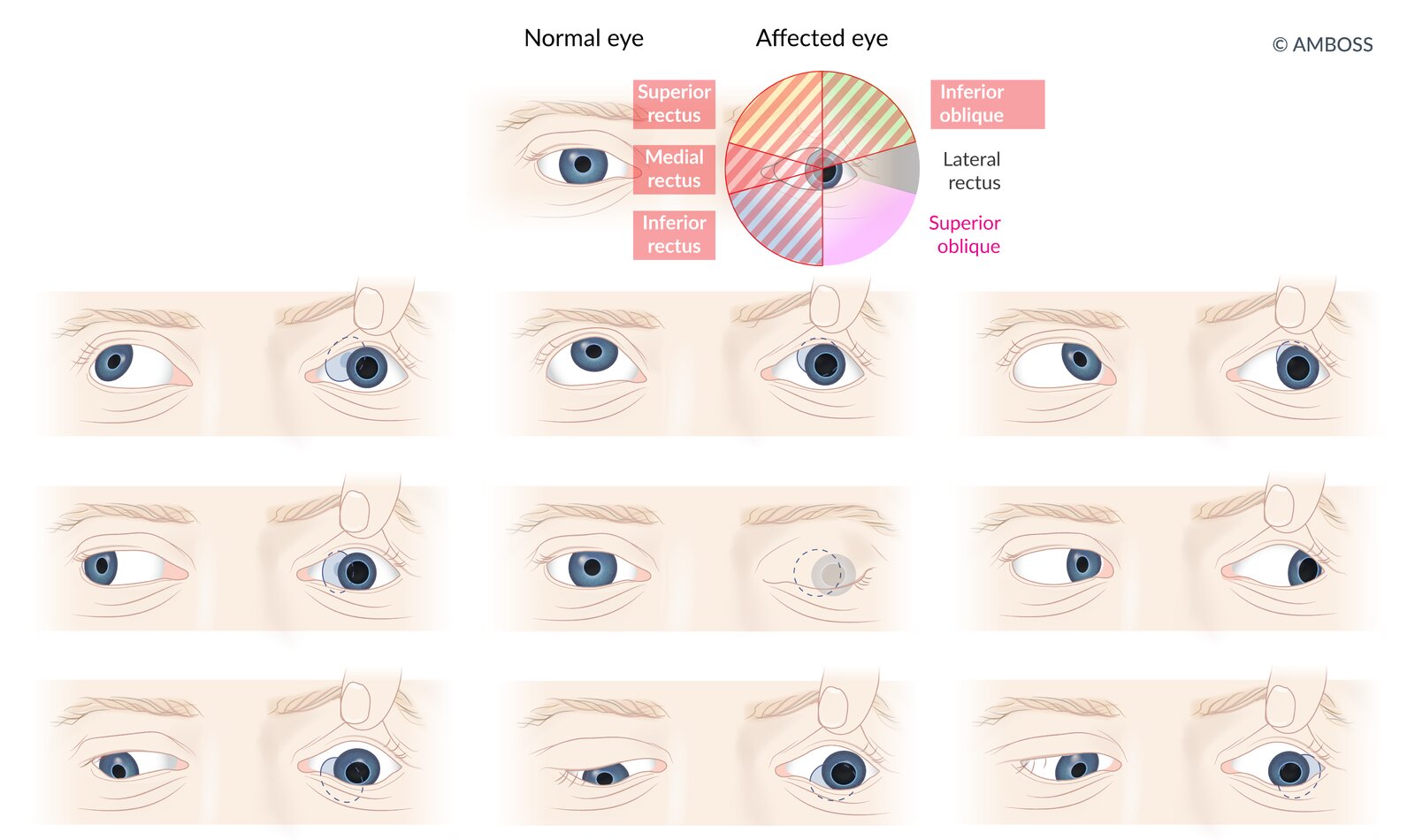
| Ophthalmoplegic migraine | Focal neurologic signs | Headache with ipsilateral paresis of eye movements: CN III most often (ptosis, dilated pupil, eye down and out); CN VI and CN IV less often | Mostly children <10 years; now classified as recurrent painful ophthalmoplegic neuropathy; image the brain (aneurysm or mass can mimic it) |
| Basilar artery migraine | Focal neurologic signs | Vertigo, dysarthria, visual disturbance, syncope or loss of consciousness, then headache | More common in adolescent girls; now called migraine with brainstem aura |
In ophthalmoplegic migraine the third nerve is the usual target: the eye rests down and out, with ptosis and a dilated pupil.
- Equivalents are diagnoses of exclusion: the child must be well, with a normal examination and normal growth, between attacks. Surgical, metabolic and posterior fossa causes are excluded first.
- Focal variants need imaging at the first attack, because stroke, aneurysm or tumor can mimic them.
- Triptans and ergots are contraindicated in hemiplegic and basilar-type migraine because of stroke risk.
| ملاحظة سريرية | |
|
In abdominal migraine and BPVC, the child presents with recurrent attacks without headache and a completely normal neurologic examination between episodes, and often has a positive family history of migraine. |
ملاحظة |
| Important – فخ امتحاني | |
| In ophthalmoplegic migraine, the third nerve (CN III) is the most frequently affected nerve, whereas hemiplegic migraine presents with unilateral weakness and is inherited in an autosomal dominant manner. | تذكر |
Cluster Headaches & Master Comparison
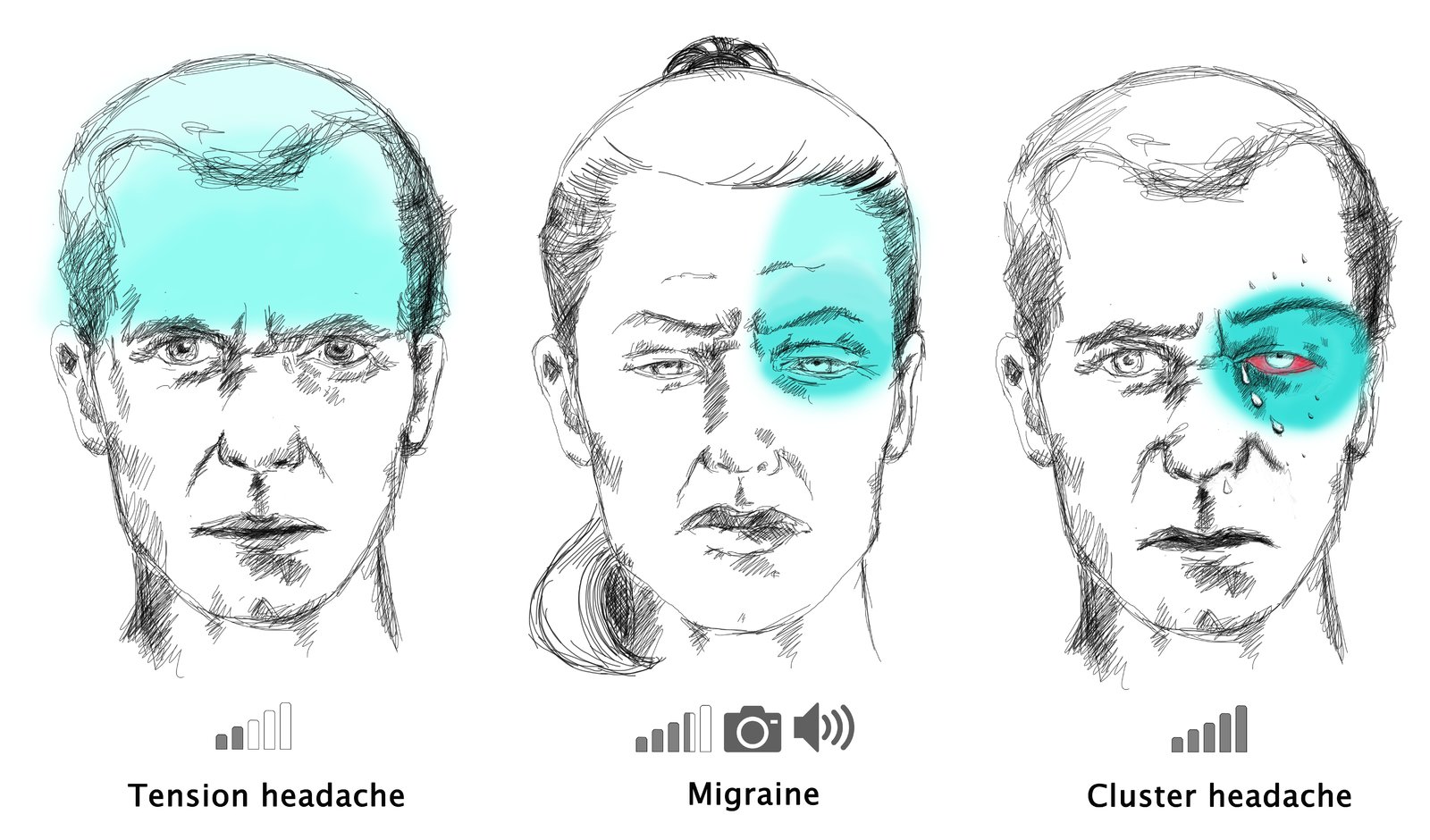
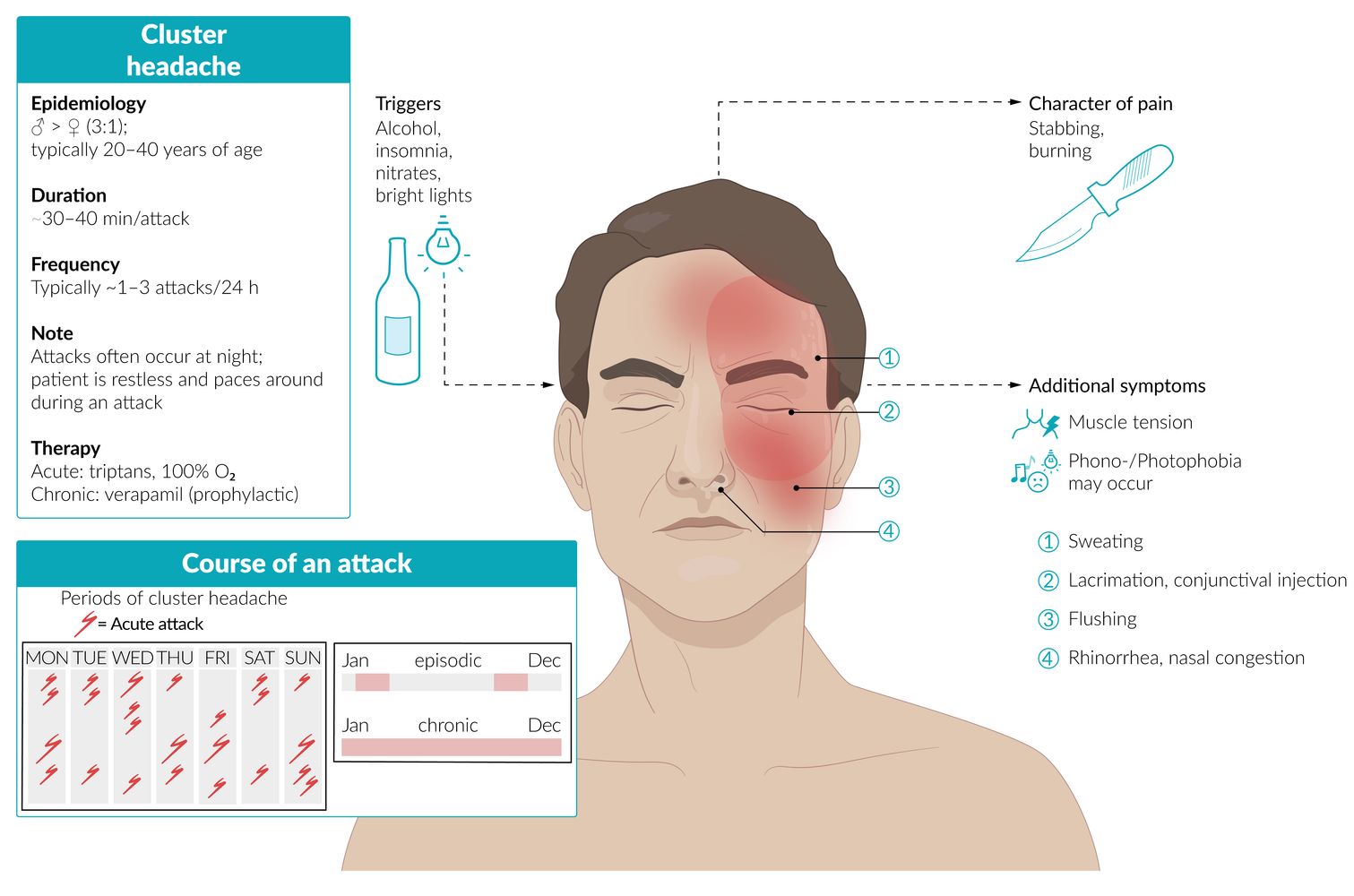
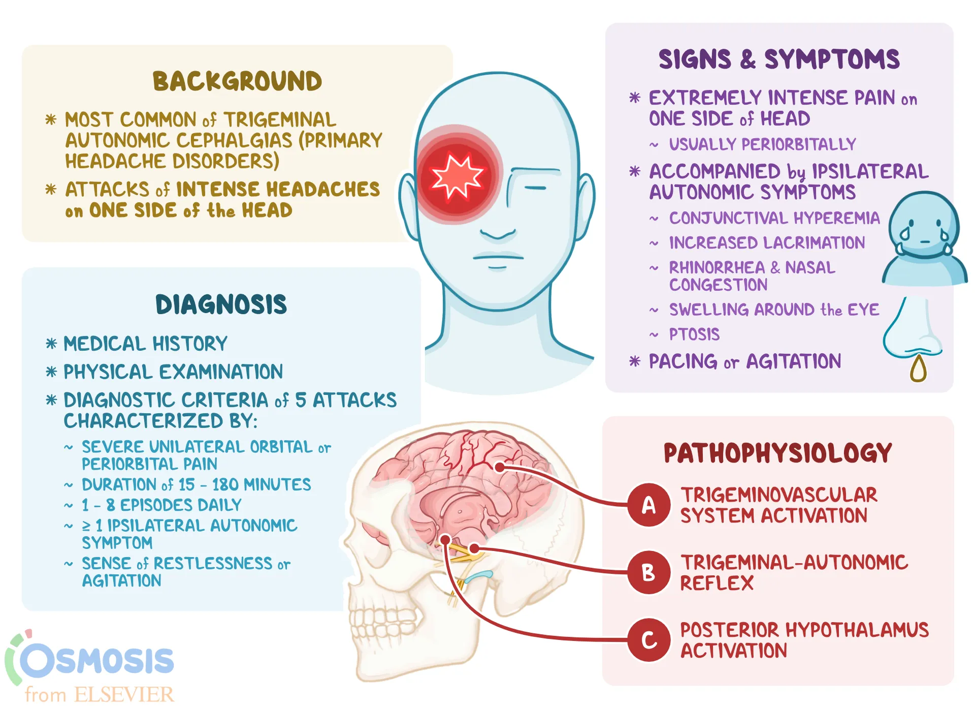
Where the pain sits separates the three primary headaches at a glance.
Epidemiology
- Rare in children <10 years; usually begins in adolescence or later.
- Boys are affected far more than girls (about 3:1 to 4:1).
- Cluster headache is a trigeminal autonomic cephalalgia; its clockwork timing points to the hypothalamus.
Clinical features
- Periodicity (the "cluster"): attacks up to several times a day (1–8/day) for a few weeks, then remission for months.
- Clockwork timing: in about 50% of patients the daily attacks come at the same hour; in about 50% an attack predictably starts within 2 hours of falling asleep.
- Pain: strictly unilateral and excruciating ("ice pick", "hot poker"), above or behind the eye or at the temple. It peaks within 5–10 minutes and resolves in 1–2 hours.
- Behavior: restless, moving constantly or rocking back and forth.
- Ipsilateral autonomic signs: ptosis and miosis (partial Horner syndrome), tearing, a red eye, rhinorrhea and nasal congestion.
- The diagnosis is clinical; a brain MRI is usually done once to exclude structural mimics.
Management
- Abortive (first-line): 100% oxygen by non-rebreather face mask for about 15 minutes, and/or a triptan (subcutaneous or intranasal sumatriptan). NSAIDs do not help.
- Abortive (alternatives) if oxygen fails or triptans are not tolerated: octreotide, intranasal lidocaine, ergots.
- Prophylaxis, started when a cluster begins: verapamil (first-line), lithium, topiramate. A short course of glucocorticoids covers the gap until verapamil takes effect.
All three types are compared in the migraine vs cluster vs tension headache table.
| Cluster headache vs migraine headache | ||
|---|---|---|
| Feature | Cluster headache | Migraine headache |
| Age of onset | Rare in children (<10 years); usually adolescence or later | Most common acute recurrent headache bringing children and adolescents to medical attention |
| Gender prevalence | Males (about 3–4 : 1) | Equal before puberty; females after puberty |
| Duration | 15–180 minutes (typically 1–2 h) | 2–72 hours in children |
| Location | Strictly unilateral: orbital, supraorbital or temporal | Unilateral or bilateral (bifrontal common in children) |
| Pain intensity | Excruciating; stabbing or burning ("ice pick", "hot poker") | Moderate to severe; throbbing or pulsating |
| Associated symptoms | Eye redness, tearing, nasal congestion, eyelid swelling | Nausea, vomiting, photophobia, phonophobia |
| Aura | Absent | In some patients (visual, sensory or speech) |
| Frequency | 1–8 attacks/day during a cluster period | Episodic, several times per month |
| Autonomic symptoms | Prominent and strictly ipsilateral (ptosis, miosis, lacrimation, rhinorrhea, sweating, facial flushing) | Not typically prominent; mild facial sweating, tearing or nasal congestion may occur in children |
| Activity | Restless, agitated, rocking or pacing | Lies still; prefers a dark, quiet room |
| Sleep impact | Awakens the patient from sleep (often within 2 h of falling asleep) | Improves with sleep |
| فخ امتحاني | |
|
A migraine patient prefers to sit still and stable because sleep relieves them, whereas a cluster headache patient wakes up after two hours of sleep and becomes restless and agitated. The first-line emergency treatment is 100% oxygen with triptans. |
تذكر |
Red Flags of Headache in Pediatrics
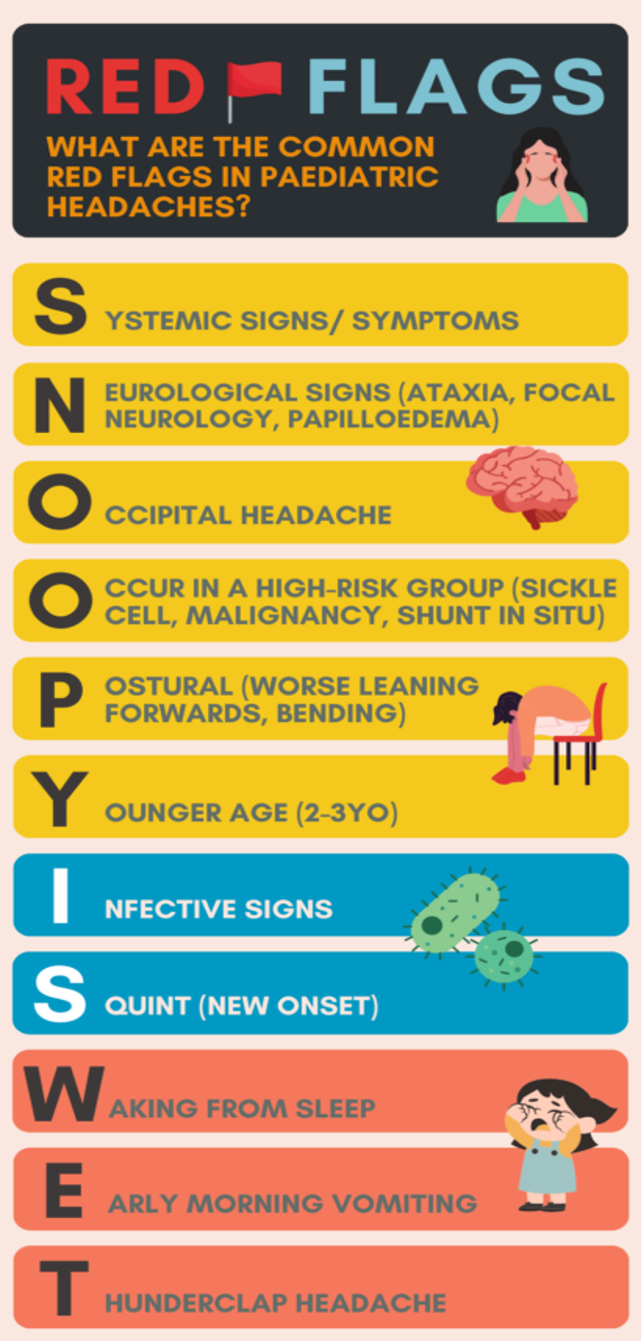
Red flags pick out the few headaches caused by intracranial pathology, infection, vascular lesions or other life-threatening conditions that need urgent evaluation.
Raised intracranial pressure and mass effect
- Being woken from sleep by headache.
- Persistent vomiting, especially early in the morning or on waking.
- Headache made worse by coughing, passing urine or defecating (Valsalva).
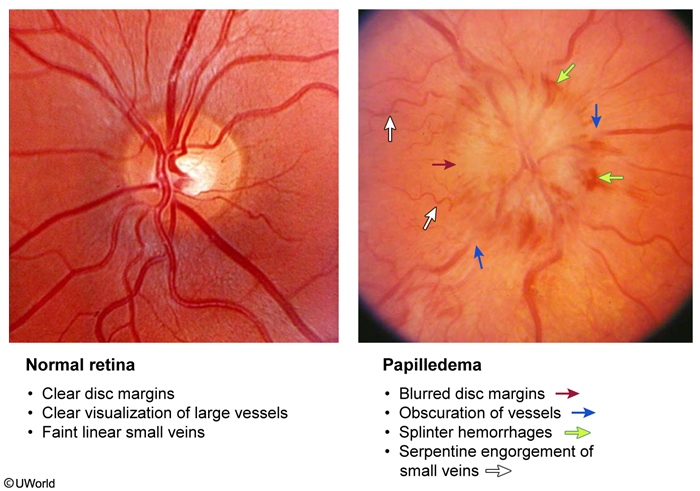
- Papilledema.
- Pulsatile tinnitus.
Neurologic or systemic dysfunction
- Abnormal neurologic examination.
- Confusion or lethargy.
- Personality change (or falling school performance).
- Nuchal rigidity.
- Growth abnormalities (suggest a hypothalamic–pituitary lesion).
Temporal and historical warning signs
- Headaches becoming steadily more frequent or more severe.
- Recurrent headache always in the same spot.
- No family history of migraine.
On fundoscopy, papilledema shows a swollen disc with blurred margins.
| Raised ICP vs focal/systemic red flags | |
|
تذكر |
| Pediatric headache red flags: WAKE UP & SCAN | |
|
جملة تذكرية |
Approach
- Step 1: Take the history and establish the pattern (acute, acute recurrent, chronic progressive, chronic nonprogressive). Do a full neurologic examination, fundoscopy and blood pressure, and check the growth chart.
- Step 2: No red flags and a typical pattern: make the diagnosis clinically, without imaging.
- Step 3: Signs of raised ICP or focal signs: MRI of the brain (preferred). A sudden "thunderclap" headache or head trauma needs an urgent noncontrast CT.
- Step 4: Do a lumbar puncture only after imaging has excluded a mass: for suspected meningitis, or for papilledema with normal imaging (idiopathic intracranial hypertension, with the opening pressure measured).
| ملاحظة سريرية | |
|
Any child who wakes from sleep with headache (Nocturnal awakening), has early morning vomiting, or experiences headache worsened by coughing must immediately suspect raised ICP and examine the fundus to exclude papilledema. |
ملاحظة |
Key Points for Exams
- Tension-type headache is the most common headache overall; migraine is the most common recurrent disabling headache that brings children to care.
- Average onset is at 7 years: slightly more boys before 7, equal at 7–11, mostly girls in adolescence.
- Tension-type: bilateral frontal band-like pressure, worse as the day goes on, no vomiting. Treat with reassurance plus acetaminophen or ibuprofen.
- Pediatric migraine is often bilateral (bifrontal) and shorter (2–72 h). With a normal neurologic exam, no imaging is needed.
- Best initial abortive for pediatric migraine: ibuprofen 10 mg/kg (or acetaminophen), then triptans. Topiramate, propranolol and amitriptyline are preventive, not abortive.
- Prevention follows PAT-VC: propranolol, amitriptyline (+CBT), topiramate, valproate, cyproheptadine.
- Migraine equivalents (cyclic vomiting, abdominal migraine, BPVC) are recurrent attacks with no headache, normal health between attacks, and a family history of migraine.
- BPVC: brief attacks of vertigo with nystagmus, no loss of awareness and no postictal state.
- Ophthalmoplegic migraine usually hits CN III (ptosis, dilated pupil, eye down and out). Hemiplegic migraine is autosomal dominant with one-sided weakness. Basilar migraine affects adolescent girls, with vertigo, dysarthria and syncope.
- Cluster: rare <10 years, mostly boys; strictly unilateral orbital pain for 15–180 min, ipsilateral autonomic signs, a restless child. Abort with 100% oxygen or a triptan; prevent with verapamil.
- Raised-ICP red flags: waking at night with headache, early-morning vomiting, pain worse with coughing or straining, papilledema. Next step: MRI of the brain.
- A mild headache unchanged for more than a year with a normal exam is reassuring. A sudden severe or progressive headache, or one with seizures, is not.
احصل على التجربة الكاملة
اشترك للوصول لفيديوهات الشرح التفصيلي والبطاقات التعليمية التفاعلية وأسئلة الممارسة مع تتبع التقدم.