Summary
Cerebral palsy (CP) is a permanent, non-progressive motor disorder from prenatal or perinatal brain injury. Prematurity is the greatest risk factor; periventricular leukomalacia (PVL) is most common. CP is classified by motor pattern — spastic (~80%), dyskinetic, ataxic, or mixed — and limb distribution (hemiplegia, diplegia, quadriplegia). Presentation includes delayed milestones, abnormal tone, hyperreflexia, primitive reflexes, and often seizures, intellectual disability, and speech or visual impairment.
Diagnosis is clinical by age 1–2 years, supported by brain MRI. Management is multidisciplinary and supportive with no cure. Treatment targets spasticity, epilepsy, and feeding difficulties. Prognosis depends on subtype and severity.
Introduction & Definition
Cerebral palsy (CP) is a static encephalopathy — a group of disorders resulting from a CNS insult during early development that produces chronic, non-progressive abnormalities of movement, posture, and tone.
The underlying insult may occur before birth, during birth, or shortly after delivery. By definition CP refers to a motor deficit, but it is frequently accompanied by seizures, cognitive deficits, intellectual disability, learning disabilities, sensory loss, and visual or auditory impairment.
| Note | |
| CP is a static encephalopathy, meaning the underlying brain injury does not progress. However, symptoms and spasticity can change and worsen with age—don't confuse this with a progressive disease. | ملاحظة |
Epidemiology
The prevalence of cerebral palsy is approximately 2–4 per 1,000 live births.
Prematurity and low birth weight dominate the risk profile — roughly 10–15% of surviving infants with a birth weight <1500 g develop cerebral palsy.
Etiology & Risk Factors
The timing of the brain injury may be prenatal, perinatal, or postnatal (during the first few years of life). Low birth weight and preterm birth are the single biggest risk factors.
For exams, anchor the three highest-yield maternal risk factors — the Rule of 3: (1) prematurity / low birth weight (<1500 g), (2) multiple gestation, and (3) congenital (TORCH) infections.
| Cerebral Palsy — Etiology & Risk Factors by Timing: Low birth weight and prematurity are the single biggest risk factors | |
| Prenatal / Maternal | Before birth |
| Prematurity & low birth weight (<1500 g) | Single biggest risk factor; 10–15% of survivors born <1500 g develop CP |
| Multiple gestation | Twin and higher-order pregnancies |
| Congenital (TORCH) infections | Toxoplasma, Rubella, CMV, HSV |
| IUGR & congenital malformations | Malformations in ~20% of patients; linked to spastic quadriplegia |
| Perinatal | During birth |
| Traumatic, prolonged, or precipitous delivery | Mechanical/ischemic perinatal insult |
| Apgar score <3 at 15 minutes | Marker of severe perinatal depression |
| Prematurity (<37 wk) or postdates (>42 wk) | Gestational-age extremes |
| Postnatal | First years of life |
| Hypoxic–ischemic encephalopathy | Leads to spastic quadriparesis |
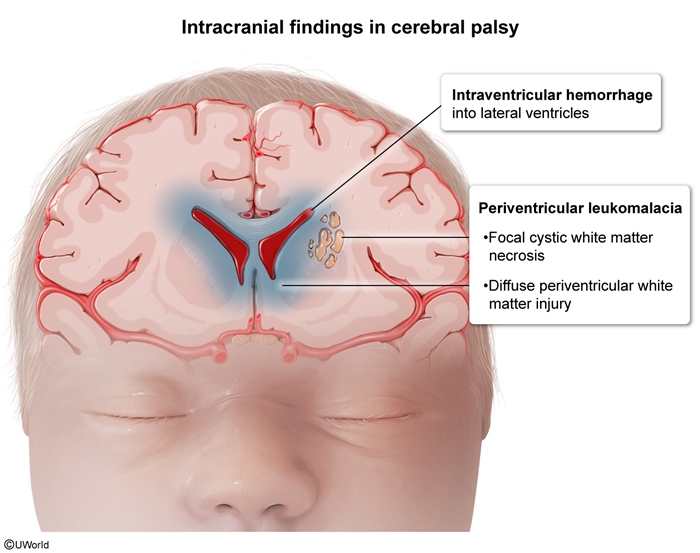
| Intraventricular hemorrhage | Preterm; precedes periventricular leukomalacia |
| Kernicterus (bilirubin encephalopathy) | Leads to dyskinetic (dystonic) CP |
| Trauma | Postnatal CNS injury |
For a consolidated rapid-review spanning risk factors, clinical features, workup and prognosis, see the cerebral palsy risk-factor and prognosis overview.
Classification & Subtypes
Cerebral palsy is divided into five subtypes, defined by the dominant movement disorder and the region of brain injury. Spastic CP is by far the most common (~70%) and reflects upper motor neuron (pyramidal) injury.
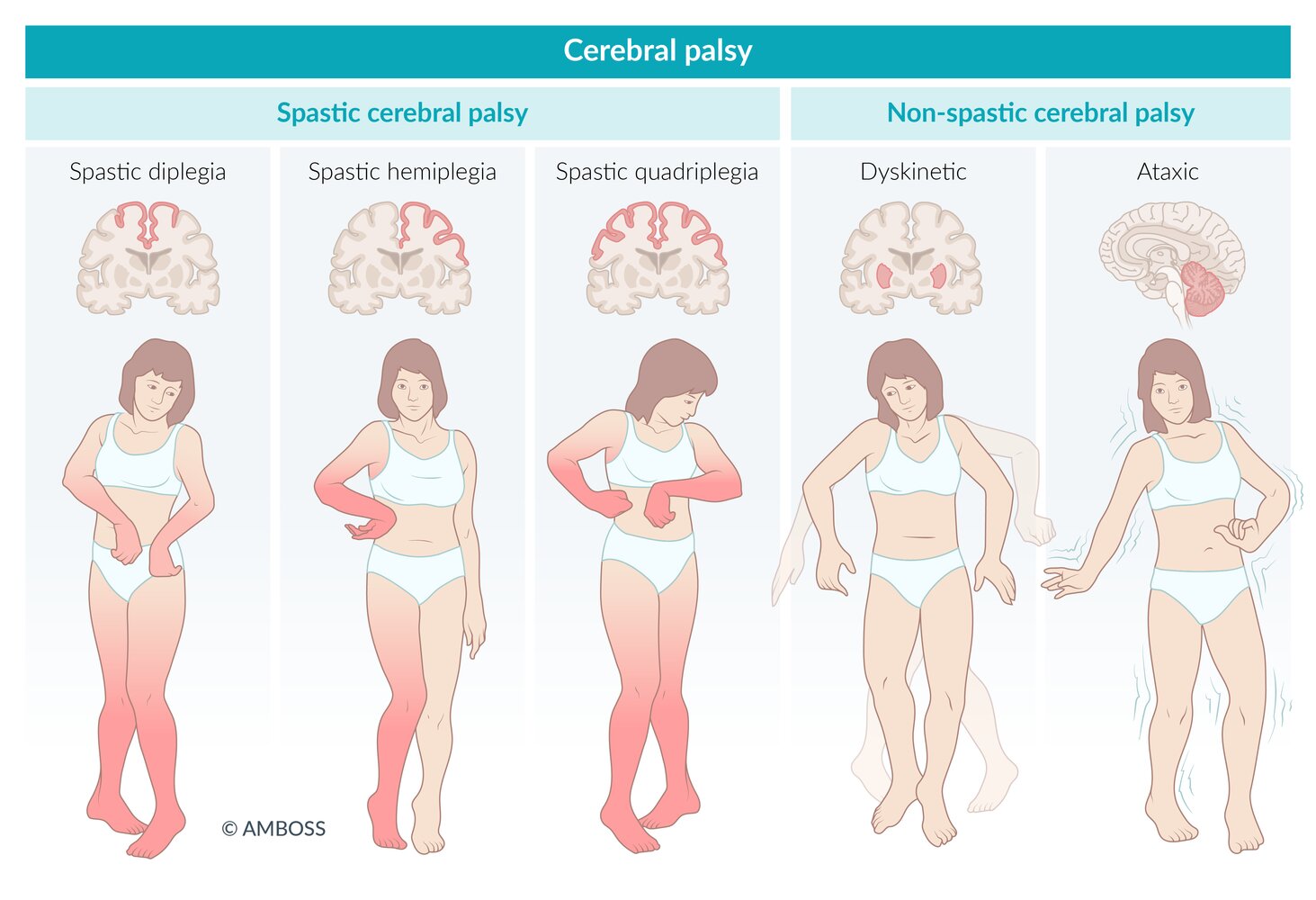
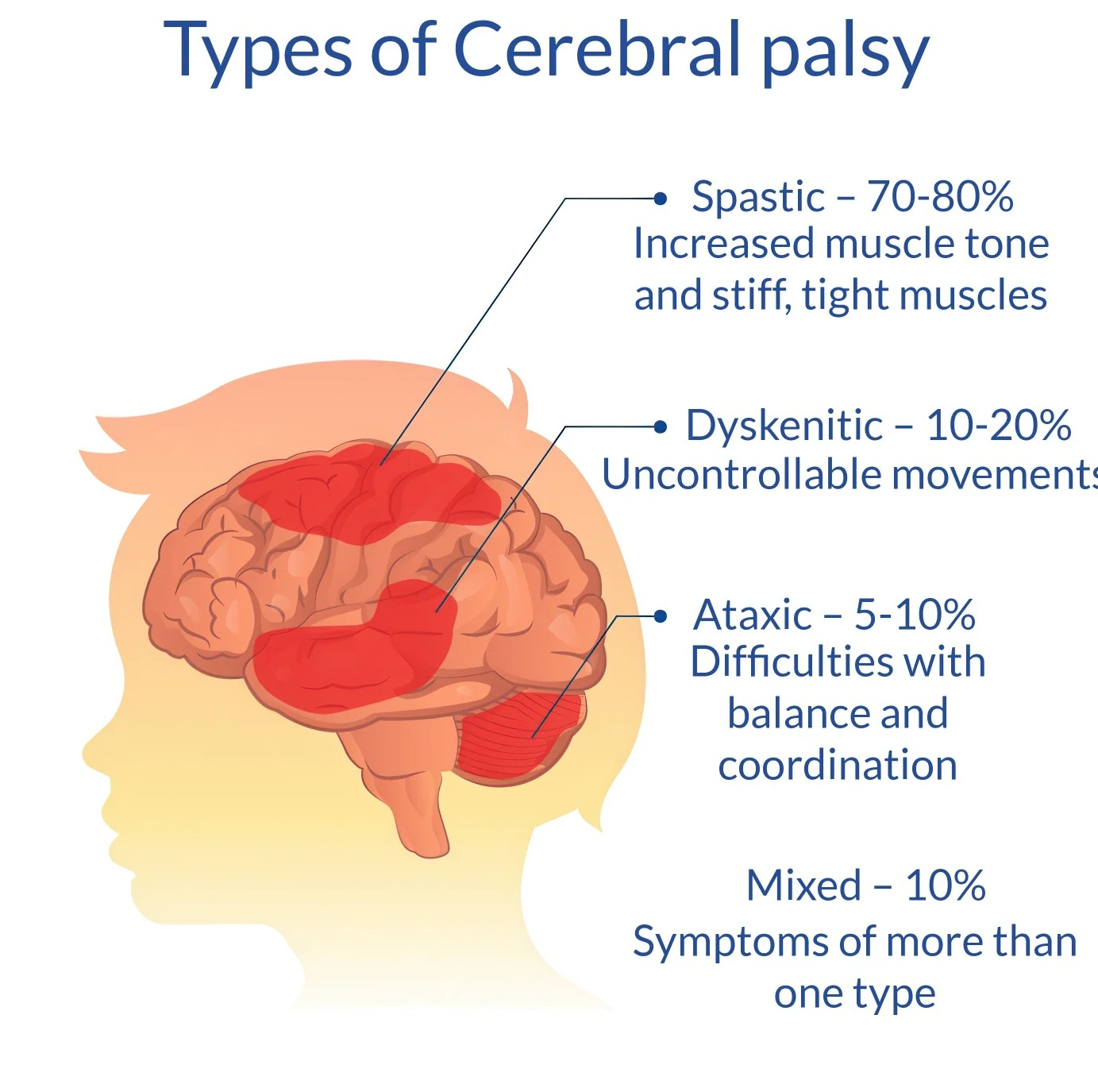
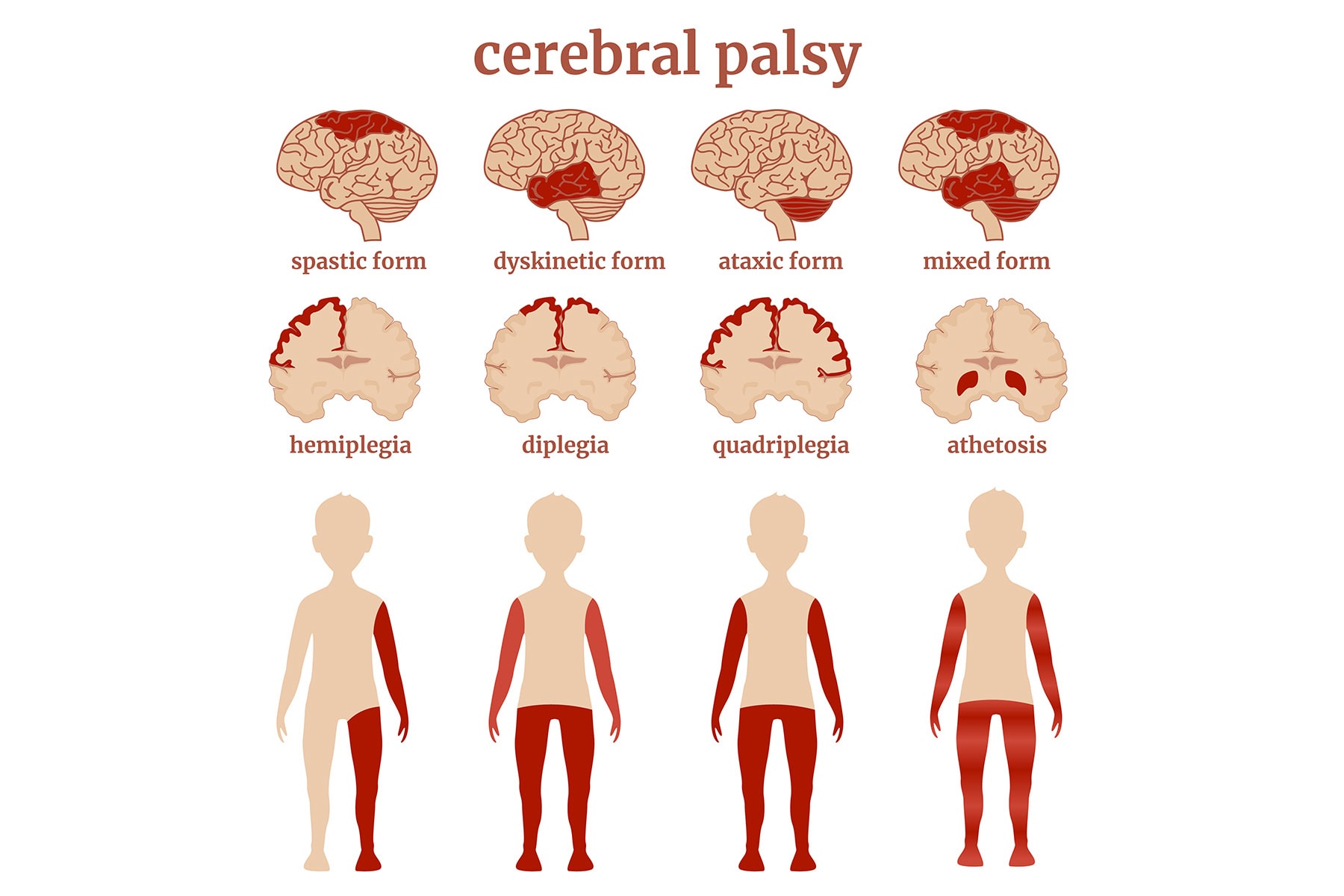
| Cerebral Palsy Subtypes — Lesion & Presentation | |||||
|---|---|---|---|---|---|
| Feature | Spastic (70%) | Dyskinetic (15%) | Ataxic (5%) | Hypotonic (7%) | Mixed (3%) |
| Brain lesion | Motor cortex / pyramidal tracts (UMN) | Basal ganglia | Cerebellum & its pathways | Cerebellum | Combined lesions |
| Hallmark signs | Hypertonia, hyperreflexia, clonus, contractures | Choreoathetosis & dystonia; disappear during sleep | Wide-based gait, incoordination | Floppy limbs, head lag on pull-to-sit | Spasticity + choreoathetosis |
| Classic association | Spastic diplegia ← preterm/LBW + IVH → PVL | Dystonic ← kernicterus | Cerebellar malformation | Intelligence often normal | Overlapping patterns |
| Distribution | Hemiplegia, quadriplegia, or diplegia (legs > arms) | Axial & appendicular muscles | Trunk & gait coordination | Global low tone | Variable |
| The 5 Subtypes of Cerebral Palsy – جملة تذكرية | |
| S-D-A-H-M → "Some Doctors Are Having Migraines" Spastic (70%) · Dyskinetic (15%) · Ataxic (5%) · Hypotonic (7%) · Mixed (3%) |
جملة تذكرية |
| Note – ملاحظة | |
| Chorea: rapid, jerky movements of proximal arm, leg and facial muscle groups. Athetosis: slow, irregular writhing movements of the limbs, face, neck and torso. Choreoathetosis is the most common dyskinetic subtype; dystonic CP is more severe and classically tied to kernicterus. |
ملاحظة |
| Clinical Note - ملاحظة سريرية | |
| Always link preterm infants and periventricular leukomalacia with spastic diplegia, and link kernicterus with dyskinetic CP—these are classic board questions. | ملاحظة |
Clinical Features & Comorbidities
Spastic CP (most common) affects one or more limbs with abnormal tone and hyperreflexia (tone may be low initially), contractures, and delayed motor milestones. Dyskinetic CP produces involuntary choreoathetotic or dystonic movements with dysarthria, while ataxic CP produces incoordination and jerky speech.
An early clinical clue is persistence of primitive reflexes beyond the normal developmental window, together with early hand preference and abnormal tone.
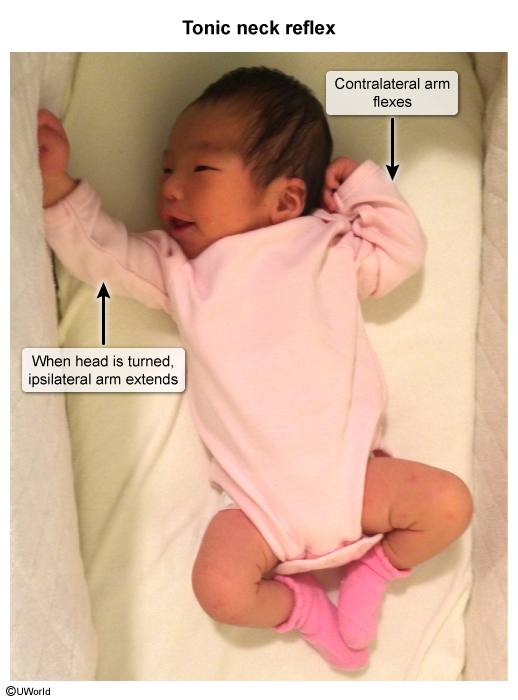
Several comorbidities cluster with CP and are frequently tested:
| Cerebral Palsy — Associated Comorbidities | |
| Comorbidity | Frequency & exam association |
| Intellectual disability | 25–75%; most common in mixed CP |
| Epilepsy | 24–50%; most common in hemiplegic CP |
| Strabismus | Frequent ocular comorbidity |
| Scoliosis | Results from chronic asymmetric muscle tone |
| Sensory & communication deficits | Visual, auditory, speech (dysarthria) and learning problems |
| فخ امتحاني | |
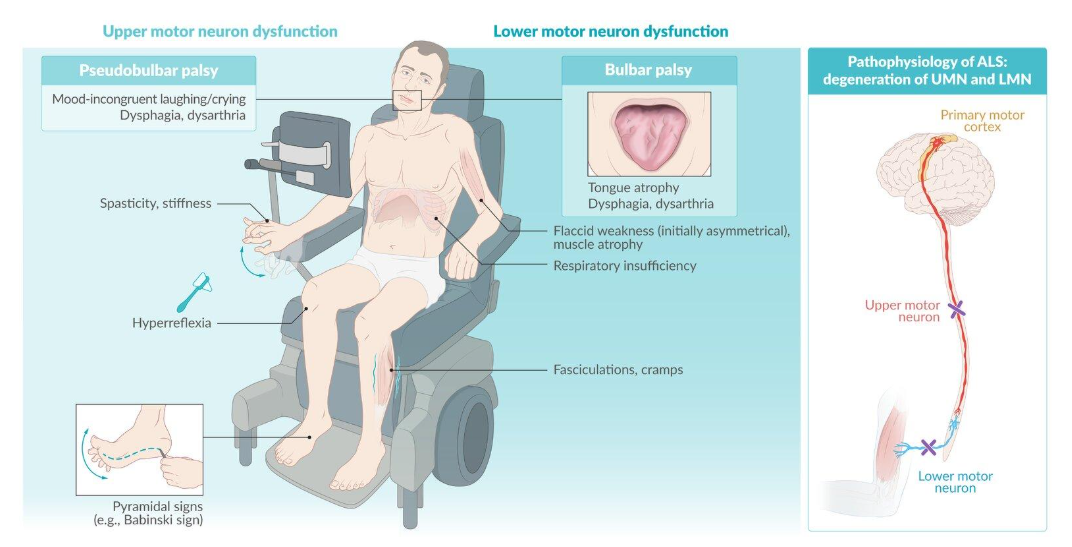
| Do not confuse CP with brachial plexus injury; CP presents with UMN signs (hypertonia, hyperreflexia, clonus, early hand preference), whereas brachial plexus injury presents with LMN signs with low tone and flaccid limb. | تذكر |
Because CP is an upper motor neuron disorder, separating it from lower motor neuron causes of limb weakness is a classic exam task — see the distribution-of-weakness guide (UMN vs LMN localization) for the pattern that distinguishes them.
Diagnosis
Cerebral palsy is a clinical diagnosis, usually established by age 1–2 years, supported by serial examinations demonstrating a static (non-progressive) disorder. Note that spasticity and other abnormal tone/movement patterns often evolve clinically over time despite the underlying injury being fixed.
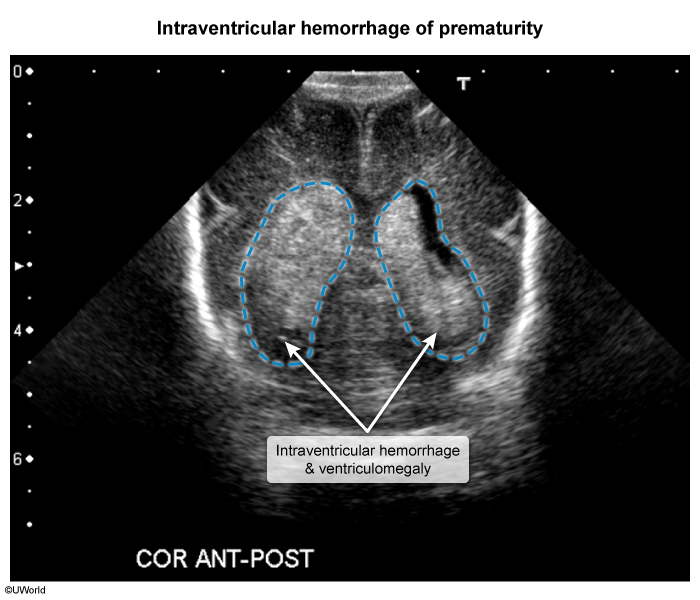
- Neuroimaging: cranial ultrasound in the newborn and brain MRI in older children delineate CNS involvement — e.g., periventricular leukomalacia and basal ganglia lesions. MRI is the most informative study.
- EEG: confirms clinically suspected seizures.
Management & Prognosis
The primary goal is to optimize functional adaptive skills — mobility, self-care, communication, educational attainment, and social participation. Care is individualized and interdisciplinary, combining physical, occupational and speech therapy with special education, orthopedics, and neurology.
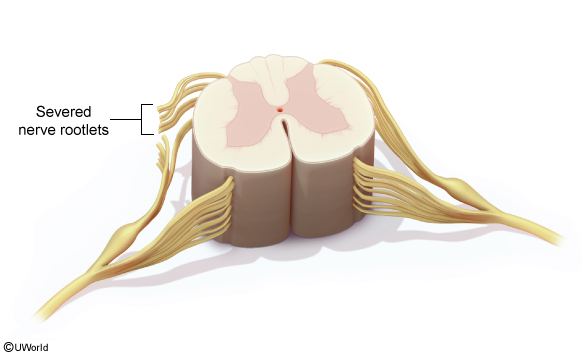
Spasticity management: baclofen (a GABA-B agonist that restores descending inhibitory control) and botulinum toxin injections, supported by lower-limb orthoses (ankle–foot orthoses, AFOs); selective dorsal rhizotomy is a surgical option for severe, refractory spasticity.
Prognosis: the neurological deficits are permanent but non-progressive; functional outcome depends on the subtype, severity, and associated comorbidities.
Key Points for Exams – نقاط مهمة للامتحانات
High-yield points for rapid revision:
- CP is a static (non-progressive) encephalopathy affecting movement, posture and tone; the injury is fixed, but clinical signs may evolve with age.
- Prematurity and low birth weight (<1500 g) are the biggest risk factors.
- Spastic CP (~70%) is the most common subtype and shows UMN signs (hypertonia, hyperreflexia, clonus, contractures).
- Spastic diplegia ↔ preterm / low-birth-weight infants with IVH → periventricular leukomalacia.
- Dyskinetic (dystonic) CP ↔ kernicterus and basal ganglia injury.
- Ataxic CP ↔ cerebellar injury; wide-based gait.
- Key comorbidities: intellectual disability (most common in mixed CP), epilepsy (most common in hemiplegia), strabismus, scoliosis.
- Diagnosis is clinical (by 1–2 yr) + brain MRI; management is interdisciplinary with baclofen / botulinum toxin for spasticity. Deficits are permanent.
For a one-page consolidated revision, revisit the cerebral palsy risk-factor and prognosis overview.
احصل على التجربة الكاملة
اشترك للوصول لفيديوهات الشرح التفصيلي والبطاقات التعليمية التفاعلية وأسئلة الممارسة مع تتبع التقدم.