شرح المدرسين
Introduction
Pregnancy is a period marked by significant physiological transformations, with the skin experiencing a wide range of changes. These alterations, from pigmentation shifts to the emergence of specific skin conditions, are typically normal and expected aspects of pregnancy. Understanding and recognizing these changes are essential for providing appropriate care and reassurance to pregnant patients.
Changes in Pigmentation
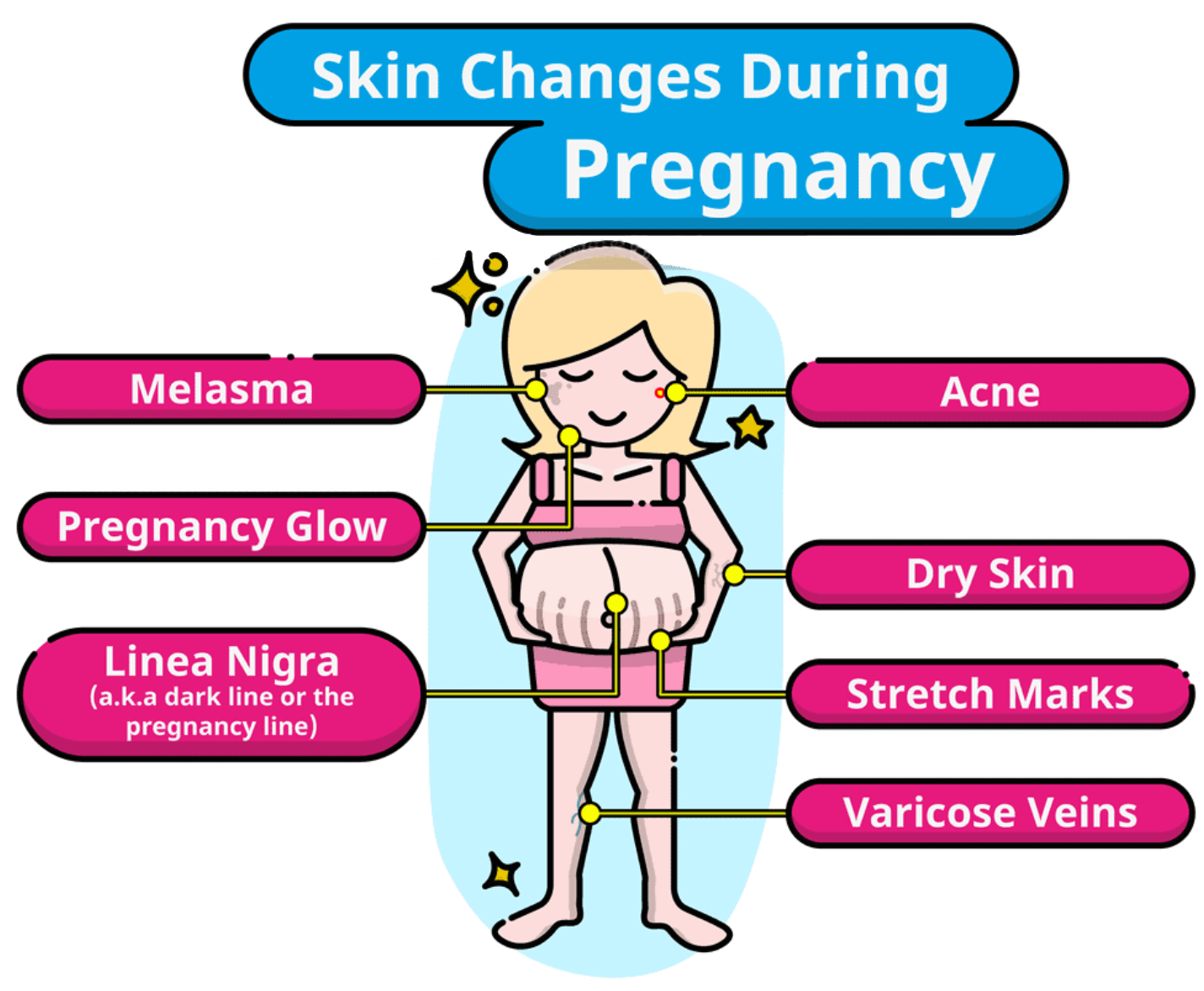
Hyperpigmentation: Affects up to 75% of pregnant women, manifesting as increased pigmentation in several areas:
- Facial Skin (Melasma): Often the most visible sign, sometimes called the "mask of pregnancy."
- Midline Skin (Linea Nigra): A line of pigmentation extending from the pubic symphysis to the xiphoid process.
- Periareolar Skin: Extending outward, forming what is referred to as the secondary areola.
- Other Areas: Including nipples, axillae, genitalia, perineum, anus, inner thighs, and neck, as well as recent scars, freckles, and lentigines, which may become more pronounced.
- Management: Postpartum melasma often regresses within a year. Persistent cases may be addressed with skin-lightening agents, chemical peels, and laser therapies, following a dermatologist's guidance.
Vascular Changes
Spider Angiomas and Palmar Erythema: Result from hormonal influences on blood vessels, appearing as small, spider-like blood vessels or redness of the palms.
- Regression: Typically, these changes regress postpartum without the need for specific treatment.
Striae Gravidarum (Stretch Marks)
Development: Appear as streaks on the abdomen, breasts, thighs, lower back, buttocks, and upper arms due to connective tissue changes.
- Genetic Predisposition: Influences their development; while they often fade postpartum, they usually do not disappear completely.
Pruritus
Causes: Can be physiologic, related to pre-existing conditions, or due to pregnancy-specific dermatoses.
- Treatment: Management strategies include oatmeal baths, topical steroids, antihistamines, and ultraviolet light therapy, depending on the underlying cause.
Skin Appendages
Glands and Hair: Pregnancy may increase eccrine activity (except on the palms) and scalp hair thickness but can lead to hirsutism and postpartum hair loss (telogen effluvium).
- Nails: Changes may include faster growth, development of grooves, and potential softening or brittleness.
Mucosal Changes
Gingival and Nasal Congestion: Many individuals experience gingivitis and hyperemia of the nasal mucosa, leading to congestion.
- Management: Maintaining good oral hygiene and using saline nasal sprays can alleviate these symptoms.
Conclusion
The skin undergoes numerous changes during pregnancy, reflecting the body's adaptation to support fetal growth and prepare for childbirth. By understanding these changes, healthcare providers can offer effective care and reassurance to pregnant individuals, helping manage any discomfort or concerns that may arise. Postpartum, many of these changes will regress, but some may require additional treatment or time to fully resolve.
احصل على التجربة الكاملة
اشترك للوصول لفيديوهات الشرح التفصيلي والبطاقات التعليمية التفاعلية وأسئلة الممارسة مع تتبع التقدم.