Summary
Primary postpartum hemorrhage (PPH), occurring within 24 hours of delivery, is the leading cause of maternal mortality worldwide. The majority of cases result from uterine atony, but a systematic approach to diagnosis uses the "5 T's": Tone, Tissue, Trauma, Thrombin, and Traction.
Clinical diagnosis combined with rapid resuscitation, uterotonics, tranexamic acid, and surgical escalation form the cornerstone of management, while prevention through antenatal risk stratification and active third-stage labor management can significantly reduce maternal morbidity and death.
Definition
Postpartum hemorrhage (PPH) is defined as:
- Blood loss ≥500 mL after vaginal delivery.
- Blood loss ≥1000 mL after cesarean delivery.
- Any blood loss associated with hemodynamic instability (tachycardia, hypotension, syncope).
There are two types of postpartum hemorrhage:
- Primary PPH: bleeding within the first 24 hours postpartum (most common; ~80% of all PPH).
- Secondary PPH: bleeding between 24 hours and 12 weeks postpartum (often due to retained tissue or subinvolution).
Epidemiology
PPH remains the leading cause of maternal mortality worldwide, accounting for approximately 12% of maternal deaths in the United States. Approximately 5% of all deliveries are complicated by PPH, making it a critical obstetric emergency.
Primary PPH accounts for ~80% of hemorrhage cases, with uterine atony responsible for up to 80% of primary PPH (roughly 64% of all PPH). The remaining 20% of primary PPH is distributed among placental abnormalities (tissue), genital tract injuries (trauma), bleeding disorders (thrombin), and uterine inversion (traction).
Maternal mortality from PPH remains preventable through early recognition, multidisciplinary team activation, and adherence to stepwise escalation protocols.
Etiology – The 5 T's
PPH results from five reversible and treatable mechanisms, succinctly captured by the "5 T's" framework. Understanding each mechanism directs focused clinical assessment and tailored intervention.
| Etiology of Postpartum Hemorrhage – The 5 T's | |
|---|---|
| T | Primary Mechanism |
| Tone (Uterine Atony) | Inadequate myometrial contraction; most common cause (~64% of all PPH). Risk factors: polyhydramnios, multiple gestation, macrosomia, prolonged labor, oxytocin overuse, multiparity, chorioamnionitis, fibroids, maternal obesity, general anesthesia. |
| Tissue (Retained Products) | Retained placenta or abnormal placentation (accreta spectrum, previa). Risk factors: prior cesarean, assisted reproduction, multiparity, advanced maternal age. |
| Trauma (Genital Injuries) | Cervical/vaginal lacerations, episiotomy complications, puerperal hematomas, uterine rupture. Associated with forceps/vacuum delivery and precipitous labor. |
| Thrombin (Coagulopathy) | Disseminated intravascular coagulation (DIC), severe preeclampsia, placental abruption. Defective hemostasis amplifies bleeding from any source. |
| Traction (Uterine Inversion) | Complete or partial uterine prolapse through cervix, caused by excessive umbilical cord traction or fundal pressure. Rare but catastrophic; requires immediate recognition and manual reduction. |
| Mnemonic – جملة تذكرية | |
|
5 T's of Postpartum Hemorrhage:
|
جملة تذكرية |
Clinical Approach by Etiology
Uterine Atony (Tone): Presents with profuse vaginal bleeding and a soft, enlarged, "boggy" uterus. First-line management includes uterine massage, bladder emptying, and sequential uterotonics (see Management section). Tranexamic acid should be administered early. Refractory cases progress to intrauterine balloon tamponade, compression sutures (B-Lynch), or surgical intervention.
Retained Placenta / Abnormal Placentation (Tissue): Failure of complete placental separation with ongoing bleeding. Placenta accreta spectrum (abnormal invasion due to prior uterine surgery or instrumentation) presents with difficulty detaching placenta and profuse hemorrhage. Management ranges from manual removal under anesthesia to emergency cesarean hysterectomy for accreta spectrum cases.
Genital Tract Trauma (Trauma): Persistent bleeding despite a well-contracted uterus. Cervical, vaginal, or perineal lacerations are common after forceps/vacuum delivery. Hematomas may expand silently. Uterine rupture (rare) typically follows prior cesarean or obstructed labor. Repair (for lacerations), drainage (for hematomas), arterial embolization/ligation, or laparotomy (for rupture) tailors the response.
Coagulopathy (Thrombin): Defective clotting amplifies bleeding from any PPH source. DIC triggered by severe preeclampsia, placental abruption, sepsis, or amniotic fluid embolism produces prolonged PT/aPTT, low fibrinogen, and elevated D-dimer. Management includes factor replacement (fresh frozen plasma, cryoprecipitate, platelet transfusion) alongside control of the bleeding source.
Uterine Inversion (Traction): Sudden prolapse of the uterine fundus through the cervix, caused by excessive umbilical cord traction or vigorous fundal pressure. Presents with sudden massive hemorrhage, severe pain, and shock disproportionate to blood loss; the uterine fundus is absent on abdominal examination. Critical: immediately stop uterotonics to relax the uterus, allowing rapid manual repositioning (Johnson method—gentle upward pressure on the inverted fundus through the vagina). If manual reduction fails or maternal shock is severe, surgical exploration and correction under anesthesia is necessary.
Diagnosis
Clinical diagnosis of PPH is made at the bedside and does not await laboratory confirmation. Rapid assessment and treatment initiation are essential because maternal stability deteriorates within minutes of onset.
Clinical assessment: Brisk vaginal bleeding, signs of hypovolemia (tachycardia >100, hypotension, cool extremities, decreased capillary refill, altered mental status), uterine tone palpation (contracted vs. boggy), and visual inspection of the introitus and vagina (speculum exam to identify lacerations, retained tissue, or blood source).
Imaging:
- Transabdominal ultrasound to detect retained placental tissue, fluid collections, or features of placenta accreta (loss of normal retroplacental echolucency, abnormal vascularity on Doppler).
- MRI is reserved for preoperative planning in suspected morbidly adherent placenta when ultrasound is inconclusive.
Laboratory: Baseline hemoglobin and hematocrit (initial Hb may be falsely normal due to incomplete hemodilution), type and crossmatch (initiate massive transfusion protocol if indicated), coagulation profile (PT, aPTT), fibrinogen level (goal ≥100 mg/dL during active bleeding), and D-dimer (elevated in DIC). Serial labs guide transfusion decisions, but clinical judgment takes precedence—do not wait for results to initiate resuscitation.
Stepwise Management
PPH management is time-sensitive and multiphase: Early recognition, simultaneous resuscitation and diagnosis, and escalation when first-line measures fail are the keys to preventing maternal death. A multidisciplinary team (obstetrician, anesthetist, midwife, blood bank, laboratory) must be activated immediately.
Phase 1: Immediate Resuscitation & Initial Assessment
- Call for help: Activate emergency obstetric response; notify anesthesia, blood bank, and operating room standby.
- Oxygen & IV access: Apply high-flow oxygen (non-rebreather mask, 15 L/min). Establish two large-bore (16–18 gauge) peripheral IV lines; central line if ongoing shock.
- Fluid resuscitation: Begin aggressive IV crystalloid (normal saline or Ringer's lactate) at wide-open rates; initiate massive transfusion protocol if systolic BP <90 mmHg or continued heavy bleeding despite crystalloid.
- Labs & typing: Stat hemoglobin, hematocrit, coagulation profile (PT, aPTT), fibrinogen, D-dimer, blood type and crossmatch. Do not delay transfusion awaiting results.
- Assess the uterus: Palpate fundal height, tone (contracted vs. boggy), and position (normal vs. inverted). This single examination directs all subsequent interventions.
Phase 2: Source-Directed Intervention
If uterus is CONTRACTED: The bleeding source is not atony. Rapidly evaluate for trauma (vaginal/cervical lacerations, episiotomy extension), retained tissue (placenta, clots), or coagulopathy. Perform speculum exam; ultrasound to assess retained products; coagulation studies.
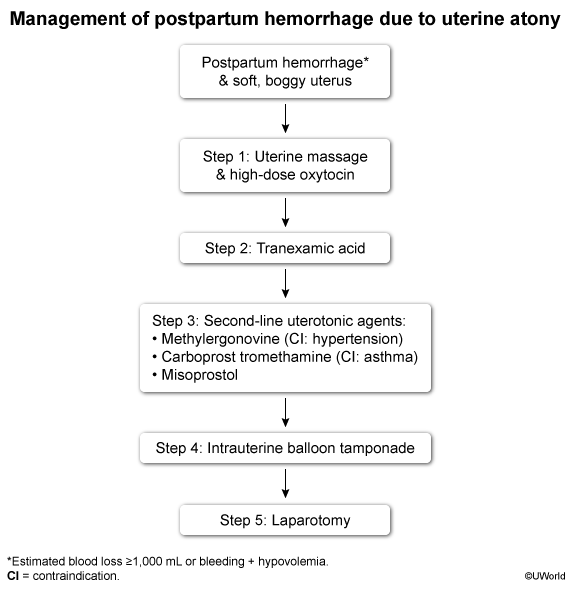
If uterus is BOGGY / ATONIC: Proceed with the following sequence in rapid succession:
- Bimanual compression: Insert one hand into the vagina (gloved fist) into the anterior fornix; place the external hand on the abdomen over the fundus. Compress the uterus firmly between both hands to collapse the uterine cavity and compress bleeding vessels. Maintain compression for 30–60 seconds, then reassess tone. Repeat as needed.
- Empty the bladder: Insert a Foley catheter to relieve any obstruction to uterine contraction and allow direct fundal palpation. Bladder distension inhibits oxytocin efficacy.
- Administer first-line uterotonic: Give oxytocin 10 units IM (preferred for immediate effect) or 10–40 units in 500–1000 mL IV crystalloid at 250 mL/min. Assess response within 15–30 minutes.
- Tranexamic acid (TXA): 1 g IV over 10 minutes, followed by 1 g IV over 8 hours (or 1 g q8h up to 4 doses total). Effective if given within 3 hours of bleeding onset; reduces mortality by ~30%. Must be given early—do not wait to see if uterotonics fail.
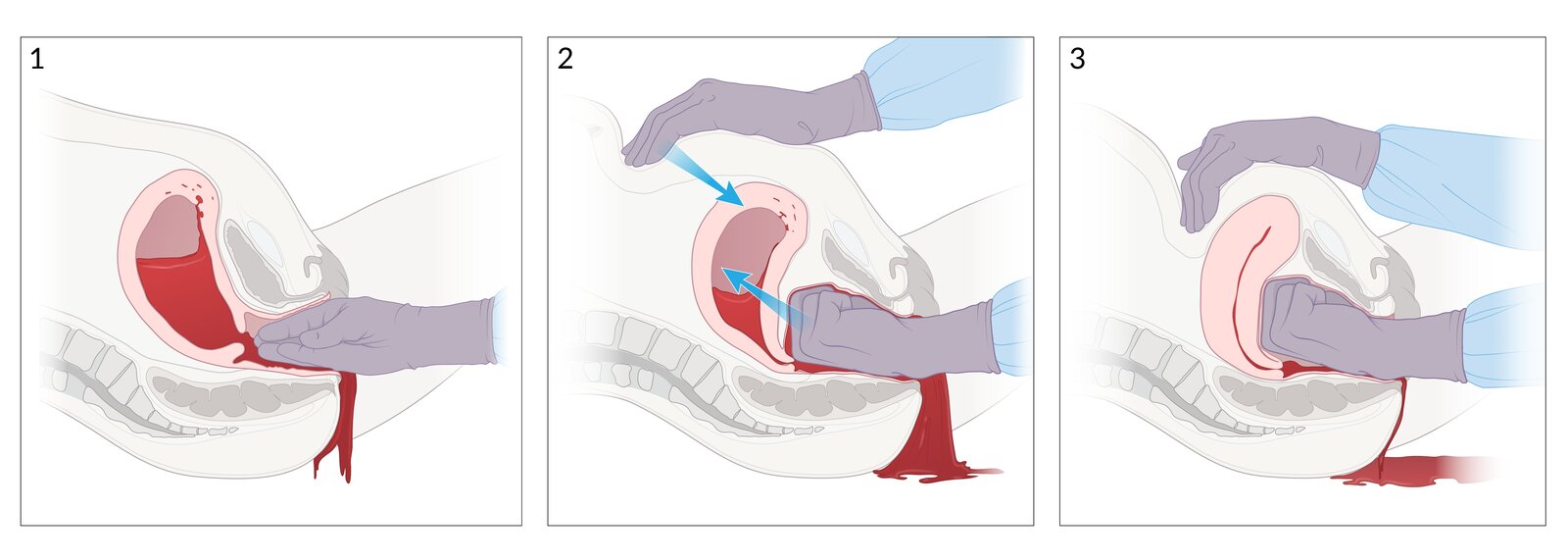
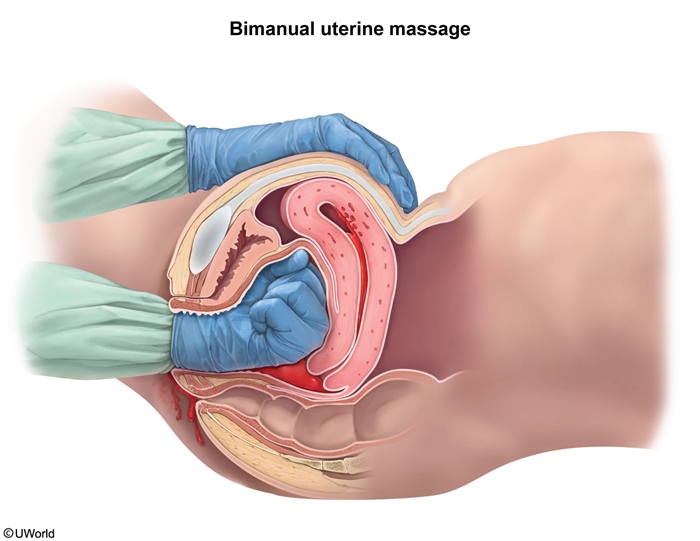
If bleeding continues despite oxytocin + TXA + bimanual compression (ongoing heavy bleeding or hemodynamic instability): Escalate to second-line uterotonic (see table below). Check the obstetric history for contraindications.
| Uterotonic Agents: Sequence, Dosing, and Contraindications | ||||
|---|---|---|---|---|
| Agent | Dose & Route | Onset | Key Mechanism | Contraindications / Cautions |
| Oxytocin (Pitocin) – 1st Line | 10 units IM or 10–40 units in 500–1000 mL IV fluid at 250 mL/min | IV: 30–60 sec; IM: 3–5 min | Direct myometrial smooth-muscle contraction | Avoid rapid IV bolus (hypotension, reflex tachycardia, arrhythmia). Monitor BP and heart rate. |
| Methylergonovine (Methergine) – 2nd Line | 0.2 mg IM/IV; repeat IM q2–4h (max 5 doses) | IM: 6–7 min; IV: 1–5 min | Sustained tetanic contraction + arterial vasoconstriction | 🚫 CONTRAINDICATED: Hypertension, preeclampsia, coronary/cerebrovascular disease (risk of MI, stroke). Sustained contractions may trap retained placenta. |
| Carboprost (Hemabate) – 3rd Line | 250 μg IM or intramyometrial; repeat q15–90 min (max 8 doses) | IM: 8–10 min; peak 15–30 min | Prostaglandin F2α; potent hemostasis + contraction | 🚫 CONTRAINDICATED: Asthma, COPD (bronchospasm risk), hypertension (hypertensive crisis). Common: fever, GI upset, flushing. |
| Misoprostol (Cytotec) – 4th Line | 800–1000 μg PR (preferred) or SL; may repeat q4h | PR: 5–8 min; slow and variable | Prostaglandin E1; weaker uterine contraction | Slowest onset; hyperthermia, diarrhea. Reserve for when other agents unavailable or contraindicated. |
| Important – فخ امتحاني | |
|
Uterotonic contraindications are exam-high-yield: Always review the obstetric history before selecting a uterotonic. Methylergonovine is absolutely contraindicated in hypertension and preeclampsia (risk of stroke, MI, hypertensive emergency). Carboprost is absolutely contraindicated in asthma and COPD (risk of severe bronchospasm and respiratory failure). Failing to recognize these contraindications is a common error on board exams and in clinical practice—it can convert a bleeding emergency into a cardiovascular or pulmonary crisis. |
تذكر |
Phase 3: Surgical / Invasive Escalation (if refractory bleeding)
If atony persists despite maximum uterotonics, tranexamic acid, and aggressive resuscitation (ongoing heavy bleeding, persistent tachycardia >110, systolic BP <90 mmHg, falling Hb despite transfusion), proceed to surgical hemostasis. Delay increases morbidity and mortality.
- Intrauterine balloon tamponade (Bakri balloon, Foley catheter): Rapid percutaneous insertion into the uterine cavity and inflation with 500–800 mL normal saline (or up to 1000 mL if needed for hemostasis). Provides direct mechanical compression of placental bed vessels. Leave in place for 12–24 hours, then deflate gradually. Success rate ~80%; allows time for coagulation correction or second-line interventions. Failure suggests abnormal placentation or coagulopathy requiring surgical exploration.
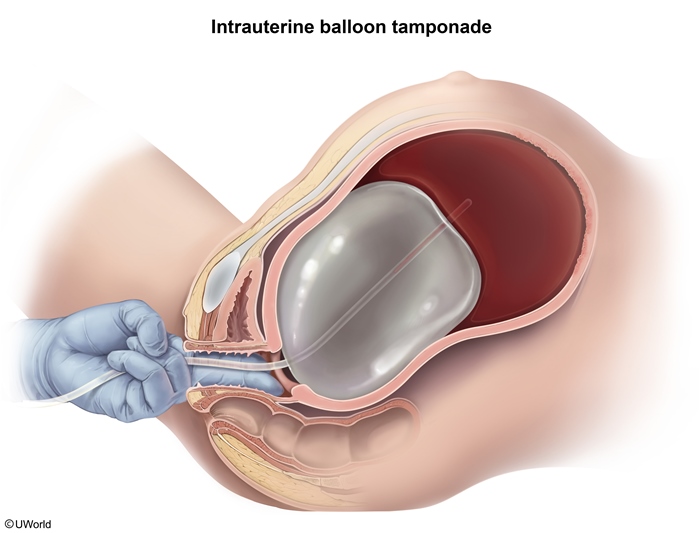
- Compression sutures (B-Lynch stitch, Cho stitch, or similar): Placed via minilaparotomy or cesarean hysterotomy (if delivery was via cesarean). These sutures compress the uterine body without hysterectomy and preserve fertility. Success rates 80–90% for atony alone.
- Arterial ligation / embolization: Bilateral uterine artery ligation (via minilaparotomy) or interventional radiology-guided angiographic embolization for bleeding refractory to uterotonics and balloon tamponade. Embolization has lower morbidity and better success (~95%) but requires available IR and hemodynamic stability during transport.
- Hysterectomy (last resort): Total or subtotal cesarean hysterectomy when other measures fail or are impossible (massive hemorrhage, uterine rupture with extensive tissue loss, placenta increta/percreta not amenable to conservative surgery). Hysterectomy is curative but sacrifices fertility and carries higher morbidity (blood loss, infection, visceral injury). Reserve for true refractory cases and maternal hemorrhagic shock.
| Clinical Pearl – ملاحظة سريرية | |
|
In uterine inversion: The cardinal rule is to STOP all uterotonics immediately because they cause the uterus to clamp down on the inverted fundus, preventing reduction. Initiate aggressive resuscitation and attempt manual reposition (Johnson method: gentle upward pressure on the inverted fundus via the vagina while simultaneously supporting the uterine body transabdominally). If manual reduction succeeds, restart uterotonics and tranexamic acid. If it fails or maternal shock develops, emergency laparotomy and surgical replacement are required. Speed of recognition and reduction is critical—delay worsens shock and increases mortality. |
ملاحظة |
Prevention
Prevention of PPH requires a three-pronged approach: antenatal risk stratification, intrapartum active management of the third stage of labor, and timely recognition of warning signs.
Antenatal Prevention
- Risk factor identification: Screen for and document risk factors for uterine atony (overdistension, prolonged labor history, multiparity, fibroids, obesity, anemia) and abnormal placentation (prior cesarean, previa, abruption history).
- Correct anemia & coagulopathy: Anemia (Hb <7 g/dL) and coagulation defects worsen PPH severity. Screen and treat in the third trimester; ensure adequate iron supplementation and evaluation of bleeding disorders if history suggests (easy bruising, prolonged menses, family history).
- Doppler ultrasound for placenta accreta risk: In women with placenta previa or prior cesarean delivery, high-risk ultrasound features (loss of retroplacental echolucency, abnormal lacunar flow, bladder interface disruption) suggest morbidly adherent placenta. Refer for specialized prenatal imaging (MRI) and arrange delivery at a center with ICU, interventional radiology, and massive transfusion capability.
Intrapartum Prevention: Active Management of the Third Stage of Labor (AMTSL)
AMTSL significantly reduces PPH incidence and severity. All eligible women should receive AMTSL unless contraindicated (e.g., undiagnosed multiple gestation before delivery of all fetuses).
- Administer uterotonic during or immediately after delivery of anterior shoulder of baby: Oxytocin 10 units IM (preferred) or 10–40 units IV/IM. This induces brisk uterine contraction, facilitating placental separation and compression of uterine bleeding vessels.
- Controlled cord traction (Brandt-Andrews maneuver): After signs of placental separation appear (uterus rises in abdomen, cord lengthens, gush of vaginal bleeding), apply gentle downward traction on the umbilical cord while stabilizing and elevating the uterus with the external hand (suprapubic pressure). This controlled technique reduces placental retained tissue and avoids uterine inversion from excessive traction.
- Uterine massage & compression: After placental delivery, massage the uterine fundus firmly in a circular motion (Credé maneuver) to promote myometrial contraction and expel retained clots. Continue for 10–15 seconds, then repeat every few minutes for the first 1–2 hours postpartum.
- Avoid unnecessary episiotomy & operative trauma: Restrict episiotomy to cases of fetal distress or instrumental delivery complications. Minimize forceps/vacuum trauma through proper training and selection of candidates. Precipitous delivery and operative trauma increase tract injury and secondary bleeding.
Complications
Complications of PPH
- Anemia: Iron deficiency persisting weeks to months postpartum; supplement with oral iron or IV iron if oral intake poor.
- Hypovolemic shock: Acute end-organ hypoperfusion; manage with aggressive fluid/blood resuscitation and source control.
- Disseminated intravascular coagulation (DIC): Consumptive coagulopathy triggered by PPH, preeclampsia, or abruption; requires factor replacement and treatment of the underlying cause.
- Sheehan syndrome (postpartum pituitary necrosis): Anterior pituitary ischemia from severe shock and hypotension; presents weeks to years later with secondary amenorrhea, hypothyroidism, and adrenal insufficiency. Rare in modern obstetrics with prompt transfusion, but a classic exam complication.
- Infection / sepsis: Retained tissue or hematoma can become infected; fever + persistent bleeding or foul-smelling discharge warrants imaging and broad-spectrum antibiotics.
- Thromboembolism: Immobility + hypercoagulable postpartum state increase VTE risk; chemical and mechanical thromboprophylaxis indicated for high-risk cases.
- Maternal death: Still accounts for 12% of maternal mortality worldwide despite modern interventions. Delay in recognition and escalation is the most common preventable factor.
Key Points for Exams – نقاط مهمة للامتحانات
| High-Yield Exam Pearl | |
|
Maternal mortality from PPH is largely preventable through team-based protocols, not just individual clinician knowledge. Board exams and clinical scenarios test whether you activate a multidisciplinary response immediately, not hours later. Early recognition (bleeding that doesn't slow despite bimanual compression and oxytocin) should trigger escalation to surgical standby and massive transfusion protocol activation. Delaying operating room notification by 'waiting to see if uterotonics work' is a common and dangerous error. In addition, misremembering uterotonic contraindications (e.g., giving methylergonovine to a preeclamptic woman, or carboprost to an asthmatic) can convert a hemorrhage emergency into a stroke or respiratory crisis—these are frequently tested as board exam 'trap' questions. |
تذكر |
Critical Exam Concepts
- PPH definition is hemodynamic, not volumetric: A woman with ≥500 mL blood loss after vaginal delivery is in PPH IF she shows signs of hypovolemia (tachycardia, hypotension, dizziness, pale or clammy skin). Conversely, a woman with 1200 mL loss but normal vital signs and normal Hb may not require transfusion immediately. Exams test your understanding that the clinical picture—not the number alone—defines PPH.
- Uterine atony is the default diagnosis until proven otherwise: When a postpartum woman has heavy bleeding and a boggy uterus, start uterine massage and oxytocin immediately. Do not wait for imaging or labs. If the uterus is well-contracted despite heavy bleeding, then think trauma, retained tissue, or coagulopathy—and examine the vagina carefully under good lighting.
- Tranexamic acid is now standard of care: Give 1 g IV early (within 3 hours of hemorrhage onset) to any woman with PPH or risk of severe PPH. It reduces mortality by ~30% and does not significantly increase thrombotic risk when dosed correctly. This is one of the few interventions with level-1 evidence in obstetrics.
- Bimanual compression is first-line mechanical hemostasis: A firm, sustained bimanual compression can stop even brisk bleeding temporarily, buying time for uterotonics to work and labs/OR to be prepared. This is a procedural skill that every resident must master.
- Uterotonic contraindications are absolute, not relative: Do not give methylergonovine to a woman with hypertension or preeclampsia—risk of MI or stroke is real and well-documented. Do not give carboprost to an asthmatic—risk of bronchospasm can be fatal. If the first-line uterotonic is contraindicated, skip it and go directly to the next agent in the sequence.
- Uterine inversion is a distinct emergency: Massive hemorrhage with shock disproportionate to blood loss + absent palpable fundus = think inversion immediately. The key is to STOP uterotonics (they worsen the inverted state) and attempt rapid manual reduction. Surgical reduction is needed if manual attempts fail or maternal shock demands immediate OR access.
- Placenta accreta spectrum requires specialized delivery planning: A woman with prior cesarean and placenta previa on ultrasound requires delivery at a hospital with IR, ICU, and massive transfusion capability. Do not deliver these women at low-volume centers—maternal mortality is 5–7% without planned C-hyst.
- Massive transfusion protocols require team activation, not clinician choice: Exams test whether you recognize that 4+ units of pRBC transfused, ongoing shock despite crystalloid resuscitation, or predicted need for >6 units should trigger automatic activation of the massive transfusion protocol (with balanced ratios of pRBC:FFP:platelets, typically 1:1:1). Do not wait; call your blood bank and OR immediately.
- Hysterectomy is a life-saving operation, not a failure: Total or subtotal cesarean hysterectomy is the definitive hemostatic surgery for refractory PPH. It sacrifices fertility but saves lives. Exams will test whether you recognize when conservative measures have failed and hysterectomy is the appropriate next step—delaying hysterectomy in a woman in hemorrhagic shock is malpractice.
| Mnemonic – Uterotonic Escalation Order – جملة تذكرية | |
|
Sequential Uterotonic Escalation: O-M-C-M = Oxytocin, Methylergonovine, Carboprost, Misoprostol. OR: \"Once oxytocin fails, Move to Methergine (if no HTN), then try Carboprost (if no asthma), and finally try Misoprostol.\" Quick contraindication check before each agent: |
جملة تذكرية |
| Mnemonic – The 5 T's of PPH – جملة تذكرية | |
|
5 T's of Postpartum Hemorrhage: Tone (uterine atony, ~64%), Tissue (retained products/accreta), Trauma (lacerations, rupture), Thrombin (DIC/coagulopathy), Traction (inversion). |
جملة تذكرية |
احصل على التجربة الكاملة
اشترك للوصول لفيديوهات الشرح التفصيلي والبطاقات التعليمية التفاعلية وأسئلة الممارسة مع تتبع التقدم.