شرح المدرسين

SUMMARY
Placental abruption is the most common cause of painful antepartum haemorrhage. Diagnosis is clinical; ultrasound cannot reliably exclude it. Immediate maternal stabilization and fetal assessment are priorities. Mode of delivery depends on maternal/fetal status, with emergency caesarean indicated in compromise. Concealed haemorrhage often leads to underestimation of actual blood loss.
DEFINITION & PATHOPHYSIOLOGY
Placental abruption (abruptio placentae) is premature separation of a normally implanted placenta from the uterine wall before delivery of the fetus. It is the leading cause of antepartum haemorrhage (APH) — vaginal bleeding after 24 weeks' gestation and before delivery. The condition carries significant risks: haemorrhagic shock, disseminated intravascular coagulation (DIC), intrauterine fetal death, and maternal mortality.
Pathophysiology
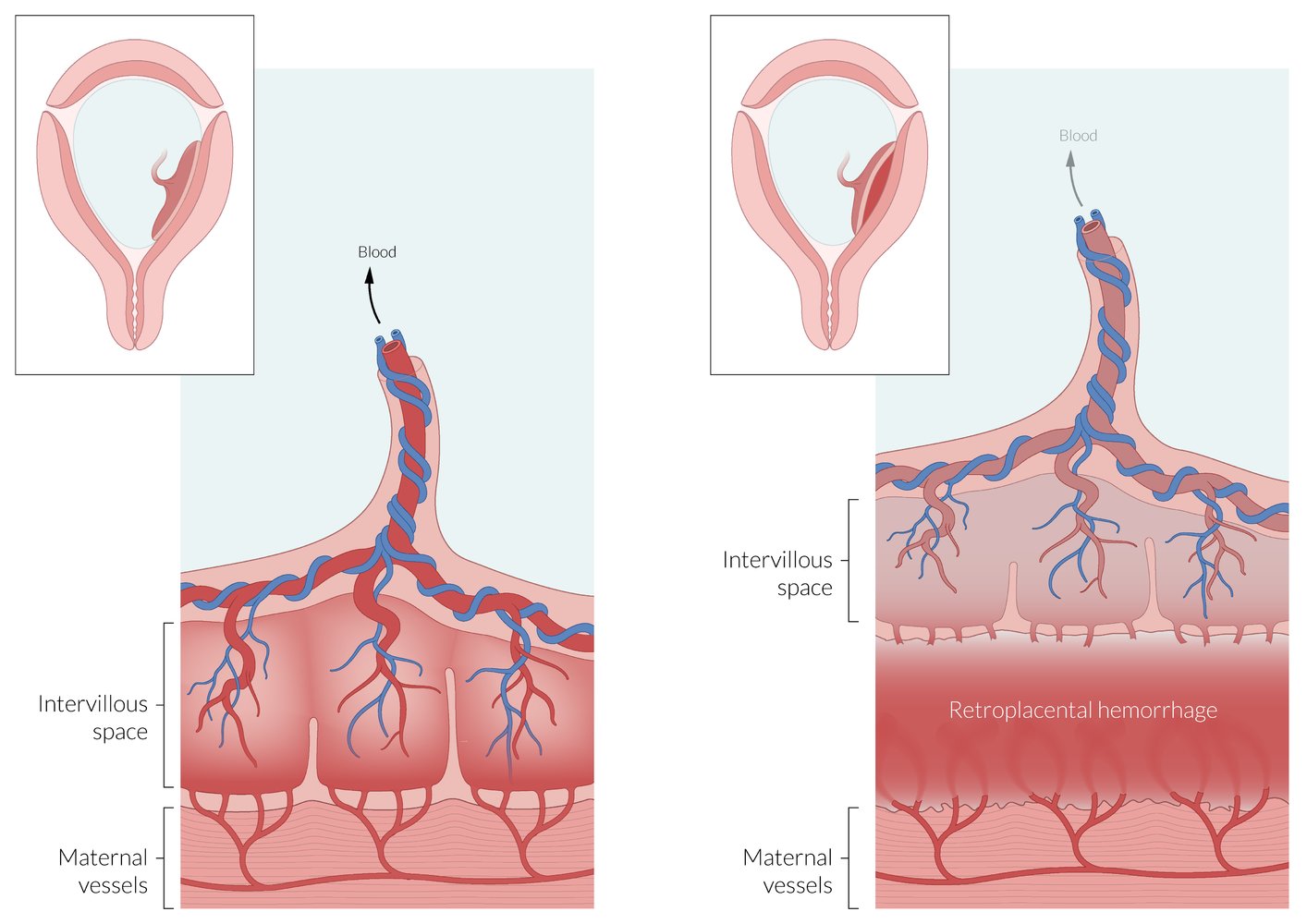
Abruption usually begins with rupture of maternal vessels in the basal decidua. Accumulated blood dissects the placenta from the uterine wall, forming a retroplacental haematoma. The degree of placental separation determines the severity of maternal bleeding and fetal hypoxia.
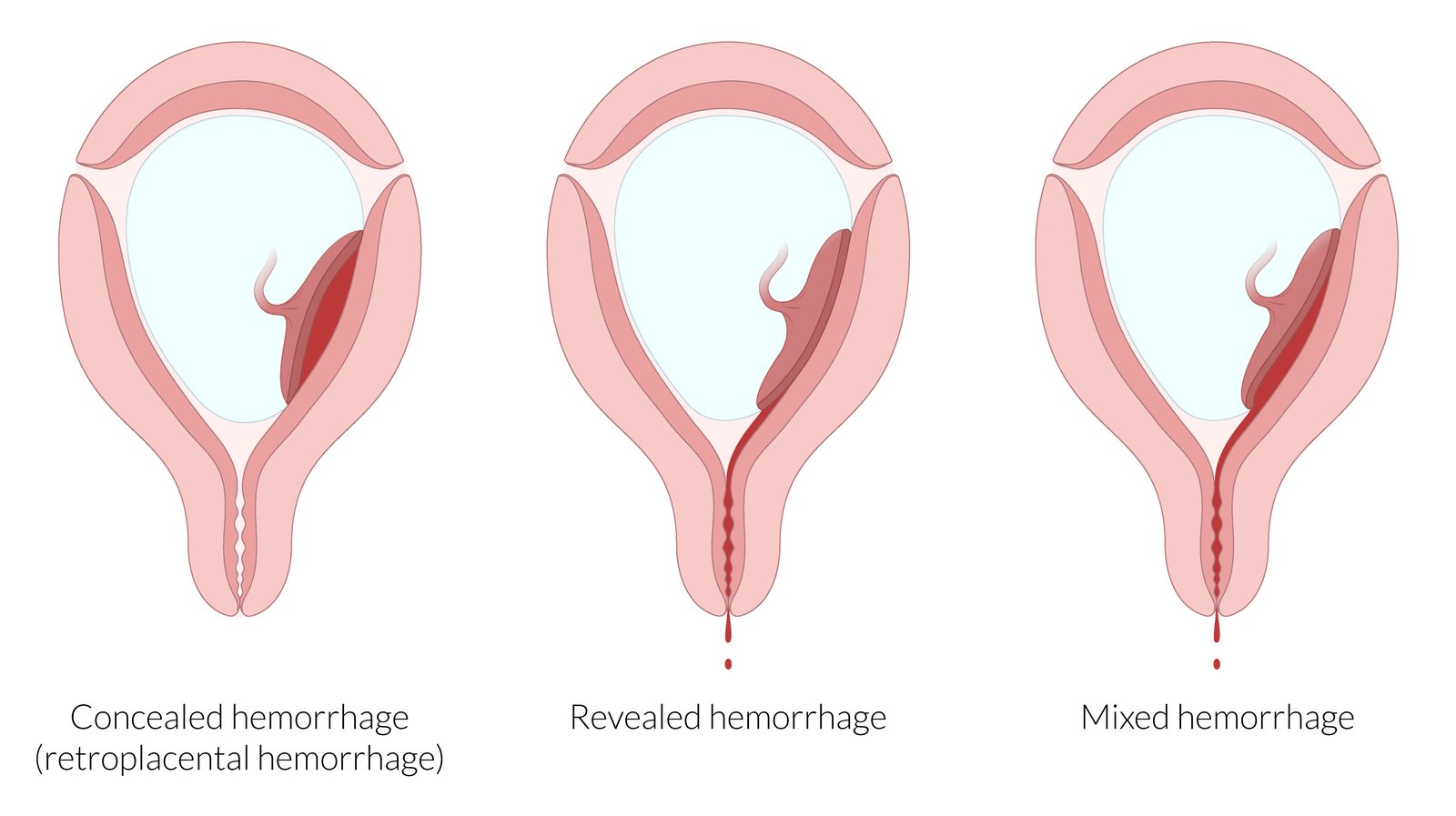
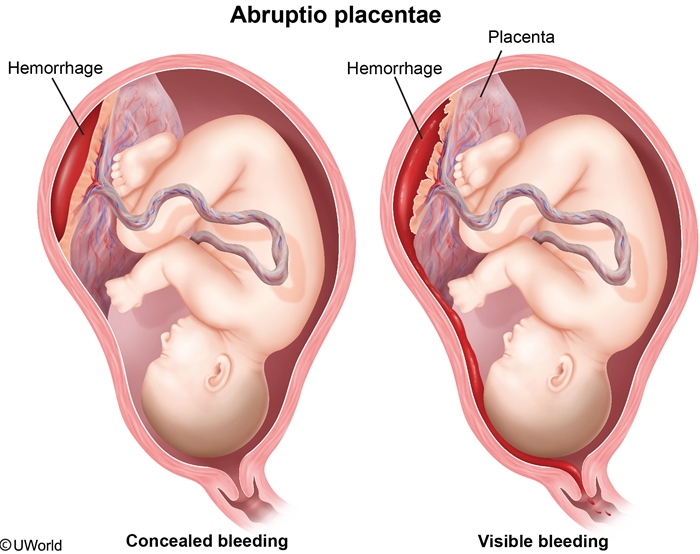
- Revealed abruption: Blood tracks between membranes and cervix, presenting as vaginal bleeding. Bleeding is visible and blood loss can be quantified clinically.
- Concealed abruption: Blood is retained within the uterus behind intact membranes, causing uterine distension, shock, and Couvelaire uterus (extravasation of blood into myometrium). Visible bleeding may be absent or minimal despite massive internal haemorrhage.
- Mixed abruption: Features of both types — retroplacental clot with some vaginal bleeding.
RISK FACTORS
High-Yield Risk Factors
The three most significant, clinically actionable risk factors are:
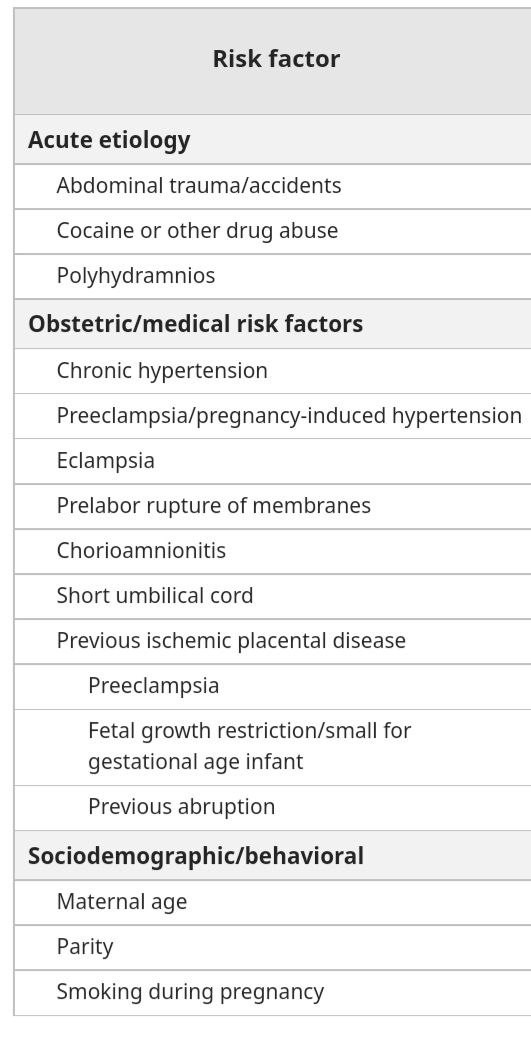
- Previous placental abruption — strongest predictor; 10–25% recurrence risk in subsequent pregnancies.
- Hypertensive disorders — pre-eclampsia, chronic hypertension, renal disease, SLE, antiphospholipid syndrome. Hypertension is the most common modifiable risk factor.
- Mechanical/acute triggers — blunt abdominal trauma (motor vehicle accident, intimate partner violence, falls), sudden uterine decompression (polyhydramnios with membrane rupture), PROM, multiple pregnancy, intrauterine myomas.
Minor Risk Factors
- Lifestyle: smoking, alcohol use, cocaine.
- Sociodemographic: advanced maternal age (>35 years), high parity.
- Hematologic: thrombophilias, inherited or acquired coagulopathies.
- Obstetric history: first-trimester bleeding with intrauterine haematoma.
CLINICAL FEATURES
Classical Presentation
The classic triad is:
- Painful vaginal bleeding (distinguishes abruption from painless previa)
- Uterine tenderness (usually over the site of separation)
- Increased uterine tone (rigid, "woody" uterus indicating tetanic contraction or Couvelaire uterus)
Use the mnemonic below to recall the full spectrum:
| ABRUPT – Clinical Presentation of Abruption | |
|
A = Abdominal & back pain |
جملة تذكرية |
Variable & Silent Presentations
- Reduced fetal movements, abnormal fetal heart rate variability, or absent fetal heart activity.
- Concealed abruption may present with sudden intrauterine fetal demise with minimal visible bleeding.
- Abdominal or back pain may be the first symptom; vaginal bleeding may be absent or delayed in concealed cases.
| Clinical Pearl – ملاحظة سريرية |
|
In concealed abruption, maternal shock is disproportionate to the amount of visible vaginal bleeding. The patient may present with severe hypotension, tachycardia, and signs of end-organ hypoperfusion (oliguria, altered mental status) despite minimal or absent external bleeding. This is a critical clinical clue that should immediately raise suspicion for abruption over other causes of APH. |
DIAGNOSIS & DIFFERENTIAL DIAGNOSIS
Diagnostic Approach
Diagnosis is primarily clinical. Clinical suspicion on the basis of painful bleeding, uterine tenderness, and hypertonicity is the gold standard. Ultrasound may support the diagnosis but cannot exclude it.
History & Examination: Quantify bleeding (frequency of pad saturation, blood colour), characterize pain (onset, location, constant vs. intermittent), assess risk factors, and perform abdominal/pelvic examination to identify tenderness and uterine tone.
Serum investigations: FBC (baseline haemoglobin, platelet count for DIC monitoring), coagulation profile (PT, aPTT, fibrinogen — early indicator of DIC), renal/liver function, blood group and cross-match (prepare 2–4 units PRBC), Kleihauer–Betke test if Rh-negative (quantify fetomaternal haemorrhage to calculate anti-D dosing).
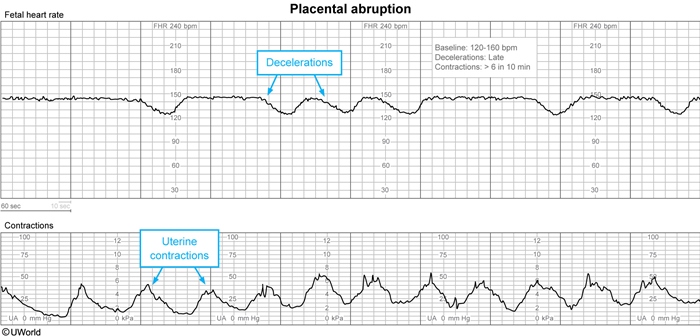
Fetal assessment: Cardiotocography (CTG) if ≥26 weeks' gestation (baseline rate, variability, decelerations indicating placental insufficiency), or fetal heart auscultation if <26 weeks.
Ultrasound (Transabdominal ± Transvaginal): Look for retroplacental haematoma (hypoechoic or mixed-echogenicity collection between placenta and uterine wall), reduced amniotic fluid (suggesting chronic abruption), or fetal death. Sensitivity is only 2–25%, so a normal scan does not exclude abruption.
| Exam Trap – فخ امتحاني |
|
You cannot rule out placental abruption with a normal ultrasound. The sensitivity of ultrasound is very low (2–25%), meaning most abruptions — especially small retroplacental clots and concealed bleeding — are not visible on imaging. Diagnosis rests on clinical judgment: painful vaginal bleeding + uterine tenderness + risk factors = abruption until proven otherwise. Do not delay maternal/fetal resuscitation waiting for "ultrasound confirmation." |
Differential Diagnosis
See the structured comparison table below to distinguish abruption from other causes of antepartum haemorrhage:
| Differential Diagnosis: Antepartum Hemorrhage (Painful Presentations) | |||
|---|---|---|---|
| Feature | Placental Abruption | Placenta Previa | Vasa Praevia |
| Bleeding character | Painful | Painless | Painless (fetal distress if large) |
| Visible blood loss | Concealed or revealed | Revealed, often heavy | Revealed, fetal origin |
| Uterine tenderness | Present (rigid, "woody") | Absent | Absent |
| Ultrasound findings | Normal or hypoechoic retroplacental clot (low sensitivity 2-25%) | Placenta covering internal cervical os | Fetal vessels crossing cervix |
| Risk of fetal death | High (hypoxia, placental insufficiency) | Lower (unless emergency delivery needed) | Very high if membrane rupture occurs |
| Diagnosis | Clinical (imaging may not confirm) | Confirmed on ultrasound | Confirmed on ultrasound |
| Management priority | Stabilization, emergency delivery if compromise | Strict bed rest, elective CS at term | Expectant management if stable; delivery once fetal lung maturity confirmed |
| Exam Trap – فخ امتحاني |
|
Never perform a vaginal examination on any patient with suspected antepartum haemorrhage before excluding placenta previa with ultrasound. Vaginal manipulation over a previa can trigger massive hemorrhage. Always do transabdominal ultrasound first; only perform speculum or digital cervical assessment after placenta previa is ruled out and abruption is confirmed or strongly suspected. |
MANAGEMENT
Initial Resuscitation (ABCDE)
- Admission & Airway management: Admit to labour ward for continuous monitoring. Place on high-flow oxygen (target SpO₂ ≥94%).
- IV access: Insert two large-bore (14–16 G) peripheral cannulas or central line. Start urgent IV fluid resuscitation with normal saline or Hartmann's solution.
- Bloods & products: Send FBC, coagulation profile, renal function, LFTs, blood group & cross-match, Kleihauer–Betke (if Rh-negative). Ensure blood bank has 2–4 units PRBC, fresh frozen plasma, and platelets immediately available. Consider early massive transfusion protocol if active haemorrhage.
- Continuous monitoring: Apply CTG ≥26 weeks (baseline rate, variability, accelerations, decelerations). Insert urinary catheter; aim urine output ≥0.5 mL/kg/hour (sign of adequate perfusion).
- Anti-D immunoglobulin: Administer within 72 hours for all Rh-negative, unsensitized women (dose 500 IU per mL of fetal red cells, minimum 100 IU/mL fetal blood; use Kleihauer result to calculate).
Definitive Management (Depends on Severity & Gestation)
- Emergency caesarean section: Indicated immediately if maternal shock (refractory hypotension, oliguria, altered mental status) or fetal compromise (absent variability, late decelerations, fetal bradycardia, or fetal death is confirmed). Do not delay for vaginal delivery attempt if either mother or fetus is unstable.
- Vaginal delivery (preferred if stable): If mother is haemodynamically stable, pain is tolerable, cervix is favourable (dilated ≥3 cm, effaced, station ≥−2), and no sign of maternal/fetal compromise:
- Admit to labour ward on continuous CTG monitoring.
- Perform amniotomy if cervix permits (may accelerate labour and reduce uterine distension in concealed abruption).
- Initiate oxytocin infusion (start 1 mIU/min, increase by 1–2 mIU/min every 15–30 min, maximum 20 mIU/min) to enhance uterine contractions.
- Prepare for emergency caesarean if labour arrest, signs of fetal distress, or maternal decompensation occur.
- Conservative management (rare, select cases only): Consider in mild/partial abruption (small retroplacental clot, minimal bleeding, normal CTG) with maternal haemodynamic stability, normal coagulation, and preterm gestation (<34 weeks). Requires:
- Strict bed rest in hospital with continuous maternal and fetal monitoring.
- Serial CTG, daily coagulation studies, FBC.
- Corticosteroids for fetal lung maturity (if <34 weeks).
- Immediate delivery at first sign of maternal instability, fetal compromise, or preterm labour.
- This approach carries significant risk and is rarely justified; most abruptions warrant urgent delivery.
Postpartum Management
- Active third stage: Administer IM oxytocin 10 IU at delivery of anterior shoulder (or IV in divided doses) to enhance uterine contraction and minimize postpartum haemorrhage.
- Monitor lochia: Check for excessive bleeding; abruption patients are at high risk for DIC-related PPH.
- Recheck coagulation profile & FBC: Repeat 6 hours postpartum and as indicated by clinical status (watch for ongoing fibrinogen consumption, worsening thrombocytopenia).
- Counsel on recurrence: Inform patient of 10–25% recurrence risk in future pregnancies; plan close antenatal surveillance.
COMPLICATIONS
Maternal Complications
- Hypovolaemic shock: Result of rapid blood loss, worsened by concealed bleeding. May progress to irreversible shock if not treated aggressively.
- Disseminated intravascular coagulation (DIC): Tissue factor released from damaged decidua triggers widespread microthrombosis and consumption of platelets, fibrinogen, and clotting factors. Presents with ↓ platelets, ↓ fibrinogen, ↑ PT/aPTT, and bleeding manifestations. DIC is seen in ~10–20% of clinically significant abruptions.
- Acute renal failure: Consequence of hypoperfusion (prerenal azotemia) or DIC-related microangiopathy (acute tubular necrosis). Oliguria with rising creatinine is a poor prognostic sign.
- Postpartum haemorrhage: Uterine atony (from Couvelaire uterus disruption), DIC-related coagulopathy, and retained clot all increase PPH risk.
- Sheehan's syndrome: Pituitary infarction following severe hypotension and shock. Results in long-term hormone deficiencies (hypothyroidism, adrenal insufficiency, amenorrhoea). Seen in <1% of modern practice but a catastrophic complication.
- Amniotic fluid embolism (rare): Rupture of uterine veins into amniotic fluid during labour or in severe abruption with uterine contractions. Presents with sudden dyspnea, hypotension, and cardiac arrhythmias. High mortality.
- Uterine rupture (very rare): Massive Couvelaire uterus with weakening of myometrium may rarely rupture, especially if labour is induced in severe abruption.
Fetal & Neonatal Complications
- Intrauterine fetal death (IUFD): Placental insufficiency from separation reduces oxygen delivery; cumulative blood loss may be so severe that maternal shock compromises placental perfusion. IUFD occurs in ~5–10% of clinically significant abruptions.
- Preterm delivery: Labour often begins spontaneously in abruption or is induced due to maternal/fetal compromise. Preterm infants face respiratory distress, intraventricular haemorrhage, and other prematurity sequelae.
- Intrauterine growth restriction (IUGR): Chronic or partial abruption reduces placental function, leading to poor fetal growth and low birth weight.
- Neonatal anaemia: Fetomaternal haemorrhage into maternal circulation may cause significant fetal blood loss. Kleihauer–Betke quantification guides anti-D dosing and identifies need for neonatal transfusion.
- Neonatal hypoxic–ischaemic encephalopathy (HIE): Severe intrauterine hypoxia from placental insufficiency or from the stress of emergency delivery may cause HIE, with seizures, feeding difficulties, and long-term neurological disability.
KEY POINTS FOR EXAMS – نقاط مهمة للامتحانات
- Placental abruption is the most common cause of painful antepartum haemorrhage. The **painful** character is the key that distinguishes it from placenta previa (painless).
- Diagnosis is clinical. Classic triad = painful vaginal bleeding + uterine tenderness + rigid ("woody") uterus. Ultrasound sensitivity is only 2–25%; a normal scan does not exclude abruption.
- Concealed abruption is the clinical emergency. Maternal shock may be disproportionate to visible bleeding. Suspect concealed abruption if shock is "out of proportion" to the amount of external blood loss.
- Top 3 risk factors (Rule of 3):
- Previous abruption (strongest, ~10–25% recurrence)
- Hypertensive disorders (pre-eclampsia, chronic HTN)
- Mechanical trauma or sudden uterine decompression (polyhydramnios rupture, PROM)
- Never do a vaginal exam before ultrasound. Always exclude placenta previa (ultrasound) before performing speculum or digital cervical assessment on any APH patient. Risk of massive bleeding if previa is present.
- DIC is a major maternal complication, seen in ~10–20% of clinically significant abruptions. Monitor coagulation profile (fibrinogen, PT, aPTT, platelet count) closely. Falling fibrinogen is an early sign.
- Management follows ABCDE resuscitation. Two large-bore IVs, blood work + cross-match, continuous CTG (if ≥26 weeks), anti-D for Rh-negative women, and prepare for emergency caesarean if maternal/fetal compromise occurs.
- Vaginal delivery is preferred if stable; caesarean is emergent if maternal shock (refractory hypotension, oliguria, altered mental status) or fetal compromise (loss of variability, late decelerations, bradycardia).
- Fetal death risk is high (~5–10% of significant abruptions). Preterm delivery, IUGR, and neonatal complications (anaemia, HIE) are common sequelae of severe abruption.
- Counsel on recurrence: Abruption recurs in 10–25% of subsequent pregnancies. Close antenatal surveillance (serial CTG, fetal growth scans) is essential in future pregnancies.
- Amniotic fluid embolism and Sheehan's syndrome are rare but catastrophic maternal complications. AFE presents with acute dyspnea and hypotension; Sheehan's presents months postpartum with hormone deficiencies.
- Use the ABRUPT mnemonic to recall the clinical features: Abdominal/back pain, Bleeding (painful), Rigid uterus, Uterine tenderness, Profound shock (disproportionate), Tenderness + fetal compromise.
احصل على التجربة الكاملة
اشترك للوصول لفيديوهات الشرح التفصيلي والبطاقات التعليمية التفاعلية وأسئلة الممارسة مع تتبع التقدم.