شرح المدرسين

Summary
Ectopic pregnancy is implantation of a fertilized ovum outside the uterine cavity, most commonly in the fallopian tube. It remains a leading cause of maternal death in the first trimester and constitutes a life-threatening obstetric emergency when ruptured. Early diagnosis through serial β-human chorionic gonadotropin (β-hCG) measurement and transvaginal ultrasound (TVUS), combined with risk stratification, enables safe management via expectant, medical (methotrexate), or surgical approaches in hemodynamically stable patients, while ruptured ectopic pregnancy demands immediate resuscitation and emergency surgery.
Definition & Epidemiology
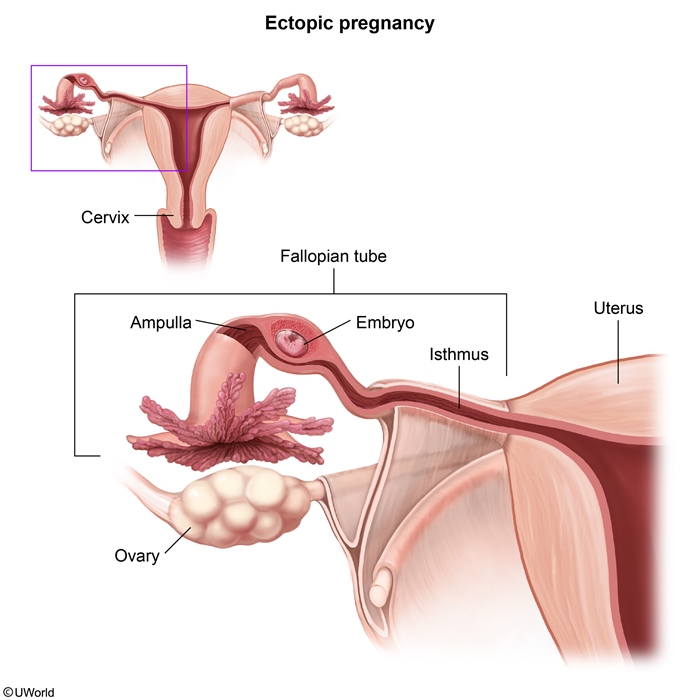
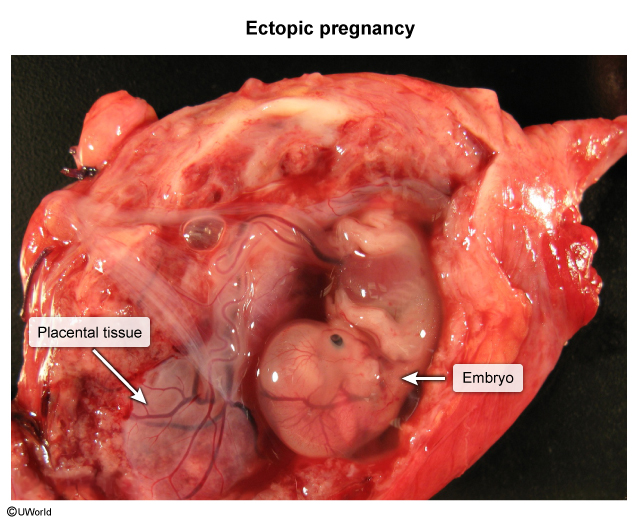
Ectopic pregnancy refers to implantation of a fertilized ovum outside the endometrial lining of the uterine cavity. The majority (≈95%) occur within the fallopian tubes, particularly the ampulla (≈70%), followed by the isthmus (≈12%) and fimbrial region (≈11%). Less common sites include the interstitial portion of the tube, ovary, cervix, abdominal cavity, and broad ligament.
Epidemiology: In the UK, ectopic pregnancies occur in approximately 1 in 80–90 pregnancies. Globally, ectopic pregnancy accounts for significant morbidity and mortality in the first trimester, making it a critical diagnosis to recognize and manage promptly.
Etiology & Risk Factors
Pathogenesis: Ectopic pregnancy results from impaired tubal transport of the fertilized ovum, usually secondary to anatomical distortion or functional impairment of the fallopian tube.
Primary Risk Factor Categories:
1. Tubal Damage and Prior Tubal Events
- Previous ectopic pregnancy (10–15% recurrence risk)
- Pelvic inflammatory disease (PID)
- Endometriosis
- Tubal surgery, tubal ligation reversal, or pelvic/abdominal surgery causing adhesions
- History of ruptured appendix or other peritoneal inflammatory events
2. Contraceptive Paradox: IUD and Progesterone-Only Contraception
- Intrauterine device (IUD): While it prevents overall pregnancy, conceptions that occur despite an IUD in situ have a significantly higher likelihood of being ectopic. The IUD preferentially prevents intrauterine implantation but does not prevent tubal pregnancy as effectively.
- Progesterone-only pill (POP): Conceptions occurring with POP use have an increased ectopic risk compared to those with no contraception.
| فكرة سؤال: IUD and Ectopic Pregnancy | |
|
The IUD reduces overall pregnancy rates, but if the patient presents with a positive pregnancy test and has an IUD in place, the first thing you should think of is ectopic pregnancy until proven otherwise. The danger of the IUD is that it prevents normal pregnancy more effectively than it prevents ectopic pregnancy. |
تذكر |
3. Assisted Reproduction and Other Factors
- In vitro fertilization (IVF) and embryo transfer: Embryo transfer technique and altered tubal environment increase ectopic risk.
- Maternal factors: Smoking, advanced maternal age (≥35 years), congenital uterine anomalies (e.g., DES exposure in utero, bicornuate uterus), and tubal motility disorders (e.g., Kartagener syndrome).
Clinical Pearl: Not all risk factors are modifiable, but their identification helps stratify patients requiring closer monitoring and earlier, more aggressive diagnostic imaging when symptoms develop.
Clinical Features & Differentials
| Classic Triad of Ectopic Pregnancy | |
|
A – Amenorrhoea (absent period) Any woman of reproductive age presenting with this triad requires immediate pregnancy test and transvaginal ultrasound. |
جملة تذكرية |
Early Clinical Features
- Amenorrhoea: Missed or delayed period (from pregnancy hormone secretion)
- Unilateral pelvic or lower abdominal pain: May be colicky or sharp; often on the side of the affected tube
- Vaginal bleeding: Brown discharge ("prune juice" appearance), typically lighter and more watery than normal menses
- Adnexal tenderness: On bimanual pelvic examination, particularly over the affected side
- Cervical excitation: Pain on manipulation of the cervix during examination
Red Flag: Shoulder-Tip Pain (Kehr Sign)
Shoulder-tip pain (pain at the tip of the shoulder, often worse when lying flat) is pathognomonic for diaphragmatic irritation caused by intraperitoneal bleeding. It indicates rupture or impending rupture of the ectopic pregnancy.
| Clinical Note: Shoulder-Tip Pain as a Red Flag | |
|
If the patient complains of shoulder-tip pain (pain at the tip of the shoulder), this indicates diaphragmatic irritation caused by intraperitoneal bleeding, and the ectopic is usually ruptured. Treat this as a surgical emergency without delay. |
Note |
Ruptured Ectopic Pregnancy: Hemodynamic Instability
- Sudden, severe abdominal pain (may be diffuse rather than localized)
- Signs of peritonitis: Rebound tenderness, guarding, board-like abdomen
- Hypovolaemic shock: Tachycardia (>100 bpm), hypotension (<90 mmHg systolic), pallor, syncope, altered mental status
- Massive haemoperitoneum: Abdominal distension, loss of bowel sounds
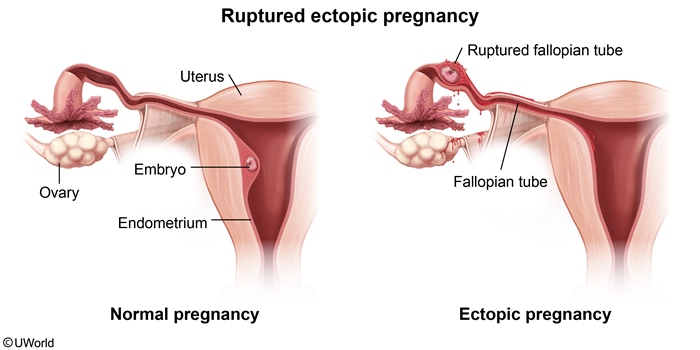
Any patient with these features requires immediate IV access, fluid resuscitation, type & cross-match, and stat operating room availability.
Differential Diagnosis
| Differential Diagnosis of Ectopic Pregnancy: Conditions Mimicking Early Pregnancy Loss or Pelvic Pain | |
| Obstetric Causes | First-trimester complications |
| Miscarriage (threatened, incomplete, complete) | Intrauterine pregnancy with vaginal bleeding ± pain; β-hCG falling or absent; ultrasound shows gestational sac in uterus or empty cavity after recent bleeding |
| Pregnancy of Unknown Location (PUL) | Positive β-hCG but no intrauterine or definitive adnexal pregnancy on TVUS; requires serial β-hCG and repeat scanning to resolve |
| Gynecologic (Non-pregnant) | Ovarian/tubal pathology |
| Ovarian cyst rupture | Acute pelvic pain, free fluid on ultrasound; negative pregnancy test; normal β-hCG |
| Ovarian torsion | Severe unilateral pain, nausea/vomiting; ultrasound shows enlarged ovary with decreased Doppler flow; negative pregnancy test |
| Acute pelvic inflammatory disease (PID) | Bilateral adnexal tenderness, purulent cervical discharge, fever; may have positive pregnancy test if concurrent pregnancy |
| Non-gynecologic | General surgical/urologic emergencies |
| Appendicitis | Right lower quadrant pain, fever, elevated WBC; pregnancy test negative; absence of adnexal mass |
| Urinary tract infection / Pyelonephritis | Dysuria, frequency, costovertebral angle tenderness; urinalysis shows pyuria/nitrites; pregnancy test may be positive or negative |
| Diverticulitis | Left lower quadrant pain; absence of adnexal findings; normal or negative pregnancy test |
Diagnosis & Investigations
Clinical Principle: Every woman of reproductive age presenting with abdominal pain, pelvic pain, or vaginal bleeding must have a pregnancy test (urine or serum β-hCG). Diagnosis of ectopic pregnancy relies on the combination of serial β-hCG dynamics and transvaginal ultrasound (TVUS) findings.
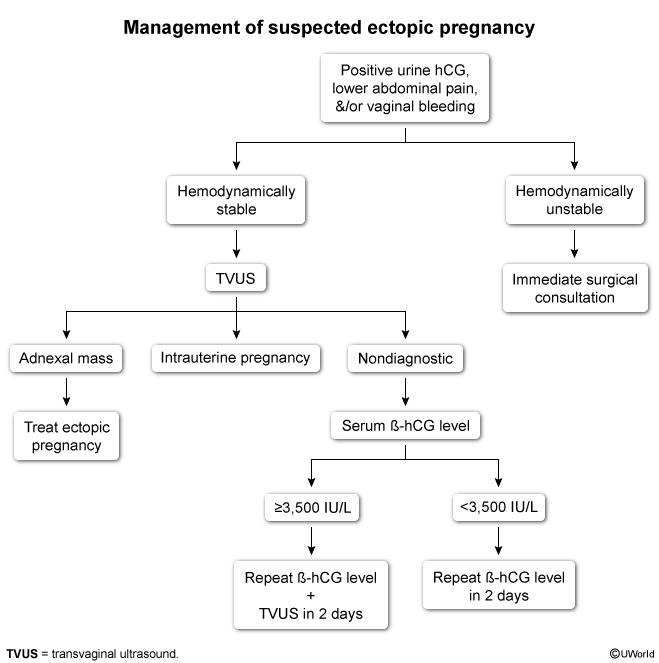
Diagnostic Approach: Serial β-hCG and Ultrasound
Serum β-hCG Patterns:
- Normal intrauterine pregnancy: β-hCG doubles every 48–72 hours in the first 4 weeks after implantation
- Ectopic pregnancy or non-viable pregnancy: Plateauing, slower-than-expected rise, or declining β-hCG suggests abnormal implantation or loss of viable trophoblast
- Discriminatory threshold: β-hCG >1500–2000 IU/L without a visible intrauterine gestational sac on TVUS strongly suggests ectopic pregnancy or non-viable intrauterine pregnancy
| Clinical Note: Discriminatory Zone for Beta-hCG | |
|
If serum β-hCG is greater than 1500 mIU/mL and no intrauterine gestational sac is visible on TVUS, the patient most likely has an ectopic pregnancy or non-viable pregnancy. This discriminatory threshold is the most critical diagnostic sign indicating implantation outside the uterus. |
Note |
Transvaginal Ultrasound (TVUS) Findings:
- Empty uterus with thickened endometrium: Absence of intrauterine gestational sac despite adequate β-hCG level
- "Tubal ring" sign: Rounded adnexal mass (gestational sac) with peripheral hyperechogenicity and "ring of fire" sign on color Doppler (increased vascularity at the tubal-trophoblast interface)
- Free fluid in the pouch of Douglas: Suggests rupture or leakage; anechoic (blood) or echogenic (clot) collection indicates hemoperitoneum
- Interstitial pregnancy: "Interstitial line" sign with a thin myometrial mantle (<5 mm) around the gestational sac; higher rupture risk due to greater myometrial vascularity
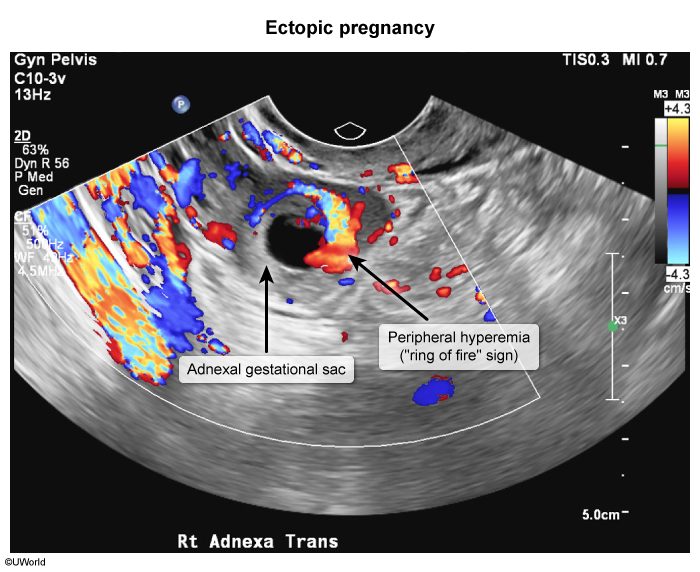
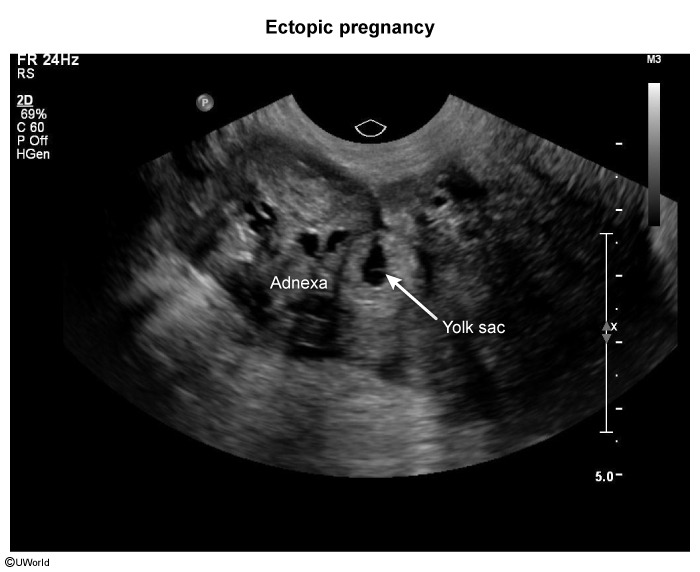
Pregnancy of Unknown Location (PUL): When β-hCG is positive but neither intrauterine nor definitive adnexal pregnancy is visualized on TVUS, serial β-hCG and repeat ultrasound (typically within 48 hours) are required to resolve the diagnosis. Rising β-hCG suggests viable intrauterine pregnancy (may not yet be visible); plateauing or falling suggests ectopic pregnancy, miscarriage, or non-viable intrauterine pregnancy.
Other Investigations
- Full Blood Count (FBC): Assess hemoglobin/hematocrit for evidence of anemia due to blood loss; elevated WBC may reflect peritoneal irritation or infection
- Blood type and Rh status: Essential prior to any surgery or methotrexate therapy; Rh-negative women require anti-D prophylaxis
- Baseline renal and liver function: Mandatory before methotrexate administration (methotrexate is hepatotoxic and renally cleared)
- Coagulation profile: Consider if massive hemorrhage is suspected
Definitive Diagnosis: Diagnostic laparoscopy (or laparotomy if hemodynamically unstable) is the gold standard when clinical and ultrasound findings are inconclusive or when a hemodynamically unstable patient requires immediate surgical assessment.
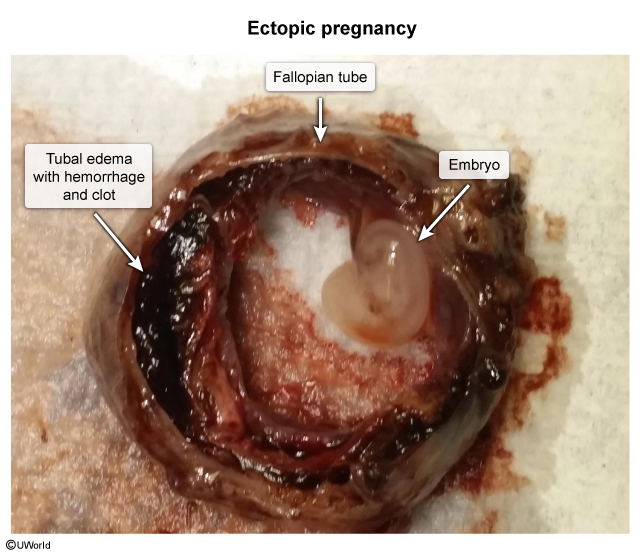
Management Approaches
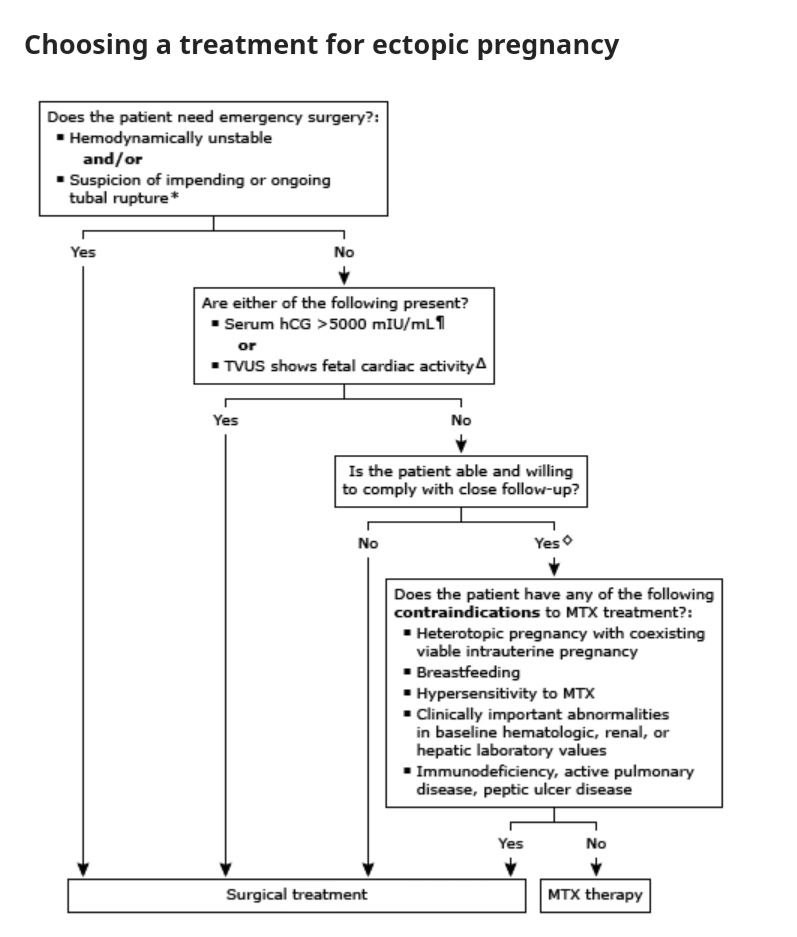
Management Principle: Treatment of ectopic pregnancy depends on hemodynamic stability, β-hCG level, ultrasound findings (mass size, presence/absence of fetal cardiac activity), patient fertility desires, and access to follow-up care.
The goal is to resolve the ectopic pregnancy with the least morbidity while preserving tubal function and fertility when possible.
| Ectopic Pregnancy Management: Expectant vs. Medical vs. Surgical | |||
|---|---|---|---|
| Factor | Expectant Management | Medical Management (Methotrexate) | Surgical Management |
| Patient Status | Hemodynamically stable, minimal symptoms | Hemodynamically stable, reliable follow-up | Unstable, ruptured, or failed medical therapy |
| β-hCG Level | Low and falling (<1500) | <5000 mIU/mL (typically) | >5000 or rapid rise |
| Ultrasound Findings | Small unruptured mass, no fetal heart | No fetal cardiac activity, mass <3.5 cm | Any; ruptured = surgical emergency |
| Procedure | None; serial β-hCG every 48 hours | Single IM dose of methotrexate; monitor β-hCG ≥15% decline by day 4–7 | Salpingectomy (standard) or salpingotomy (fertility-sparing); laparoscopy if stable, laparotomy if unstable |
| Access to Care | Must have urgent access to emergency services | Must have reliable follow-up capability | Immediate availability for surgery |
| Success Rate / Outcome | Resolves spontaneously in selected cases; risk of rupture | ~90% success; ~10% require repeat MTX or surgery | ~100% effective; salpingotomy requires β-hCG follow-up to exclude persistent trophoblast |
| Fertility Implications | Tube may remain patent if unruptured | Tube preserved; future fertility often maintained | Salpingectomy: reduced fertility if contralateral tube diseased; salpingotomy: allows future fertility but requires monitoring |
Medical Management: Methotrexate (MTX)
Mechanism: Methotrexate is a folate antagonist that inhibits dihydrofolate reductase, blocking DNA synthesis and cell division. Trophoblastic tissue is highly mitotic and sensitive to MTX, resulting in cessation of growth and eventual resorption or rupture of the ectopic pregnancy.
Regimen: Single intramuscular (IM) injection of methotrexate, typically 50 mg/m² body surface area (or fixed 50 mg dose). Some centers use repeated-dose protocols (days 0, 2, 4, 6) for higher hCG levels, but single-dose is standard in most guidelines.
Indications for Medical Management:
- Hemodynamically stable, with no signs of rupture
- Unruptured ectopic pregnancy confirmed on TVUS
- No fetal cardiac activity on ultrasound
- Ectopic mass <3.5–4 cm in diameter
- β-hCG typically <5000 mIU/mL (higher levels associated with lower success rates)
- Normal baseline renal and hepatic function
- Reliable patient able to attend follow-up appointments
- Patient not breastfeeding
Post-MTX Monitoring:
- Serum β-hCG on day 4 and day 7: β-hCG should decline by ≥15% between day 4 and day 7; if inadequate decline, repeat MTX dose or surgical intervention is needed
- Weekly β-hCG until <5 mIU/mL: Ensures complete trophoblastic resolution and excludes persistent ectopic pregnancy
- Symptom monitoring: Return precautions for severe pain, shoulder-tip pain, syncope, or heavy bleeding (rupture)
| Methotrexate Contraindications – موانع استخدام ميثوتركسيت | |
|
RUPTURE RULES MTX OUT: R – Rupture (hemodynamic instability) If ANY of these are present, proceed directly to surgical management. |
جملة تذكرية |
Surgical Management
Indications:
- Hemodynamic instability or rupture (immediate surgical emergency)
- Failed medical therapy (inadequate β-hCG decline on MTX)
- Ectopic pregnancy >3.5–4 cm or with visible fetal cardiac activity
- β-hCG >5000 mIU/mL
- Patient unable to comply with follow-up
- Suspicion of rupture on clinical grounds (shoulder-tip pain, peritonitis, shock)
Surgical Procedures:
- Salpingectomy: Removal of the affected fallopian tube. This is the standard approach, especially when the contralateral tube is diseased or damaged. It eliminates the risk of persistent ectopic pregnancy and recurrent ectopic pregnancy in the same tube.
- Salpingotomy: Linear incision along the tubal wall to remove the ectopic pregnancy while preserving the tube. This is a fertility-sparing option for patients with a single tube or those strongly desiring to avoid further surgery. However, it carries a 5–15% risk of persistent trophoblast and requires serial β-hCG monitoring for several weeks post-procedure.
Approach (Minimally Invasive vs. Open):
- Laparoscopy: Preferred in hemodynamically stable patients. Allows visualization, diagnosis confirmation, and treatment with minimal trauma.
- Laparotomy: Reserved for hemodynamically unstable patients or massive hemorrhage where rapid access and blood transfusion capacity are needed. Also chosen when laparoscopy is contraindicated or inadequate visualization is anticipated.
Anti-D Prophylaxis: All Rh-negative (RhD-negative) women undergoing surgical or medical management of ectopic pregnancy should receive anti-D immunoglobulin to prevent alloimmunization. Standard dose is 500 IU per mL of fetal red cells (typically 1500 IU or 300 μg for first-trimester ectopic pregnancy).
Complications & Prognosis
Complications
Untreated Ectopic Pregnancy:
- Tubal rupture → massive hemoperitoneum → hypovolemic shock → maternal death (most common preventable cause of first-trimester maternal death)
Treatment-Related Complications:
- Methotrexate: Hepatotoxicity, myelosuppression (bone marrow toxicity), teratogenesis (absolute contraindication in ongoing viable pregnancy)
- Surgery: Bleeding, infection, iatrogenic organ damage, adhesion formation, increased risk of recurrent ectopic pregnancy in remaining/repaired tube
Persistent Ectopic Pregnancy: Continuation of trophoblastic growth after medical or surgical therapy; occurs in ~5% after salpingotomy; detected by post-procedure β-hCG elevation or plateau. Managed by repeat MTX or surgery.
Prognosis
- Maternal mortality: Rare in high-resource settings (~0.1% of ectopic pregnancies) but remains leading cause of first-trimester maternal death globally
- Recurrence risk: 10–15%, depending on underlying tubal pathology; higher if both tubes damaged
- Fertility outcomes: Best if contralateral tube is healthy; salpingectomy reduces fertility if contralateral tube is diseased; salpingotomy allows future conception but slightly higher ectopic recurrence
- Subsequent intrauterine pregnancy: Possible after appropriate management; counsel on early ultrasound confirmation of intrauterine location in next pregnancy
Key Points for Exams – نقاط مهمة للامتحانات
High-Yield Exam Facts
Basics:
- Implantation outside the uterine cavity; 95% in the fallopian tube (ampulla most common)
- Leading cause of first-trimester maternal death
Key risk factors:
- Previous ectopic, PID, tubal surgery, IVF
- Pregnancy despite IUD or POP = higher ectopic risk
Classic presentation (APB):
- Amenorrhoea + unilateral Abdominal pain + vaginal Bleeding
- Shoulder-tip pain = hemoperitoneum → suspect rupture
- Rupture → sudden severe pain + shock (tachycardia, hypotension)
Diagnosis:
- Any reproductive-age woman with pain/bleeding → pregnancy test
- β-hCG: normal IUP doubles in 48h; ectopic = slow rise/plateau
- β-hCG >1500–2000 with empty uterus on TVUS = ectopic until proven otherwise
- TVUS: empty uterus, adnexal mass, "tubal ring", "ring of fire"
Management (driven by stability):
- Unstable / ruptured → immediate surgery
- Stable, low β-hCG, small mass, no fetal heart → Methotrexate (single dose)
- β-hCG >5000, fetal cardiac activity, or failed MTX → surgery
Must-know pearls:
- MTX contraindications: rupture/instability, β-hCG >5000, fetal heart, renal/hepatic disease, breastfeeding
- Salpingectomy = standard; salpingotomy = fertility-sparing (needs β-hCG follow-up)
- Give anti-D to all Rh-negative women
Exam focus: classic triad + risk factors, β-hCG trend & discriminatory threshold, TVUS signs, and hemodynamic stability as the key driver of management.
احصل على التجربة الكاملة
اشترك للوصول لفيديوهات الشرح التفصيلي والبطاقات التعليمية التفاعلية وأسئلة الممارسة مع تتبع التقدم.