شرح المدرسين

Summary
Kawasaki disease (KD) is an acute, self-limited medium-vessel vasculitis of unknown etiology that predominantly affects children under 5 years of age. It is the leading cause of acquired heart disease in children in developed countries due to its propensity to cause coronary artery aneurysms. This lesson covers the epidemiology, pathogenesis, clinical features, diagnostic criteria, management, and complications of KD — all high-yield topics for USMLE Step 1 and Step 2 CK.
Overview & Definition
Kawasaki disease (KD), also called mucocutaneous lymph node syndrome, is an acute febrile, self-limited medium-vessel vasculitis of childhood. It is a multisystem disorder that can involve the heart, skin, mucous membranes, GI tract, central nervous system, joints, and peripheral vascular bed.
The cause is unknown; KD probably represents an autoimmune inflammatory response to a currently undefined infectious trigger in a genetically predisposed child. Its clinical importance lies in its cardiac sequelae — KD is the most common cause of acquired heart disease in children, driven by its predilection for the coronary arteries.
Epidemiology & Pathogenesis
KD is a disease of early childhood. Approximately 85% of cases occur between 6 months and 5 years of age, and it is uncommon in infants younger than 6 months. Males are affected slightly more often than females. Incidence is highest in children of East Asian ethnicity, although KD can occur in any ethnic group.
Critically, it is the most common cause of acquired heart disease in children, having overtaken acute rheumatic fever in developed countries.
Pathologically, KD is a medium-vessel vasculitis. The inflammatory process is thought to be an aberrant immune response to an as-yet unidentified infectious agent, producing widespread vascular inflammation with a striking predilection for the coronary arteries — the substrate for the aneurysms that define the disease's morbidity.
Clinical Features & Diagnostic Criteria
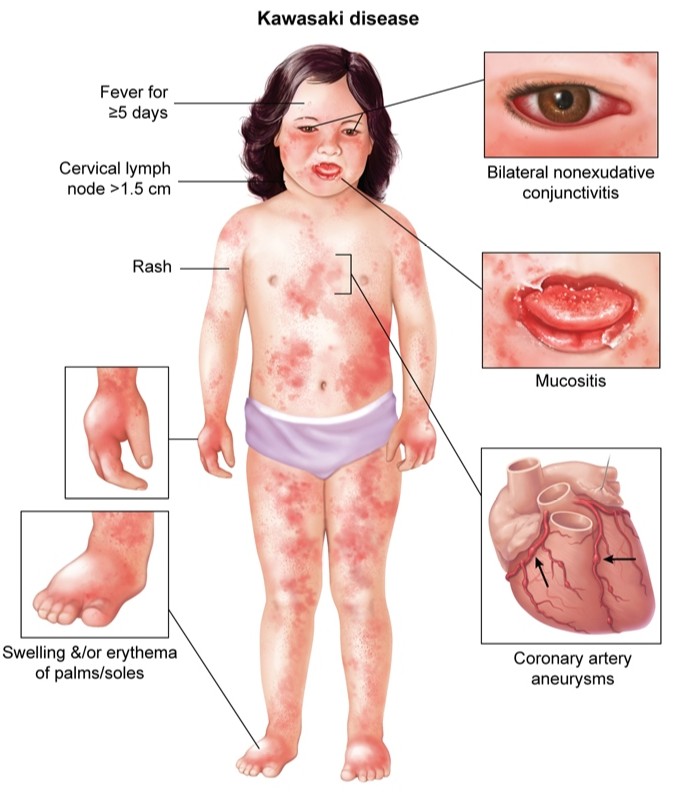
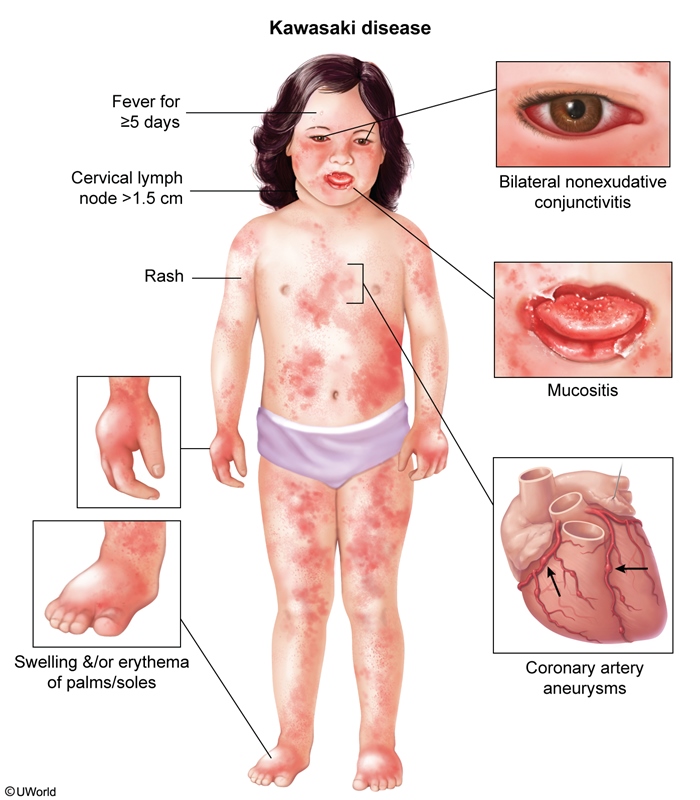
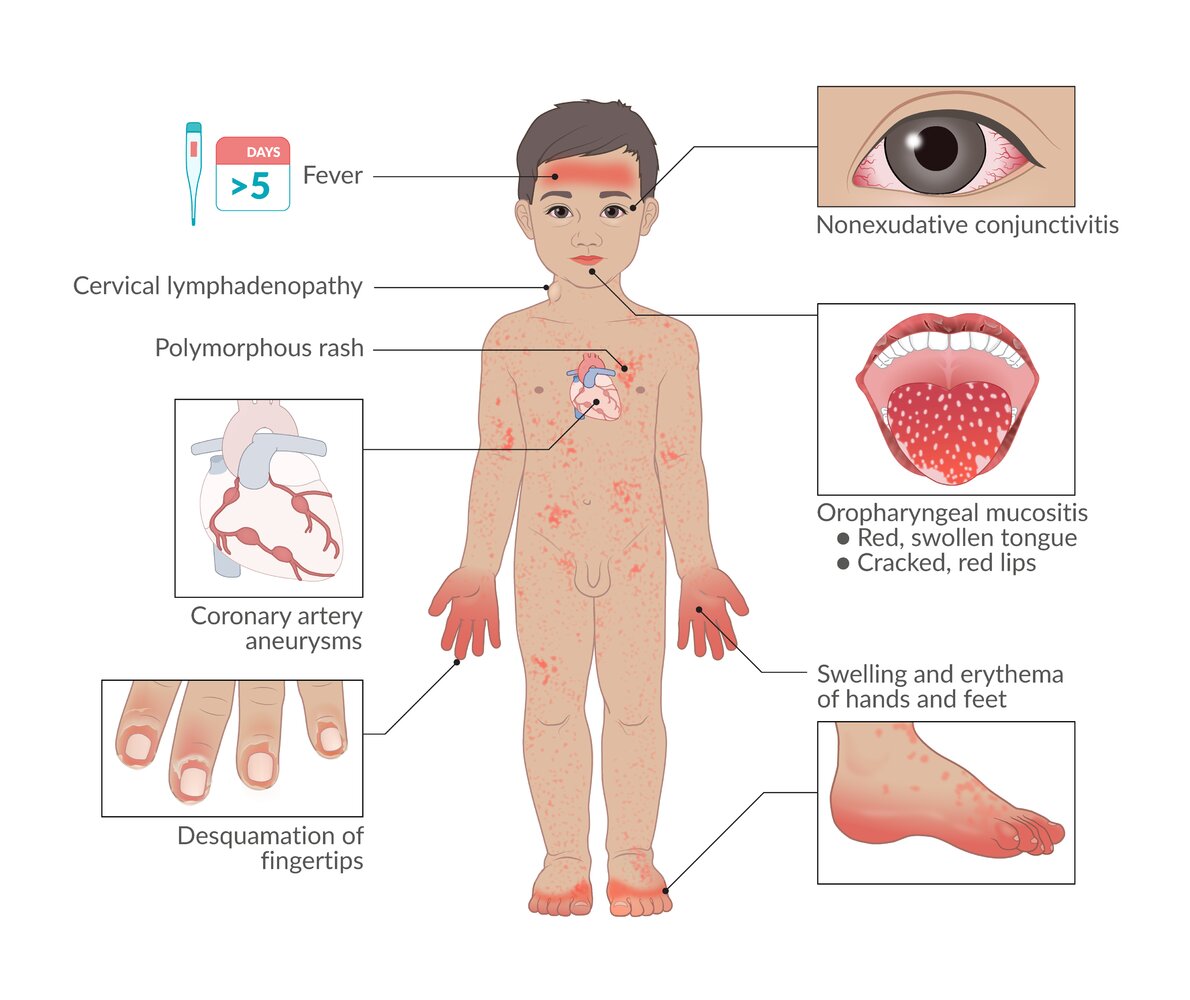
The diagnosis of KD is clinical. It requires fever ≥5 days (temperature typically >38.9 °C / 102 °F — the most consistent manifestation) plus ≥4 of the following 5 criteria:
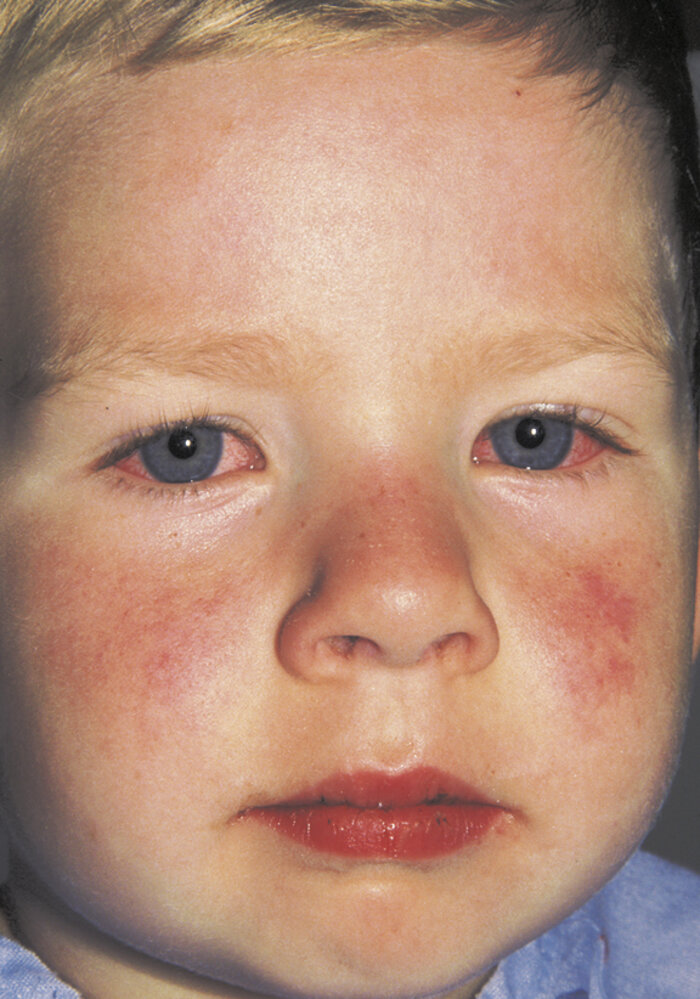
- Conjunctivitis — bilateral, nonexudative (no drainage).
- Mucositis — injected/fissured, cracked and peeling lips, pharyngeal erythema, and strawberry tongue.
- Cervical lymphadenopathy — usually unilateral, ≥1.5 cm.
- Polymorphous rash — macular or maculopapular erythematous; perineal erythema and desquamation; any rash except vesicles and bullae.
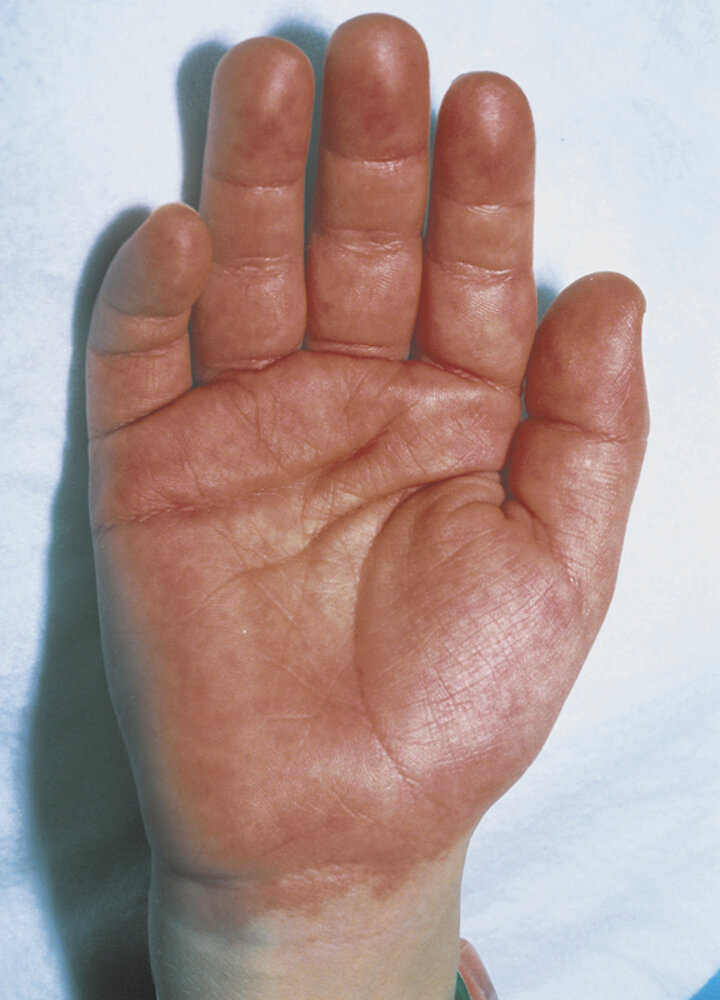
- Extremity changes — erythema and edema of the hands and feet, with later periungual desquamation.
The illness must not be explainable by any other disease process.
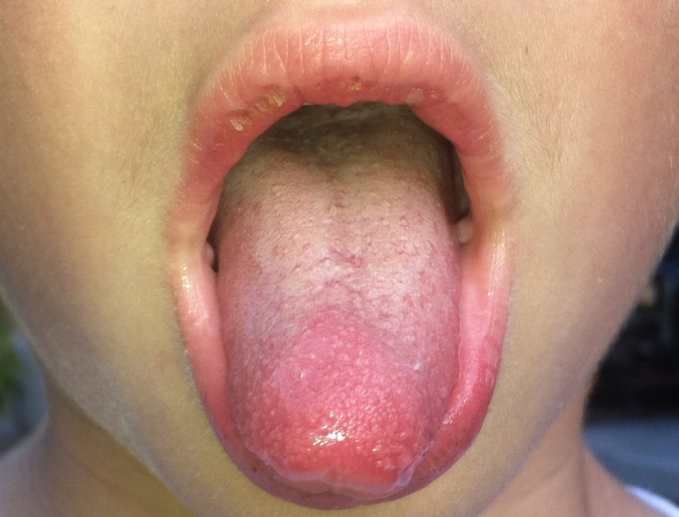
For rapid recall of the criteria, use the classic mnemonic:
| CRASH and burn — the 5 criteria + fever | |
|
جملة تذكرية |
The extremity changes evolve over the disease course — from early erythema and edema of the palms and soles to characteristic periungual desquamation.
Supportive laboratory findings (non-diagnostic but useful, especially for incomplete cases):
- Inflammatory markers: ↑ ESR and CRP.
- CBC: ↑ WBC (leukocytosis) and ↑ platelets (thrombocytosis, subacute); ↓ Hb (anemia).
- LFTs: ↑ AST/ALT.
- Urine: sterile pyuria (urethritis).
Associated non-cardiac features that may accompany the core criteria include:
- Urethritis with sterile pyuria
- Aseptic (sterile) meningitis
- Hydrops of the gallbladder
- Sterile arthritis or arthralgias
- Anterior uveitis
Because KD shares mucocutaneous features with several pediatric exanthems, it must be distinguished from them. See the differential of erythematous childhood rashes for the features that separate KD from scarlet fever (also causes strawberry tongue) and measles.
| Atypical / incomplete Kawasaki disease | |
|
Incomplete (atypical) KD can be diagnosed with fewer than 4 criteria — particularly in infants and whenever coronary artery abnormalities are demonstrated on echocardiography. Do not wait for the full picture before treating. Exam trap: A patient with atypical KD can be diagnosed with fewer than 4 criteria if coronary aneurysms are found on echo—do not wait for all symptoms to manifest. |
تذكر |
Clinical Course
Untreated KD evolves through three recognizable phases. The acute phase is dominated by fever and the mucocutaneous criteria; the subacute phase brings periungual desquamation, thrombocytosis, and the peak risk of coronary artery aneurysm formation; and the convalescent phase is a period of gradual clinical and laboratory normalization.
| Clinical Course of Kawasaki Disease | |||
|---|---|---|---|
| Phase I — Acute phase | |||
| Duration | Clinical manifestations | Laboratory findings | Treatment |
| 1–2 weeks | Fever; bilateral nonexudative conjunctivitis; cervical lymphadenopathy; erythema and edema of hands and feet; cracked, peeling lips and strawberry tongue; maculopapular erythematous rash | ↑ ESR, CRP; ↑ WBC; ↑ AST/ALT; sterile pyuria; sterile CSF pleocytosis; ↓ Hb; ↓ serum albumin | IVIG + high-dose aspirin |
| Phase II — Subacute phase | |||
| Duration | Clinical manifestations | Laboratory findings | Treatment |
| Weeks to months | Peeling of nail beds / distal extremities (periungual desquamation); highest risk of coronary artery aneurysm formation | ↓ ESR, CRP; ↑ platelet count (thrombocytosis) | Low-dose aspirin |
| Phase III — Convalescent phase | |||
| Duration | Clinical manifestations | Laboratory findings | Treatment |
| Weeks to years | Gradual resolution of coronary aneurysms; clinical recovery | Normalization of all laboratory values | Low-dose aspirin continued until aneurysms resolve |
Management & Complications
Management
Treatment combines anti-inflammatory therapy with serial echocardiographic assessment for coronary artery disease.
- IV immunoglobulin (IVIG) is the primary therapy. It improves the fever and inflammatory response and decreases the risk of coronary aneurysms; it is most effective when given within 10 days of fever onset.
- Aspirin — high (anti-inflammatory) dose initially, then reduced to low (antiplatelet) dose.
- Corticosteroids — useful in some patients unresponsive to IVIG.
- TNF inhibitors — may have a role in IVIG-refractory patients.
| Aspirin dosing in Kawasaki disease | ||
|---|---|---|
| Feature | High-dose (anti-inflammatory) | Low-dose (antiplatelet) |
| Dose | 80–100 mg/kg/day | 3–5 mg/kg/day |
| Purpose | Anti-inflammatory during the acute febrile phase | Antiplatelet — prevent thrombosis within aneurysms |
| Timing | Started with IVIG in the acute phase | After defervescence; continue 6–8 weeks if no aneurysm |
| If aneurysm present | — | Continued long-term (add warfarin for giant aneurysms) |
| Clinical Note | |
|
High-dose aspirin is given as anti-inflammatory therapy initially, then reduced to low-dose for antiplatelet effect to prevent thrombosis within aneurysms. |
Note |
Long-term care depends on the degree of coronary artery involvement. Patients with persisting aneurysms are maintained on aspirin (or warfarin for giant aneurysms) and followed regularly by cardiology with echocardiography. The full Kawasaki disease diagnostic criteria, labs, and treatment overview consolidates the criteria, expected laboratory findings, and the IVIG + aspirin regimen in one reference.
Cardiac involvement & complications
Cardiac disease is the defining morbidity of KD. Patients may develop carditis, pericarditis, or valvulitis, and ventricular dysfunction can occur.
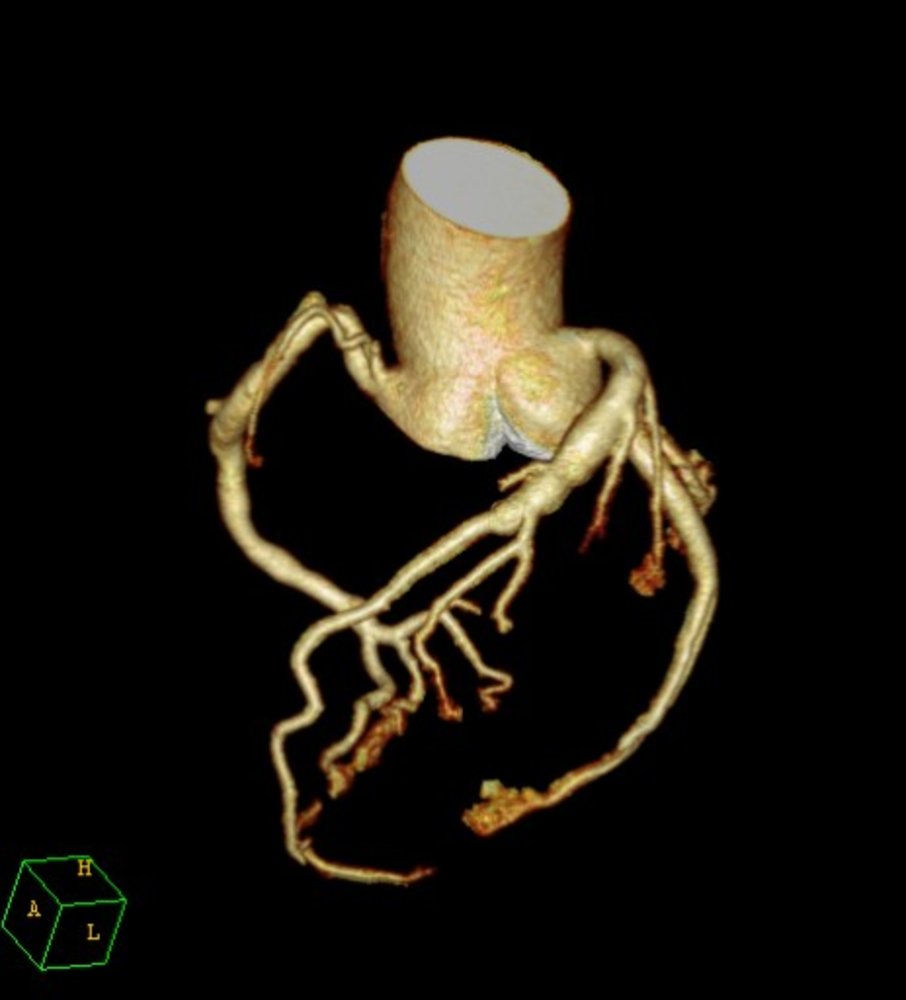
- Coronary artery aneurysms are the pathognomonic and most concerning manifestation, developing in 20–25% of inadequately treated cases.
- They typically appear around days 7–14 (subacute phase), are often bilateral, and favor the proximal vessels.
- About 50% of aneurysms resolve over time.
Echocardiography is the primary diagnostic modality for the coronary arteries. It is performed at the time of diagnosis (or suspected diagnosis) and repeated at 2–8 weeks to look for aneurysms.
Prognosis
If coronary artery disease is absent, mortality is rare and recurrence is uncommon. Even when coronary disease is present, mortality is <1%, and aneurysms — especially those <8 mm — commonly regress over time. Long-term prognosis is unclear, and there may be an increased risk of atherosclerotic heart disease in adulthood.
Key Points for Exams
| Key Points for Exams – نقاط مهمة للامتحانات | |
|
ملاحظة |
Two exam-favorite decision points worth over-learning: once KD is diagnosed, the next best step is a baseline echocardiogram; and in a septic-looking infant <6 months with prolonged fever and few classic signs, keep incomplete KD high on the differential — this age group carries the greatest risk of coronary complications.
احصل على التجربة الكاملة
اشترك للوصول لفيديوهات الشرح التفصيلي والبطاقات التعليمية التفاعلية وأسئلة الممارسة مع تتبع التقدم.