شرح المدرسين

SUMMARY
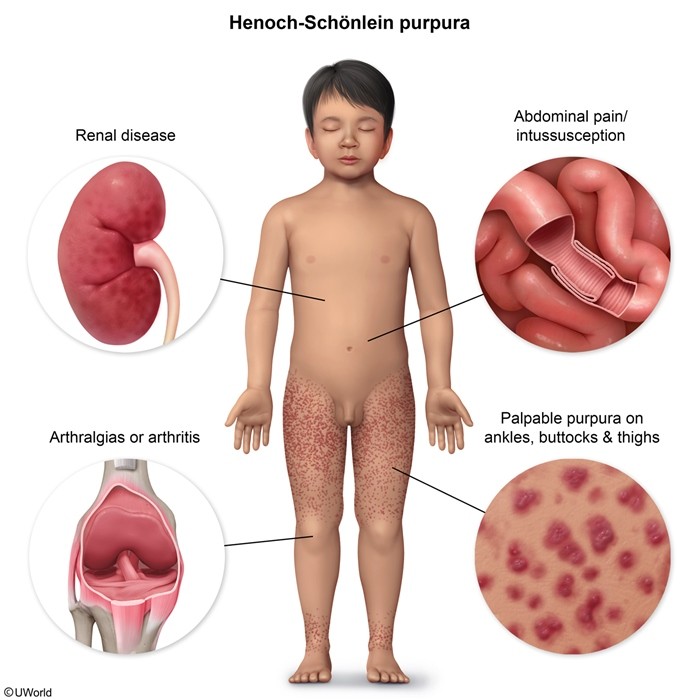
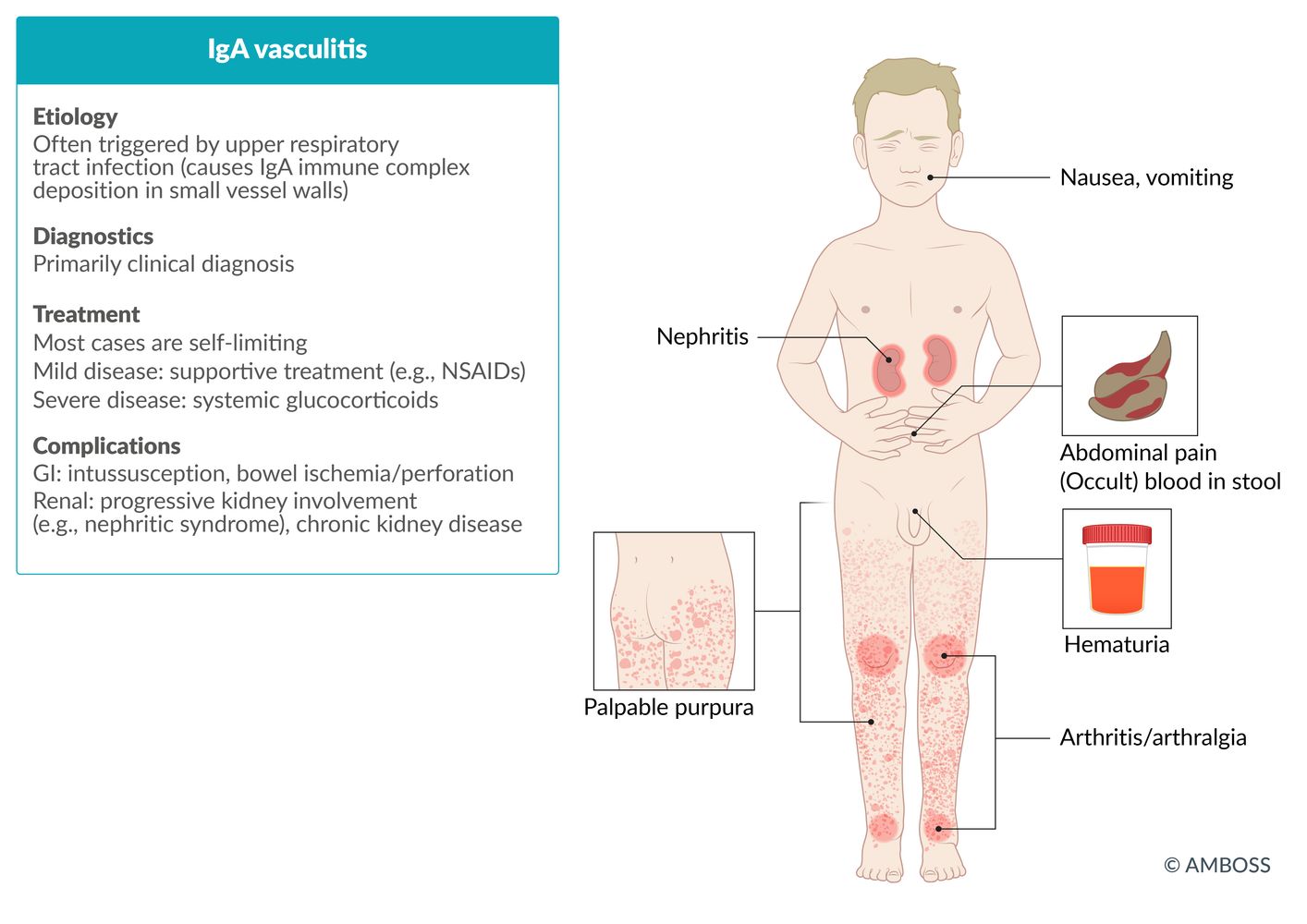
Henoch–Schönlein purpura (HSP), now formally termed IgA vasculitis (IgAV), is a systemic small-vessel vasculitis driven by IgA immune-complex deposition in vessel walls. It is the most common vasculitis of childhood and classically presents as a tetrad of Arthritis, Abdominal pain, Renal disease, and Palpable Purpura (mnemonic AARPP).
Overview
Henoch–Schönlein purpura (HSP) — reclassified as IgA vasculitis (IgAV) — is an acute, usually self-limiting immune-complex small-vessel vasculitis. Deposition of IgA1-containing immune complexes within the walls of arterioles, capillaries, and venules triggers an inflammatory reaction that produces the disease's hallmark cutaneous, joint, gastrointestinal, and renal manifestations.
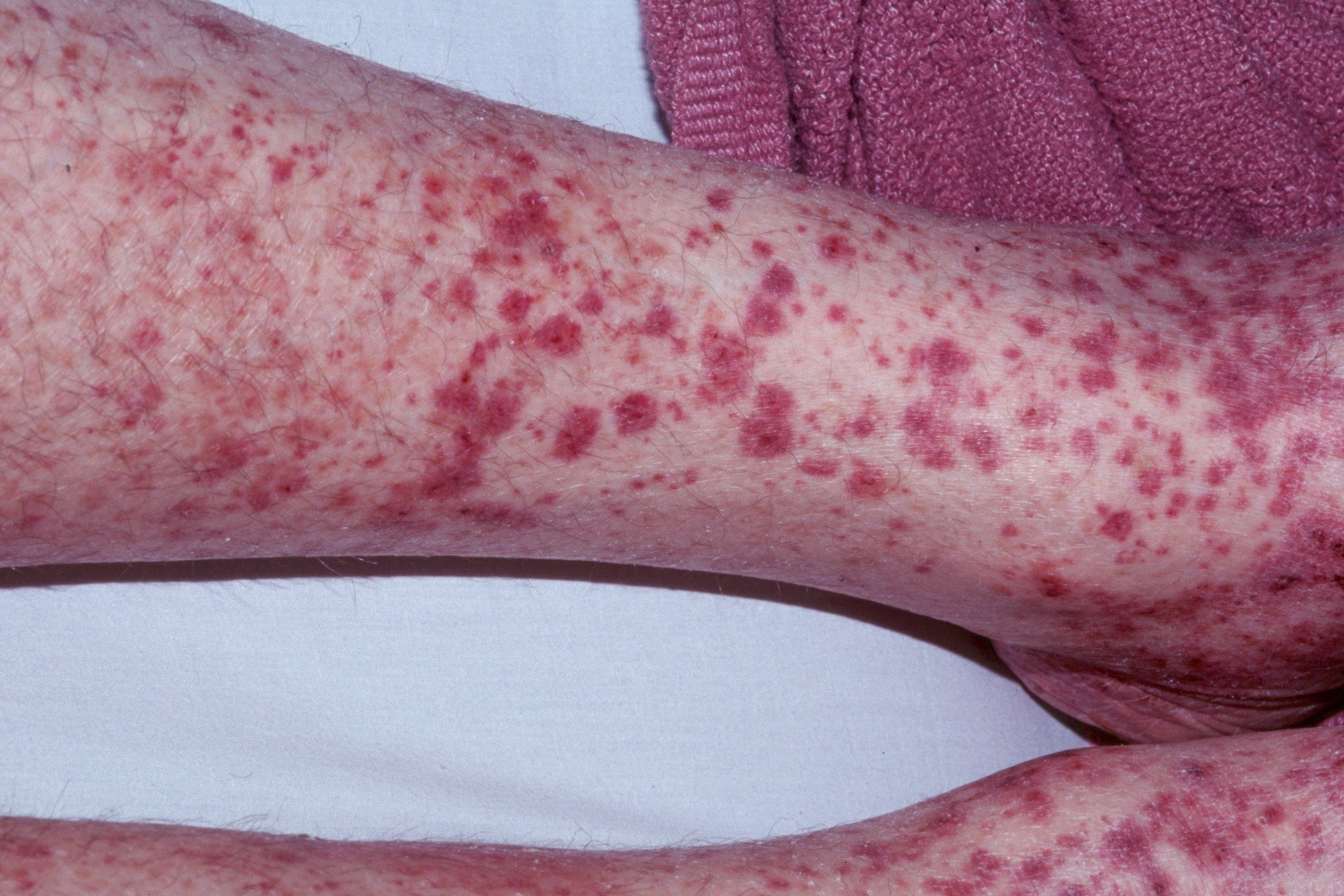
It is the most common vasculitis of childhood and most often follows an upper respiratory infection. The classic presentation is a tetrad of palpable purpura (dependent, over the buttocks and lower limbs), arthritis/arthralgia, abdominal pain, and renal involvement. Purpura is required for the clinical diagnosis, but the other features may appear before, with, or after the rash.
The overall course is favorable: most children recover fully within weeks, often without specific treatment. Long-term prognosis is determined chiefly by renal disease, which can rarely progress to chronic kidney injury, so follow-up focuses on monitoring the kidneys.
Epidemiology
- HSP is the most common form of vasculitis in childhood.
- Mean age at diagnosis is ~4 years, and >75% of affected patients are <7 years. The typical range is 3–15 years, but IgAV is also seen in older adolescents and (less commonly) adults.
- Male predominance — boys are affected roughly twice as often as girls (2:1).
- Seasonal clustering in the fall, winter, and spring, consistent with a post-infectious trigger.
Etiology & Pathogenesis
Etiology
An upper respiratory tract infection or gastroenteritis precedes HSP in ~50% of patients. The most frequently tested triggers are:
- Bacteria — Streptococcus pyogenes (group A strep) is the classic association.
- Viruses — common URTI / gastroenteritis viruses (e.g., Epstein–Barr virus).
- Drugs — penicillin (and other β-lactams).
Pathogenesis
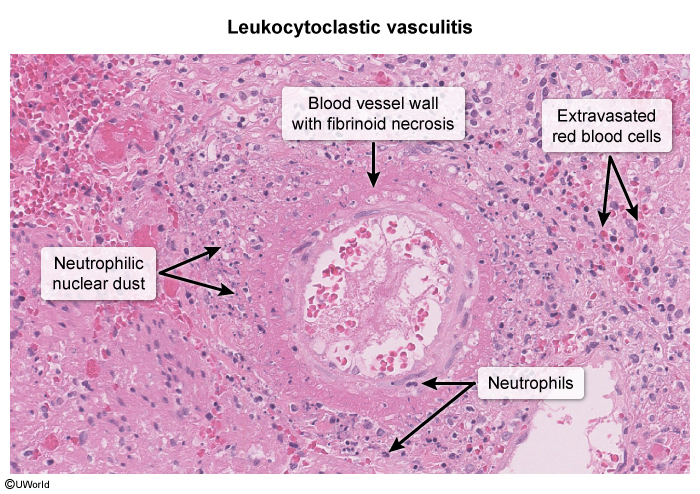
HSP is an IgA-mediated leukocytoclastic vasculitis. Circulating IgA immune complexes deposit in small-vessel walls, triggering neutrophil recruitment and complement activation. Immunofluorescence shows predominant IgA deposition with smaller amounts of IgG and C3. On light microscopy the vessels show fibrinoid necrosis with neutrophilic breakdown (leukocytoclasis) — small vessels damaged by perivascular neutrophil accumulation. The renal lesion is mesangial IgA immune-complex deposition, histologically identical to IgA nephropathy (Berger disease).
Clinical Features
After the infectious prodrome, distinctive skin, joint, and GI manifestations appear; renal involvement may follow. Skin disease is universal, whereas the other organ systems are variable. Joint or abdominal symptoms may even precede the rash by days to weeks, a common diagnostic pitfall.
| Clinical features of HSP by organ system | |
|---|---|
| System (frequency) | Key clinical features |
| Skin (100%) |
|
| Joints (50–80%) |
|
| GI (~20%) |
|
| Renal (30–50%) |
|
| Risk factors for permanent renal damage in children | |
|
تذكر |
| Important – فكرة سؤال | |
|
In adolescent boys, HSP can cause acute scrotal pain and swelling that mimics testicular torsion. Suspect IgA vasculitis — not torsion or an STI — when scrotal involvement accompanies palpable purpura with a normal platelet count. |
تذكر |
| Clinical Note | |
|
Intussusception is the most common GI complication and must be considered if a patient presents with severe colicky abdominal pain. |
ملاحظة |
Diagnosis
Diagnosis is clinical, based on history and the characteristic examination. Routine laboratory tests are neither specific nor diagnostic; they serve mainly to confirm normal platelets and to screen for renal involvement. The supporting criterion is palpable purpura plus ≥2 of: diffuse abdominal pain, arthritis/arthralgia, renal involvement (hematuria/proteinuria), or a biopsy showing IgA deposition.
| Diagnostic workup in HSP | |
|---|---|
| Test | Typical finding |
| Platelets & coagulation | Normal — a nonthrombocytopenic purpura (the key differentiator from ITP). |
| Urinalysis / renal function | Hematuria ± RBC casts ± proteinuria; creatinine normal to increased. |
| ESR & serum IgA | ESR increased; serum IgA elevated in ~50% of patients. |
| Immune complexes | Circulating IgA immune complexes in serum; IgA deposition in skin and glomeruli. |
| Skin biopsy | Leukocytoclastic vasculitis with IgA deposition; reserved for atypical or adult presentations. |
When biopsy is performed (atypical or adult cases), skin shows leukocytoclastic vasculitis and renal immunofluorescence demonstrates mesangial IgA deposits — the same pattern seen in IgA nephropathy.
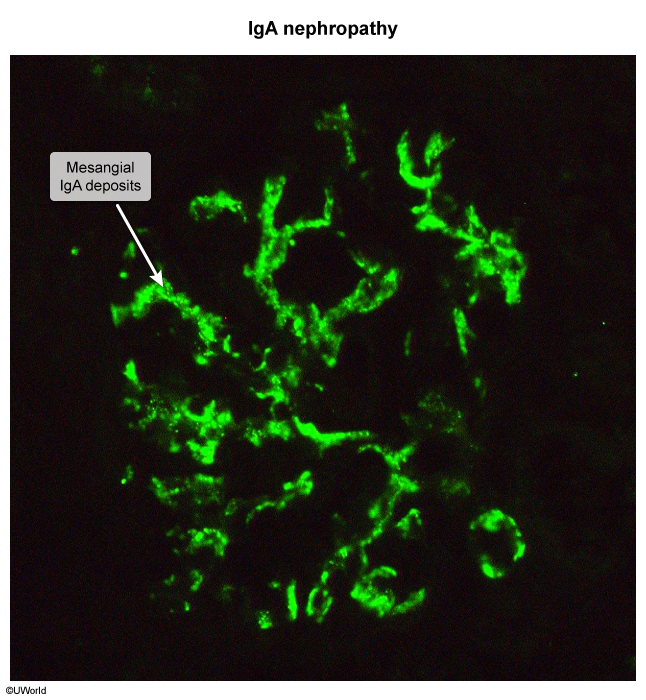
Because platelets are normal despite florid purpura, the rash is a nonthrombocytopenic purpura — this separates HSP from immune thrombocytopenic purpura (ITP). See the immune thrombocytopenic purpura (ITP) overview for the contrasting mucocutaneous bleeding and exclusion-based diagnostic picture. For a consolidated reference, the IgA vasculitis clinical and diagnostic overview summarizes pathogenesis, manifestations, and criteria in one place.
| Exam Trap - فخ امتحاني | |
|
Examiners always emphasize that the platelet count is normal in order to differentiate HSP from thrombocytopenic purpura such as ITP. |
تذكر |
| Important – فكرة سؤال | |
|
Classic pediatric HSP — palpable purpura plus ≥2 of {arthralgia, abdominal pain, renal involvement} with normal platelets — needs no additional testing to confirm. Skin biopsy is reserved for atypical or adult presentations. |
تذكر |
Management
Management centers on symptom relief and monitoring for complications; most children recover with supportive care alone.
- Supportive care (most patients): adequate hydration, rest, and analgesia. NSAIDs relieve arthralgia (use cautiously with GI bleeding or renal impairment).
- Systemic glucocorticoids: reserved for severe symptoms — disabling abdominal pain, significant GI involvement, or severe arthritis — and generally given to hospitalized patients. Steroids ease GI and joint symptoms but do not alter the overall clinical course or prevent renal disease.
- Renal surveillance: follow with urinalysis and blood pressure every 2 weeks for 1–2 months after presentation, then monthly for at least 6 months.
- Referral: new hematuria, proteinuria, or hypertension should prompt nephrology referral.
| Clinical Note - ملاحظة سريرية | |
|
Steroids ease GI and joint symptoms but do not alter the overall clinical course or prevent renal disease. |
ملاحظة |
Complications, Prognosis & Mnemonics
Complications
- GI: intussusception (most common GI complication), GI hemorrhage, and rarely bowel infarction.
- Renal: the main source of long-term morbidity — ranging from persistent hematuria/proteinuria to nephrotic syndrome, chronic renal insufficiency, and end-stage renal disease (~1% of cases).
| Important – فكرة سؤال | |
HSP-associated intussusception is typically ileoileal (small-bowel–to–small-bowel), unlike the idiopathic ileocolic type of infancy. Edematous, hemorrhagic bowel wall acts as the lead point, so it is often missed on contrast/air enema and is best detected by ultrasound. |
تذكر |
Prognosis
- Generally self-limiting — about 64% recover within 4 weeks.
- Recurs in up to 40% of patients, usually within 6 weeks to 2 years of presentation.
- Long-term morbidity is dependent on the severity of renal disease.
Mnemonics
| AARPP — the HSP clinical tetrad | |
|
جملة تذكرية |
| GO PALE — risk factors for permanent renal damage | |
A child at risk of lasting kidney injury may eventually “go pale” from renal failure:
|
جملة تذكرية |
Key Points for Exams
Key Points for Exams – نقاط مهمة للامتحانات
- HSP = IgA vasculitis, the most common childhood vasculitis; small-vessel, IgA immune-complex mediated; often post-URTI/gastroenteritis (strep, viruses, penicillin).
- Remember the tetrad AARPP: Arthritis, Abdominal pain, Renal disease, Palpable Purpura.
- Palpable purpura on buttocks and lower extremities is present in 100%; it is a nonthrombocytopenic purpura — platelets and coagulation are normal (differentiates from ITP).
- Diagnosis is clinical; classic pediatric cases need no additional testing. Biopsy (leukocytoclastic vasculitis + IgA deposition) is reserved for atypical/adult presentations.
- Intussusception is the most common GI complication and is characteristically ileoileal.
- Scrotal pain/swelling in a boy with purpura and normal platelets suggests HSP — not torsion.
- Renal lesion = mesangial IgA deposition, identical to IgA nephropathy; renal disease determines long-term prognosis (ESRD ~1%).
- Treatment is supportive; glucocorticoids relieve severe GI/joint symptoms but do not alter course or prevent nephritis. Monitor urinalysis + BP for ≥6 months.
- Prognosis: ~64% recover within 4 weeks; recurrence in up to 40%. Predict permanent renal damage with GO PALE.
احصل على التجربة الكاملة
اشترك للوصول لفيديوهات الشرح التفصيلي والبطاقات التعليمية التفاعلية وأسئلة الممارسة مع تتبع التقدم.