شرح المدرسين

summary
سجل دخولك لإضافة ملاحظات خاصة لكل قسم
· اشترك الآن
Introduction
- Growth is an ongoing process, so measuring height, weight, and head circumference at each physician visit is important.
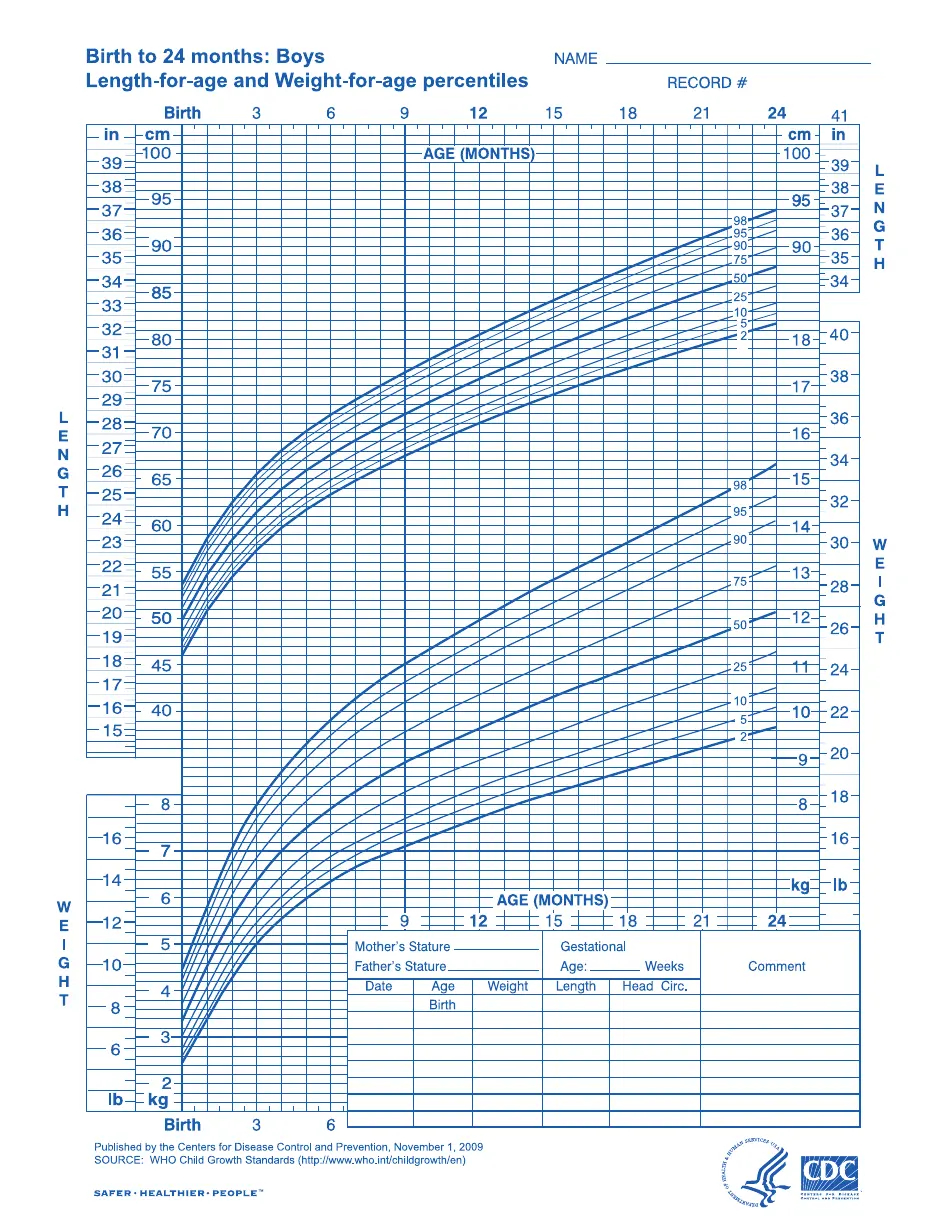
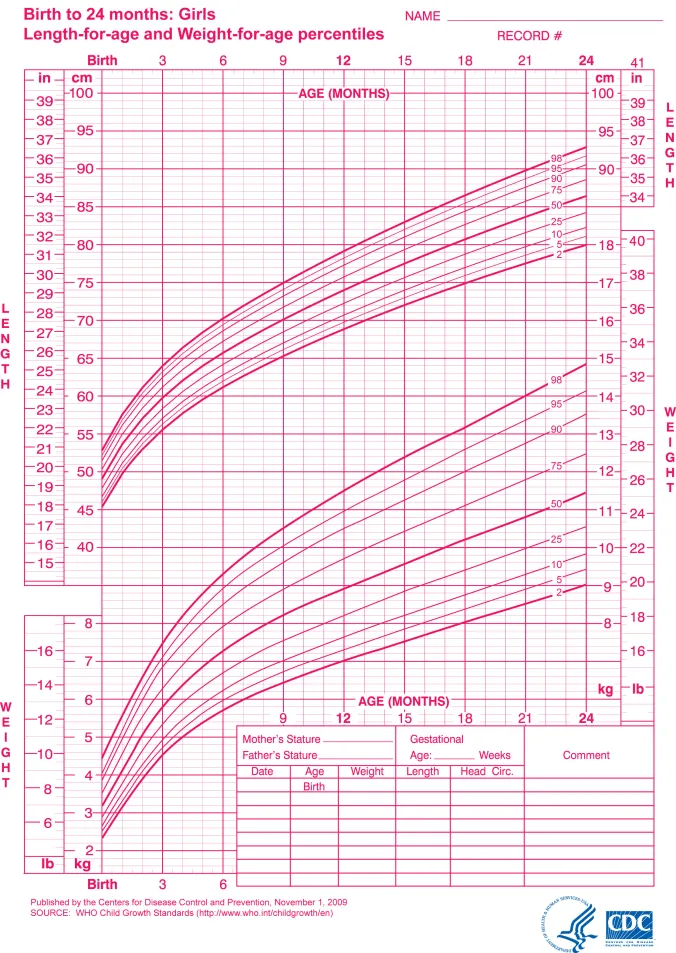
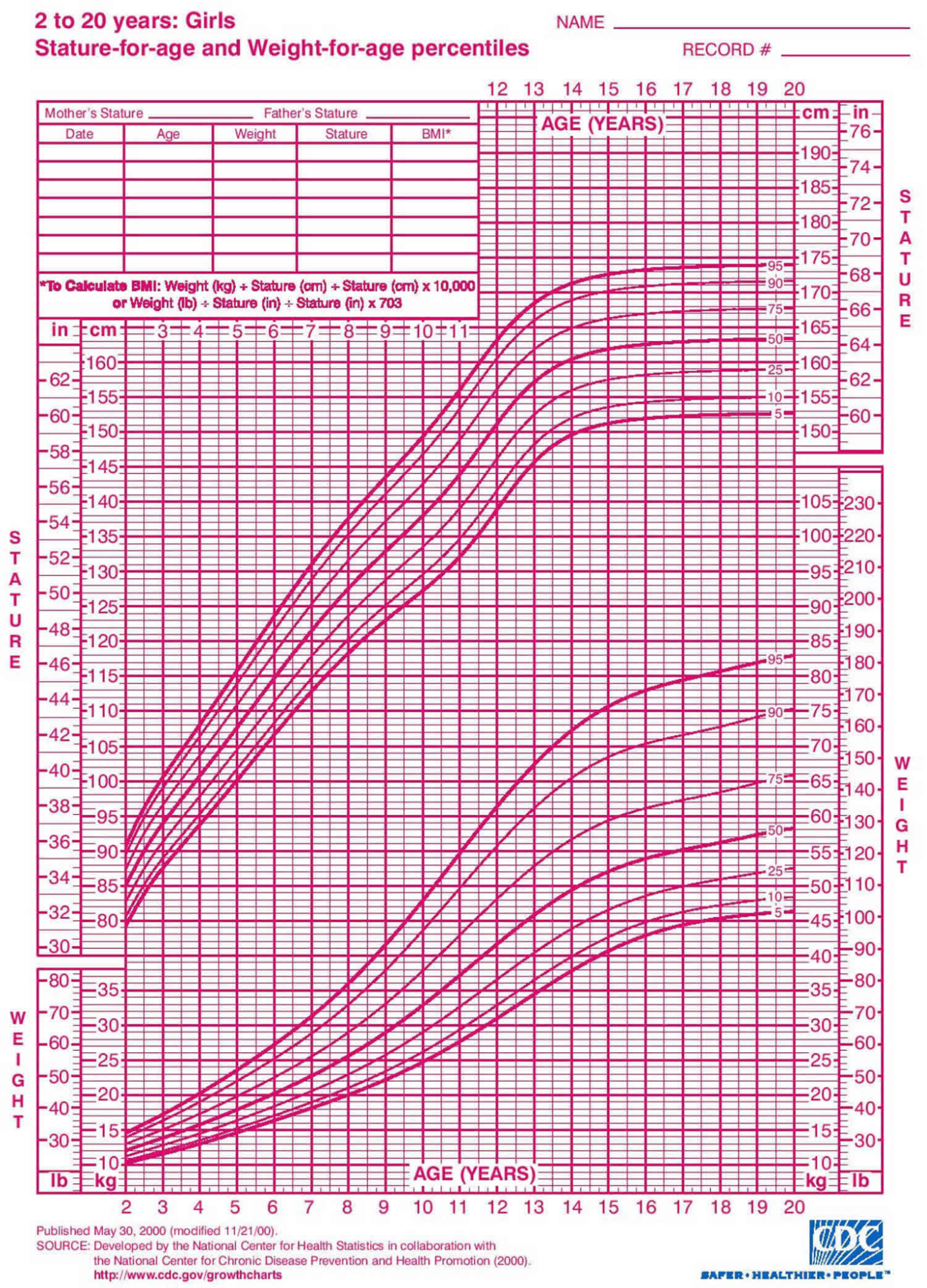
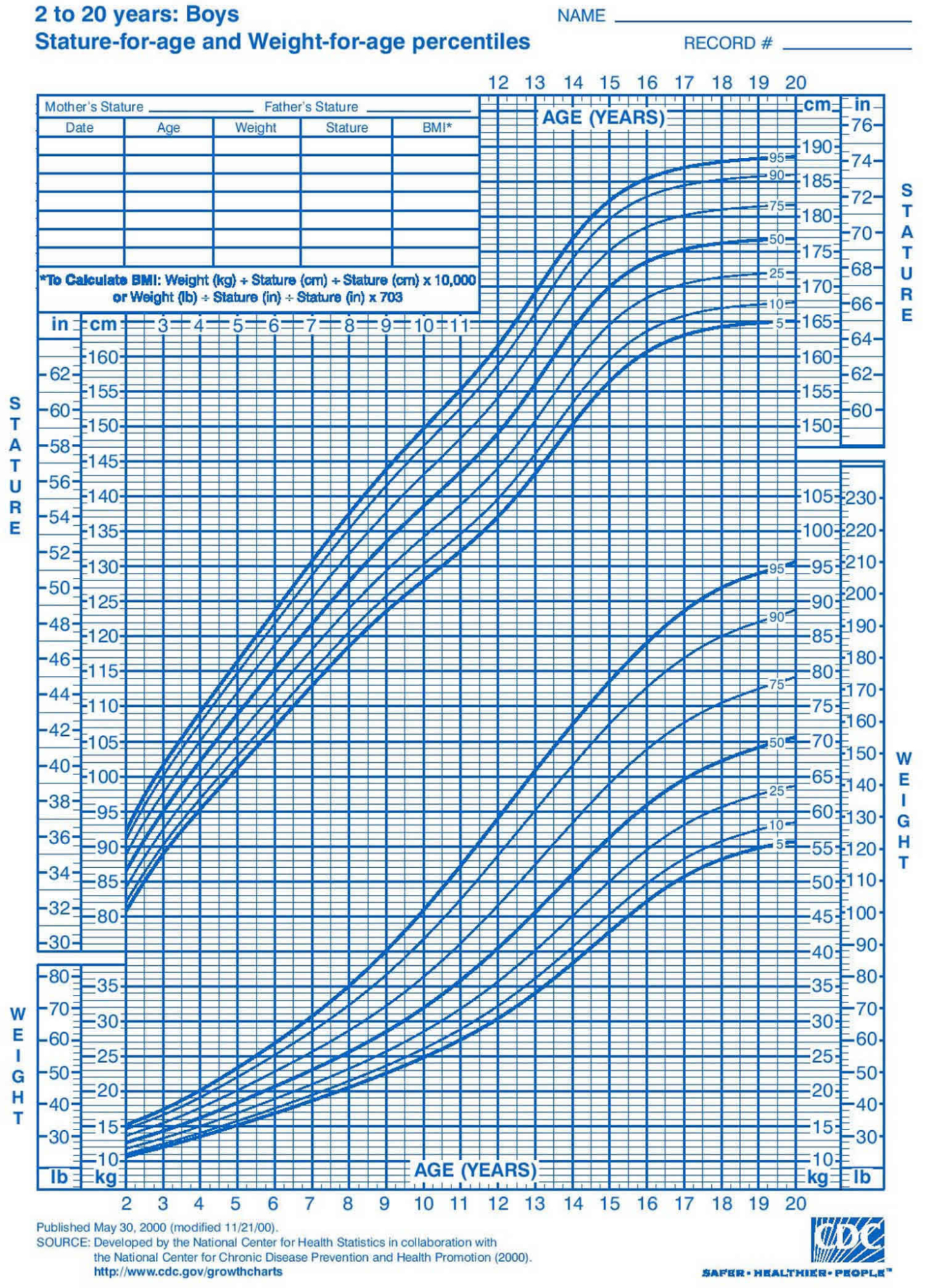
- Growth charts represent a distribution of measurements, such as weight, height, and HC by age, gender,and percentile, based on a population sample.
- Current Centers for Disease Control and Prevention (CDC) recommendations in the U.S. are to use the 2006 World Health Organization (WHO) growth standards for infants and children 0-2 years of age and the 2000 CDC growth charts for children > 2 years of age.
- Specialty growth charts are available for premature infants, those with achondroplasia, and for children with genetic disorders ( Down, Noonan, Williams, and Turner syndromes).
| Note | |
| We continue gestational age correction for Prematurity before using the normal growth charts. Correction for prematurity until: Weight through 24 months of age. Length/height through 40 months of age. Head circumference through 18 months of age. |
ملاحظة |
سجل دخولك لإضافة ملاحظات خاصة لكل قسم
· اشترك الآن
Growth Charts Divisions
- Major divisions or percentile curves are noted at the 3rd, 5th, 10th, 25th, 50th, 75th, 90th, 95th, and 97th percentiles.
- The 50th percentile is the median, and it is also the standard value for age. Thus, 50% of children of that age are expected to plot above the median (high values) and 50% of children of that age are expected to plot below the median(low values).
- Growth during Infancy is influenced by maternal factors (e.g., maternal diabetes, hypertension, tobacco use, diet). After 2 years, height more closely correlates with MPH.
| Note | |
| Do not diagnose a growth problem using a single measurement of a growth point. The key is to evaluate growth curves over time and examine the pattern of growth. |
ملاحظة |
سجل دخولك لإضافة ملاحظات خاصة لكل قسم
· اشترك الآن
Growth Pattern Variations
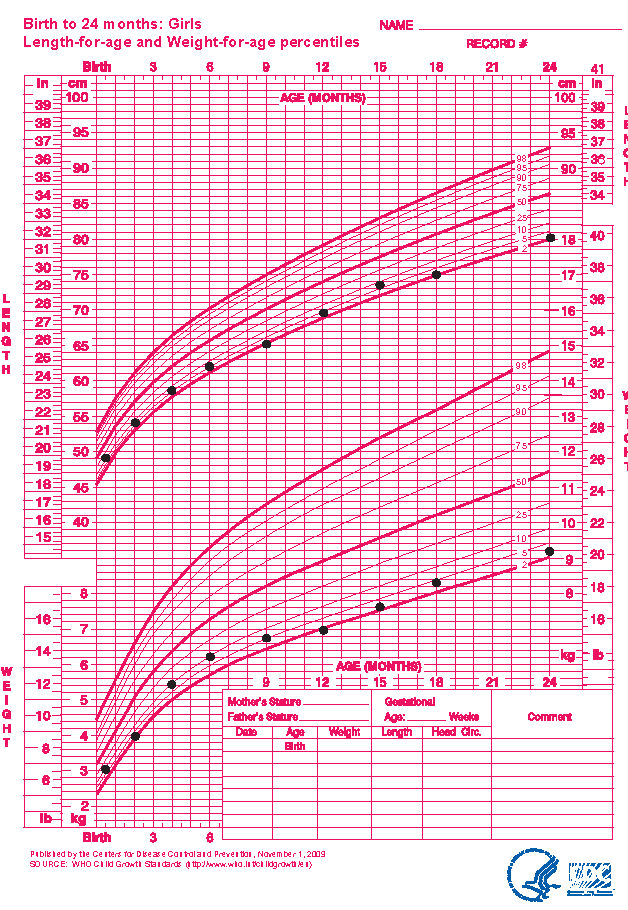
Familial Short Stature
- A child with familial short stature grows parallel to standard curves, at or just below the statistically normal range of heights and weights.
- This is considered a normal variant.
- Weight-for-height and skin-fold thickness are normal
- The bone age (BA) is consistent with the chronological age in genetic short stature, because genetic short stature results from having one or both short parents.
- Boys and girls can be equally affected
- Bone age (BA) = chronological age (CA)
Pathological Short stature
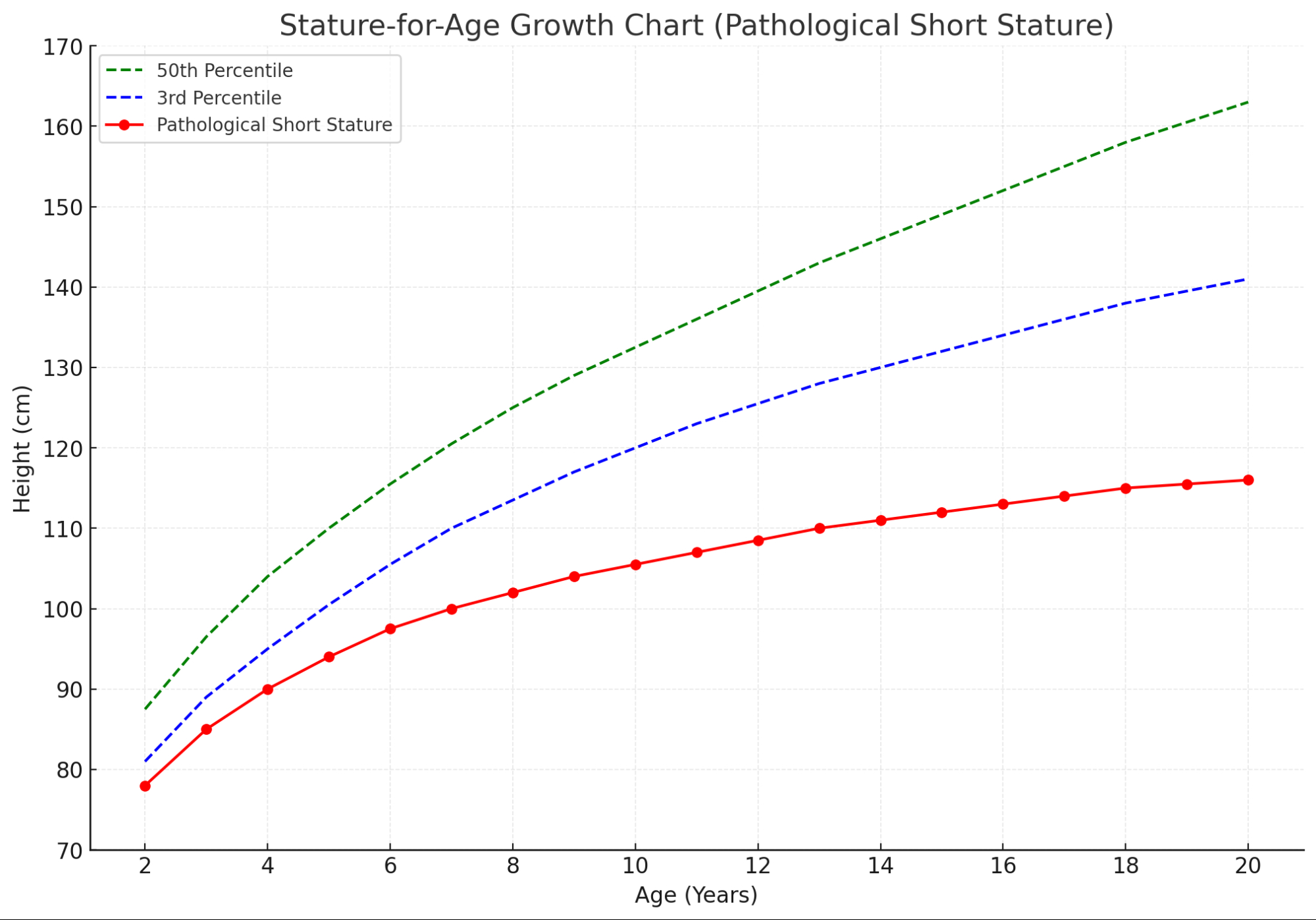
- A child with congenital pathological short stature is small for gestational age at birth and, over time, continues to fall further away from the population means on all growth parameters.
- Possible Causes: chromosomal abnormality (e.g.Turner syndrome), a congenital infection (e.g., TORCH infections), and a prolonged period of intrauterine hypoxia leading to intrauterine growth failure.
| Note | |
|
ملاحظة |
سجل دخولك لإضافة ملاحظات خاصة لكل قسم
· اشترك الآن
Constitutional Growth Delay
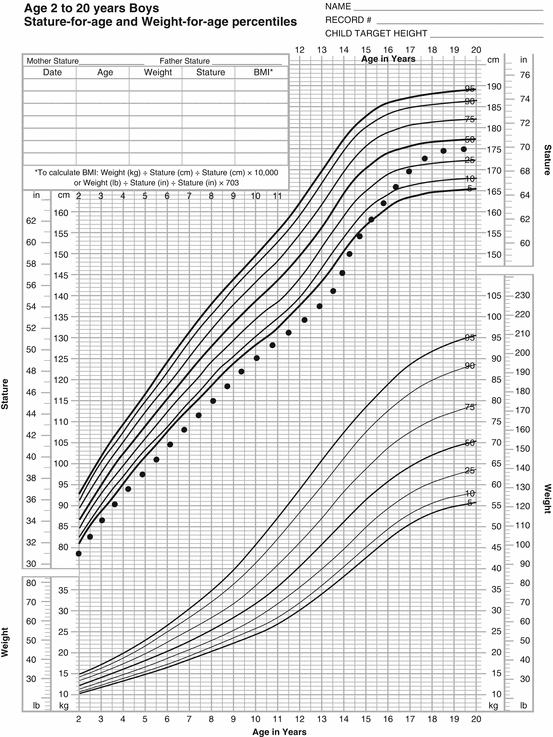
- A child with constitutional growth delay experiences a normal birth weight and height followed by a decrease in weight and height beginning at 4-6 months, and continuing until 2-3 years.
- By 3 years of age, linear growth resumes at a normal rate. Height and weight then plot parallel to or just below the 3rd percentile through the remainder of the prepubertal years.
- The child then has an accelerated rate of growth in late adolescence and achieves expected adult height (catch up growth).
- In children with CGD, puberty is delayed, leading to a marked height discrepancy during the early teenage years compared with peers.
- Final adult height is as expected for that child's genetic potential.
- CGD is more commonly identified in boys, possibly reflecting societal response to delayed male development.
- The bone age (BA) is delayed for the child’s chronological age (CA) but is consistent with height age (HA)—the age at which the child’s current height is at the 50th percentile.
- Symbolically, this is recorded as CA> BA = HA.
- Most of the time, constitutional growth delay is hereditary, and many parents of affected children report that they too were “late bloomers.”
سجل دخولك لإضافة ملاحظات خاصة لكل قسم
· اشترك الآن
احصل على التجربة الكاملة
اشترك للوصول لفيديوهات الشرح التفصيلي والبطاقات التعليمية التفاعلية وأسئلة الممارسة مع تتبع التقدم.
فيديوهات الشرح
بطاقات تفاعلية
أسئلة ممارسة
اشترك الآن