Summary
The immune system has two arms: innate immunity (immediate, non-specific defense without memory) and adaptive immunity (T cells, B cells, immunoglobulins—slow but highly specific, forms memory). Immunodeficiency is suspected when infections are recurrent, severe, unusual, or slow to clear. Warning signs in children include recurrent infections, failure to thrive, deep abscesses, and persistent thrush. Disorders are classified by the affected arm (innate vs adaptive) and cause (primary genetic vs secondary acquired). The causative organism points to the defect:
- encapsulated bacteria suggest a B-cell defect;
- opportunistic viruses/fungi in infancy suggest a T-cell defect;
- deep abscesses suggest a phagocyte defect;
- recurrent Neisseria suggests a complement defect.
Work-up: CBC with differential and quantitative immunoglobulins. Secondary causes are more common than primary and must be excluded first.
Overview
- Immune system: an organized network of cells and molecules that protects the host from infection. It works through two functional arms, and most infections trigger both.
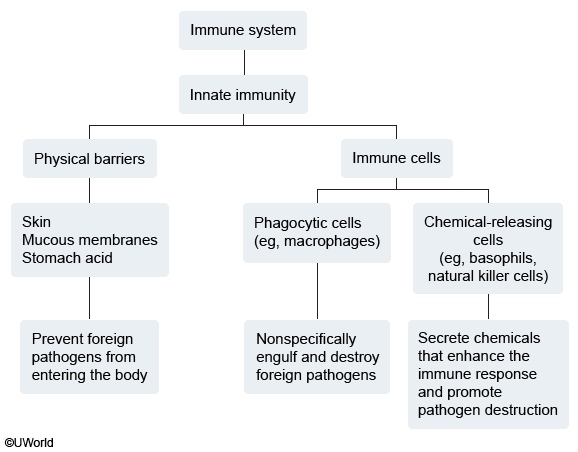
- Innate immunity — the first defense:
- Barriers: skin, mucosa, the ciliary escalator and gastric acid.
- Phagocytic cells: neutrophils, macrophages and dendritic cells engulf microbes and kill them. Neutrophils use the respiratory burst.
- Natural killer (NK) cells: kill infected cells that show stress ligands or have lost MHC class I. They need no prior exposure.
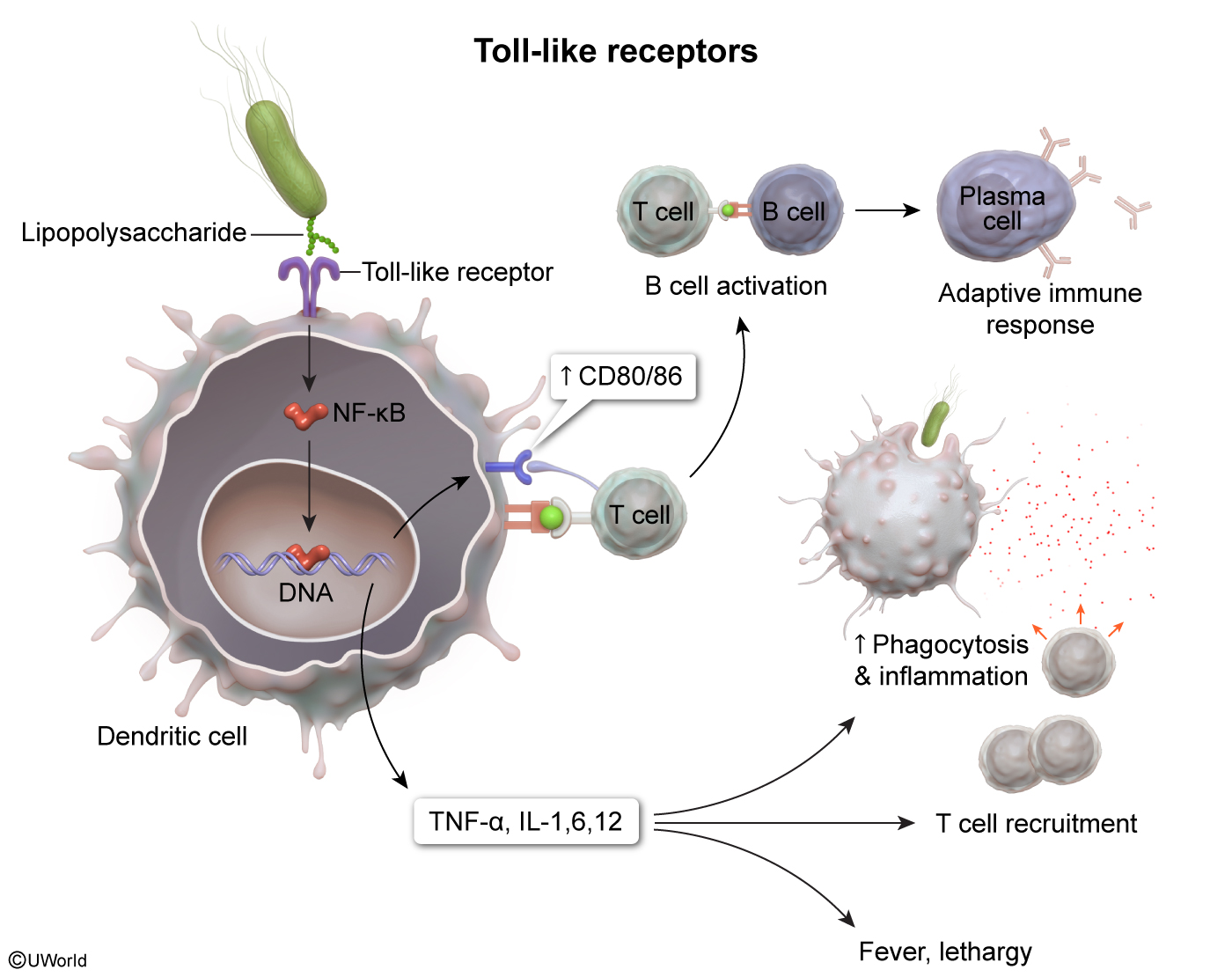
- Toll-like receptors: pattern recognition receptors on macrophages and dendritic cells. They detect conserved microbial molecules (PAMPs), for example lipopolysaccharide. Through NF-κB they trigger TNF-α, IL-1, IL-6 and IL-12.
- Mannose-binding protein (lectin pathway) and the alternative complement pathway: C3b coats microbes (opsonization), and C5b–C9 form the membrane attack complex that lyses bacteria.
Toll-like receptor signaling is also the bridge to adaptive immunity. The activated dendritic cell carries antigen to the lymph node and shows it to naive T cells.
- Adaptive immunity — specific and with memory:
- Cell-mediated (T cells): CD4 helper cells recognize antigen on MHC II, and CD8 cytotoxic cells recognize antigen on MHC I. They control viruses, fungi and intracellular bacteria.
- Humoral (B cells → plasma cells → immunoglobulins): antibodies neutralize toxins and microbes, activate classical complement and cause opsonization. This is the main defense against encapsulated extracellular bacteria.
- Maternal IgG crosses the placenta and protects the infant for roughly the first 6 months.
Innate vs Adaptive Immunity
The two arms differ in speed, specificity and memory. The innate arm buys time while the adaptive arm builds a targeted response.
| Feature | Innate immunity | Adaptive immunity |
| Nature | Primitive and broad | Highly specific |
| Recognition | Conserved microbial patterns (PAMPs) and damage signals, sensed by pattern recognition receptors (e.g., toll-like receptors) | Individual antigens, recognized by T-cell receptors (antigen on MHC) and B-cell receptors/antibodies |
| Speed of onset | Immediate | Days (on first exposure) |
| Kinetics | Hours to days | Days to weeks |
| Potency | Lower | Higher |
| Duration | Short (days) | Long (months to years) |
| Memory | None: the same response at every exposure | Yes: memory T and B cells give a faster, stronger response on re-exposure |
| Activity | Always present | Normally silent until antigen activates it |
| Main components | Skin and mucosal barriers, neutrophils, macrophages, dendritic cells, NK cells, toll-like receptors, mannose-binding protein, alternative complement pathway | T cells (CD4 helper, CD8 cytotoxic), B cells, plasma cells, immunoglobulins |
| ملاحظة سريرية | |
|
Innate immunity is the first responder: it works within hours, is non-specific, and creates no memory — each exposure is handled as if it's the first time. Adaptive immunity, by contrast, takes days to work initially, but it is highly specific and generates memory cells, which is why second exposure is much faster and stronger — and this is the fundamental principle underlying vaccination. |
ملاحظة |
Red Flags of Primary Immunodeficiency
- Primary immunodeficiencies (inborn errors of immunity): more than 550 are now described, and more are found each year.
- When to suspect one: infections that are recurrent, severe, prolonged or caused by unusual organisms, or that respond poorly to standard treatment.
- The 10 warning signs in children:
- 4 or more new ear infections within 1 year.
- 2 or more serious sinus infections within 1 year.
- 2 or more months on antibiotics with little effect.
- 2 or more pneumonias within 1 year.
- Failure of an infant to gain weight or grow normally.
- Recurrent, deep skin or organ abscesses.
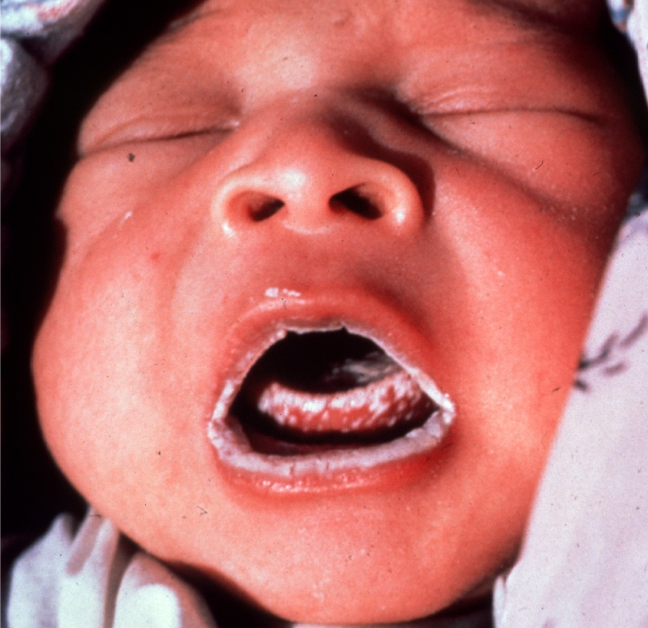
- Persistent thrush in the mouth or fungal infection of the skin.
- Need for IV antibiotics to clear infections.
- 2 or more deep-seated infections (e.g., septicemia, meningitis).
- Family history of primary immunodeficiency.
- Action: 2 or more signs mean the child should be evaluated for immunodeficiency and referred to an immunologist.
- Other clues: chronic diarrhea, unexplained autoimmunity or recurrent fevers, and a family history of unexplained early death (before 30 years).
Thrush that persists, or comes back despite treatment, is a typical clue to a T-cell defect.
| Mnemonic – جملة تذكرية: the 10 warning signs = "4-2-2-2-2, IF FAT" | |
|
The numbers (4-2-2-2-2):
The features (IF FAT):
Hook: only the ear count is 4; every other number is 2. |
جملة تذكرية |
Classification of Immunodeficiency Disorders
Immunodeficiencies can be grouped in several ways. The two most useful are by the part of the immune system that fails and by the cause.
Based on the overall structure of the immune system
- Innate immunity disorders:
- Phagocyte disorders: too few neutrophils, or neutrophils that cannot move or kill (for example, a defective respiratory burst).
- Toll-like receptor defects: microbes are poorly sensed, so the early cytokine response is weak.
- Complement deficiencies: poor opsonization and no membrane attack complex.
- Lymphocyte counts and immunoglobulins are normal in these disorders.
- Adaptive immunity disorders:
- B-cell (humoral) deficiencies: low or nonfunctional antibodies.
- T-cell (cellular) deficiencies: antibody production often fails as well, because B cells need T-cell help.
- Combined B- and T-cell deficiencies: the most severe group, with infections by every class of organism.
Based on etiology
- Primary (genetic) immunodeficiency: usually starts in childhood.
- B-cell deficiencies
- T-cell deficiencies
- Complement deficiencies
- Disorders of granulocytes
- Secondary (acquired) immunodeficiency: far more common than primary.
- Medication: corticosteroids, chemotherapy and other immunosuppressants.
- Malnutrition
- Nephrotic syndrome: immunoglobulin is lost in the urine.
- Acquired immunodeficiency syndrome (AIDS): loss of CD4 T cells caused by HIV.
- Other systemic disease: diabetes mellitus, chronic kidney disease (uremia) and leukemia or other blood cancers. Dyslipidemia does not impair host defense.
Classic Infections by Type of Immunodeficiency
The kind of organism and the age at onset point to the arm that has failed. Each arm clears a particular kind of microbe.
| Classic infections by type of immunodeficiency | |||
|---|---|---|---|
| Deficiency | Typical onset | Type of infections | Classic pathogens |
| B-cell (antibody) deficiency | After 4–6 months (maternal IgG has waned) | Recurrent sinopulmonary infections (otitis, sinusitis, pneumonia); chronic diarrhea | Bacteria (encapsulated/pyogenic): Streptococcus pneumoniae, Haemophilus influenzae, Staphylococcus aureus, Pseudomonas Virus: enterovirus Protozoa: Giardia |
| T-cell deficiency (and combined) | Early infancy (first months) | Intracellular and opportunistic infections; failure to thrive | Bacteria (mostly intracellular): Salmonella Mycobacteria: M. tuberculosis, M. avium complex Viruses: CMV, HSV, VZV, EBV, hepatitis viruses, HPV, molluscum contagiosum Fungi: Candida, Aspergillus, Coccidioides, Cryptococcus, Histoplasma Protozoa / others: Pneumocystis, Toxoplasma, Cryptosporidium, Isospora, microsporidia |
| Phagocytic disorder | Early childhood | Recurrent skin and deep-organ abscesses (lung, liver, lymph nodes) | Bacteria: S. aureus, Serratia, Nocardia (catalase-positive organisms; fungi such as Aspergillus also typical) |
| Complement deficiency | Variable (any age) | Overwhelming sepsis, recurrent meningitis/bacteremia | Bacteria: Neisseria meningitidis, S. pneumoniae |
- Why each pattern happens:
- Antibodies opsonize capsules, so B-cell defects cause pyogenic infections of the sinuses and lungs. Lack of mucosal IgA adds Giardia and chronic diarrhea.
- T cells control microbes living inside cells, so T-cell defects cause severe viral, fungal and Pneumocystis infections, together with failure to thrive.
- Neutrophils kill bacteria and fungi inside phagolysosomes, so phagocyte defects cause abscesses of the skin, lung, liver and lymph nodes. Most are due to catalase-positive organisms; see the classic respiratory-burst disorder of phagocytes (organisms, features and testing).
- The membrane attack complex is the key early defense against Neisseria, so complement defects cause recurrent meningococcal sepsis or meningitis.
| فخ امتحاني | |
|
Always remember: a patient with B-cell deficiency presents with recurrent sinopulmonary infections with encapsulated bacteria (such as S. pneumoniae and H. influenzae), and usually after age 6 months when maternal IgG wanes. While a patient with T-cell deficiency presents early with opportunistic infections like CMV, Candida, and Pneumocystis, along with failure to thrive. And if you see recurrent Neisseria — think complement deficiency, not antibody defect. |
تذكر |
Clinical Application: Approach to Suspected Immunodeficiency
- Step 1: Exclude secondary causes first. Review the drug history (steroids, chemotherapy), nutrition and urine protein (nephrotic syndrome), and test for HIV.
- Step 2: Use age and infection pattern (see the table in the previous section) to choose the arm to test.
- Onset under 4–6 months with opportunistic infections suggests a T-cell or combined defect.
- Onset after 6 months with sinopulmonary infections suggests a B-cell defect.
- Step 3 — Best initial tests: CBC with differential (lymphopenia, neutropenia) and quantitative serum immunoglobulins (IgG, IgA, IgM).
- Step 4 — Directed tests:
- B cell: specific antibody titers after vaccination (tetanus, pneumococcal). A normal response is more than a 4-fold rise in specific IgG. B-cell counts are measured by flow cytometry. See the B-cell count and immunoglobulin patterns of the humoral immunodeficiencies.
- T cell: lymphocyte subsets by flow cytometry (CD3, CD4, CD8, B and NK cells).
- Phagocyte: neutrophil count, and the oxidative burst by dihydrorhodamine (DHR) flow cytometry.
- Complement: CH50 (classical pathway) and AH50 (alternative pathway).
- Step 5: Refer to a clinical immunologist when a defect is confirmed or when 2 or more warning signs are present.
For the hallmark features of individual syndromes, see the distinctive features of selected primary immunodeficiency disorders.
| Recurrent Neisseria = terminal complement | |
A child or young adult with a second episode of meningococcal disease has a terminal complement (C5–C9) defect until proven otherwise: the membrane attack complex cannot form. Both CH50 and AH50 are low, while lymphocytes and immunoglobulins are normal. The common distractor — an antibody defect — presents instead with recurrent sinopulmonary infections by pneumococcus and H. influenzae. |
تذكر |
Key Points for Exams
- Innate immunity: immediate, non-specific and always present, with no memory. Its parts are barriers, phagocytes, NK cells, toll-like receptors, mannose-binding protein and alternative complement.
- Adaptive immunity: takes days, is highly specific and is normally silent until triggered. It builds memory, so re-exposure gives a faster, stronger response.
- Toll-like receptors recognize PAMPs such as lipopolysaccharide and signal through NF-κB to release TNF-α, IL-1 and IL-6.
- NK cells are innate. They kill cells that have lost MHC I without needing prior exposure.
- 10 warning signs = "4-2-2-2-2, IF FAT". 2 or more signs mean evaluate and refer.
- B-cell defect: recurrent sinopulmonary infections with encapsulated bacteria (S. pneumoniae, H. influenzae) after 6 months, when maternal IgG wanes. Also enterovirus and Giardia.
- T-cell defect: opportunistic viruses (CMV, HSV, VZV, EBV), fungi (Candida) and Pneumocystis in early infancy, with failure to thrive.
- Phagocyte defect: recurrent deep skin and organ abscesses with S. aureus, Serratia and Nocardia. Diagnose with DHR flow cytometry.
- Complement defect: recurrent Neisseria meningitidis means terminal (C5–C9) deficiency, with low CH50 and AH50.
- Pure antibody defects predispose to bacterial infections, not to severe viral illness such as overwhelming EBV infection.
- Secondary immunodeficiency is far more common than primary. Causes include drugs (steroids, chemotherapy), malnutrition, nephrotic syndrome, AIDS, diabetes, uremia and leukemia. Dyslipidemia is not a cause.
- Best initial tests: CBC with differential and quantitative IgG, IgA and IgM, then directed tests for the suspected arm.
احصل على التجربة الكاملة
اشترك للوصول لفيديوهات الشرح التفصيلي والبطاقات التعليمية التفاعلية وأسئلة الممارسة مع تتبع التقدم.