SUMMARY
VTE is a leading cause of maternal death, with risk highest postpartum. Prompt recognition, imaging-based diagnosis, and LMWH treatment are key, while risk assessment and prophylaxis remain essential for prevention.
Overview
Venous thromboembolism (VTE) covers deep vein thrombosis (DVT) and pulmonary embolism (PE). It is a major cause of maternal morbidity and mortality.
- Mortality: about one-third of maternal deaths in the UK.
- Relative risk: pregnancy raises the risk of VTE 4–5-fold.
- Driver: physiological changes in haemostasis: ↑ fibrinogen, ↓ protein S activity, and venous stasis.
| Important – Question Idea: When does VTE risk peak? | |
|
Risk rises progressively through pregnancy, but the peak is postpartum — especially the first week after delivery, not the third trimester. A breathless or leg-swollen woman days after delivery is the classic VTE stem. |
تذكر |
Pathophysiology & Risk Factors
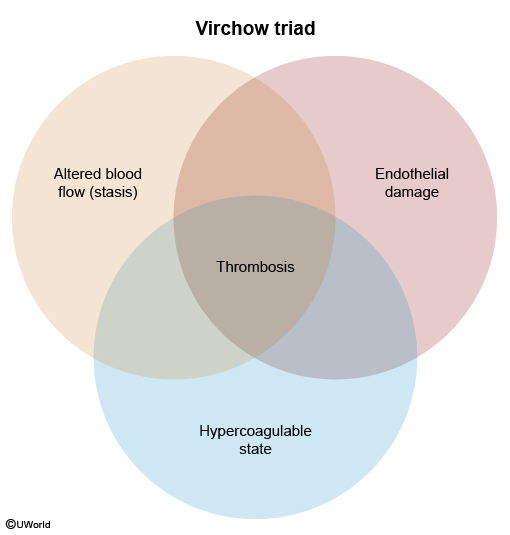
Pregnancy switches on all three parts of Virchow's triad:
- Stasis: uterine compression, especially May-Thurner syndrome (compression of the left iliac vein). This is why ~90% of DVTs are left-sided and 70% are iliofemoral.
- Hypercoagulability: ↑ clotting factors (V, VII, VIII, X, vWF, fibrinogen), protein C resistance, ↓ protein S, and ↑ fibrinolytic inhibitors.
- Endothelial injury: uterine compression and vascular trauma at delivery.
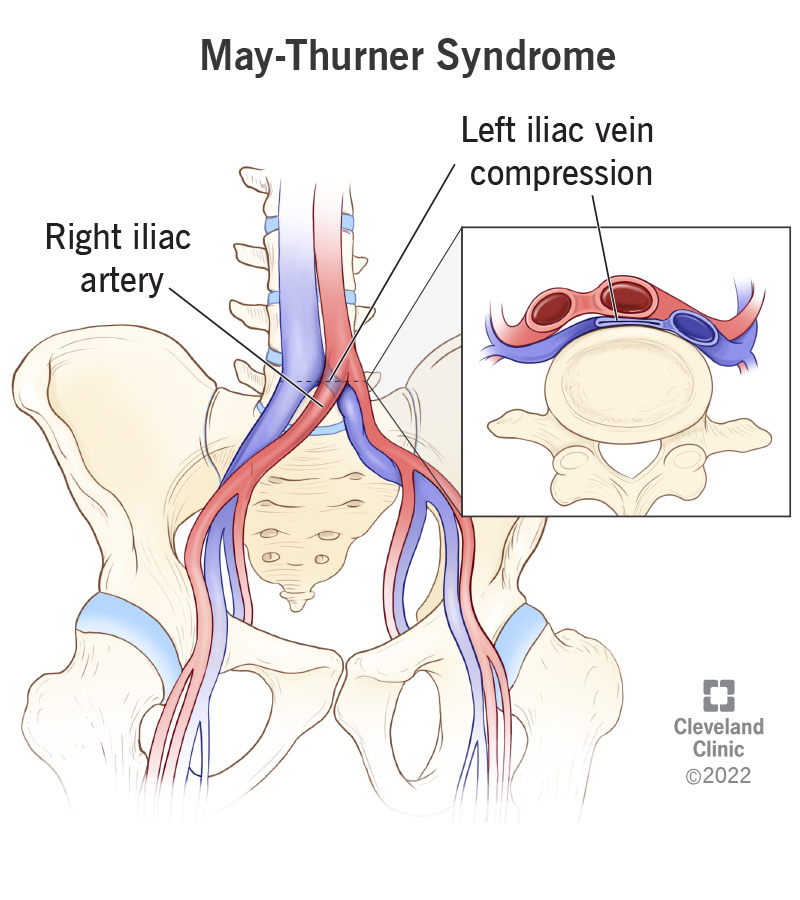
[Illustration | Clinical Description: Anatomical diagram showing a gravid uterus compressing the left common iliac vein against the lumbar spine, demonstrating May Thurner syndrome pathophysiology and left-sided DVT risk in pregnancy]
| Clinical Note – ملاحظة سريرية | |
|
Due to uterine compression on the left iliac vein, most DVTs in pregnant women are left-sided—keep this in mind in clinical scenarios. |
ملاحظة |
| Mnemonic – جملة تذكرية: "SHE" — Virchow's Triad in Pregnancy | |
|
S – Stasis (gravid uterus on the left iliac vein) SHE — the pregnant woman — carries all three limbs of the triad at once. |
جملة تذكرية |
Additional risk factors (most often tested)
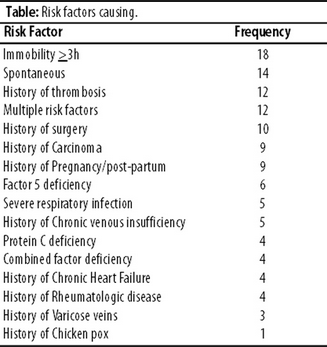
- Pre-existing: previous VTE, thrombophilia, obesity, age >35.
- Obstetric: caesarean section, pre-eclampsia, multiple pregnancy, postpartum haemorrhage (PPH).
- Transient: immobility (including long-distance travel), surgery, ovarian hyperstimulation, dehydration.
See the Risk Factors for Venous Thromboembolism (VTE) for the non-obstetric provoking factors and the inherited thrombophilia panel.
Clinical Features & Differential Diagnosis
Deep vein thrombosis (DVT)
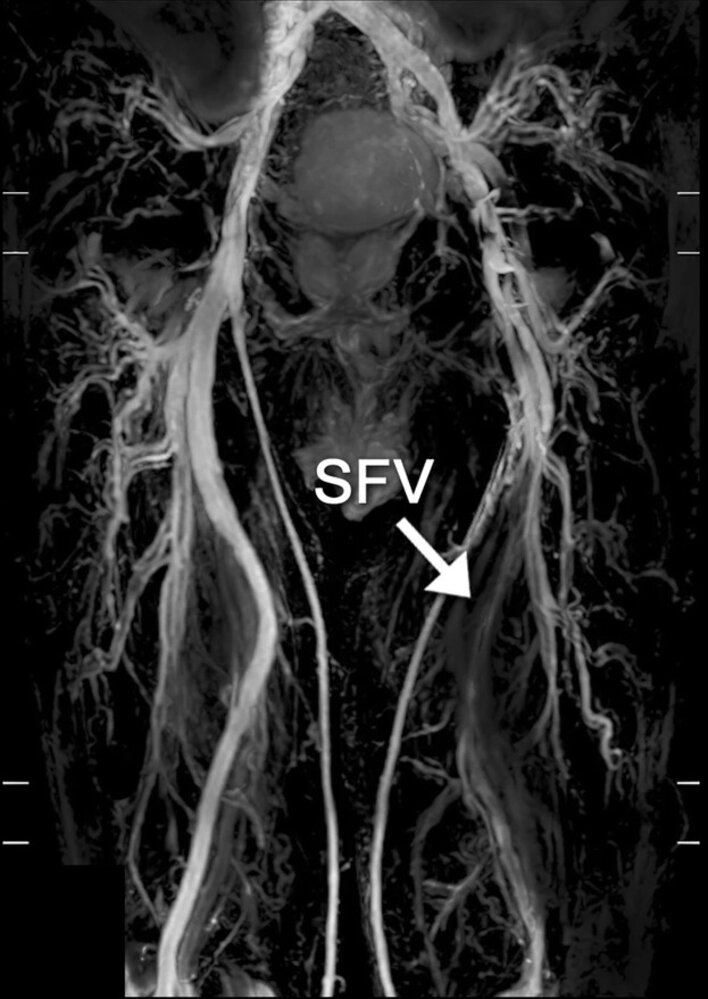
- Typical: pain and swelling in one leg, most often the left.
- Other features: pitting oedema, tenderness, pyrexia, prominent superficial veins.
- Site: proximal DVT is more common in pregnancy because the uterus compresses the left iliac vein.
- Differential diagnosis: cellulitis, ruptured Baker's cyst, superficial thrombophlebitis, physiological oedema of pregnancy.
| Important – Question Idea: Superficial thrombophlebitis | |
|
Superficial thrombophlebitis is a DVT mimic, but if it lies near the deep venous junction it is treated as DVT — do not dismiss it as a benign superficial problem. |
تذكر |
Refer to the Popliteal (Baker) Cyst overview for how cyst rupture into the calf can look like DVT.
Pulmonary embolism (PE)
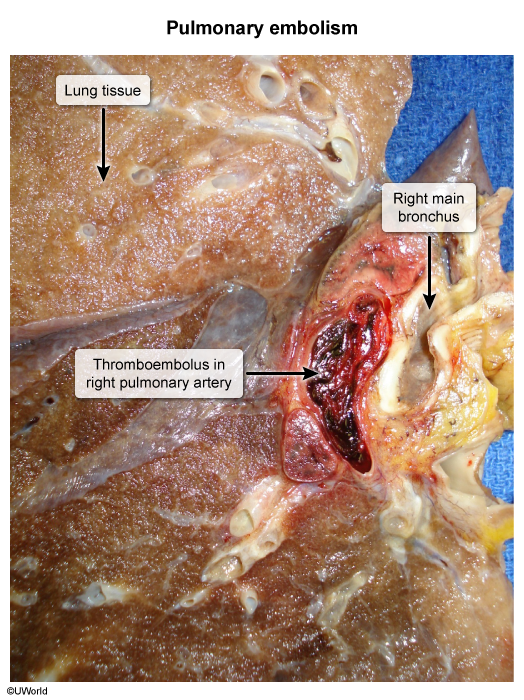
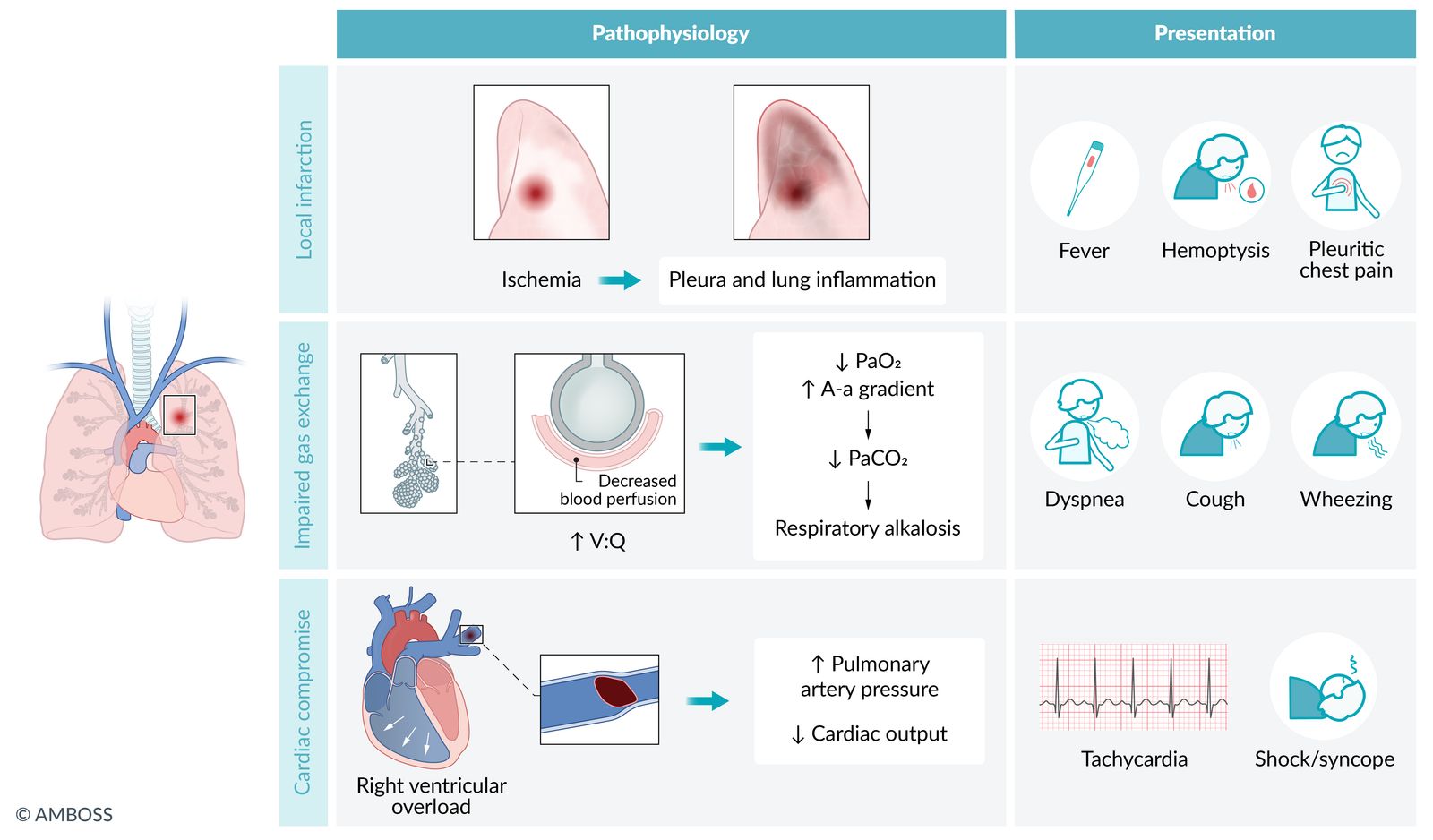
- Symptoms: sudden-onset dyspnoea, pleuritic chest pain, cough; haemoptysis is rare.
- Signs: tachycardia, tachypnoea, pyrexia; occasionally raised JVP, pleural rub, or effusion.
- Differential diagnosis: pneumonia, myocardial infarction, peripartum cardiomyopathy, amniotic fluid embolism.
See the Peripartum cardiomyopathy differential for conditions that cause versus mimic heart failure around delivery. Refer to the Amniotic Fluid Embolism overview for the peripartum collapse picture that must be told apart from massive PE.
Investigations
Serum: FBC, U&Es, LFTs, coagulation profile. These baselines are required before starting anticoagulation. D-dimer is not useful because it is physiologically raised in pregnancy.
| Note | |
|
D-dimer is physiologically elevated in pregnancy, so it cannot be used to rule out VTE; proceed directly to compression duplex ultrasound. |
ملاحظة |
Imaging pathway
| Unified Diagnostic Pathway: Suspected DVT vs Suspected PE | ||
|---|---|---|
| Step | Suspected DVT | Suspected PE |
| Initial test | Compression duplex ultrasound (first-line) | ECG + chest X-ray ± ABG |
| Definitive test | Compression duplex ultrasound | CTPA or V/Q scan |
| Negative test, persistent suspicion | Repeat ultrasound after 1 week, with interim anticoagulation | — |
| Shortcut | — | DVT confirmed on leg ultrasound → chest imaging may be avoided |
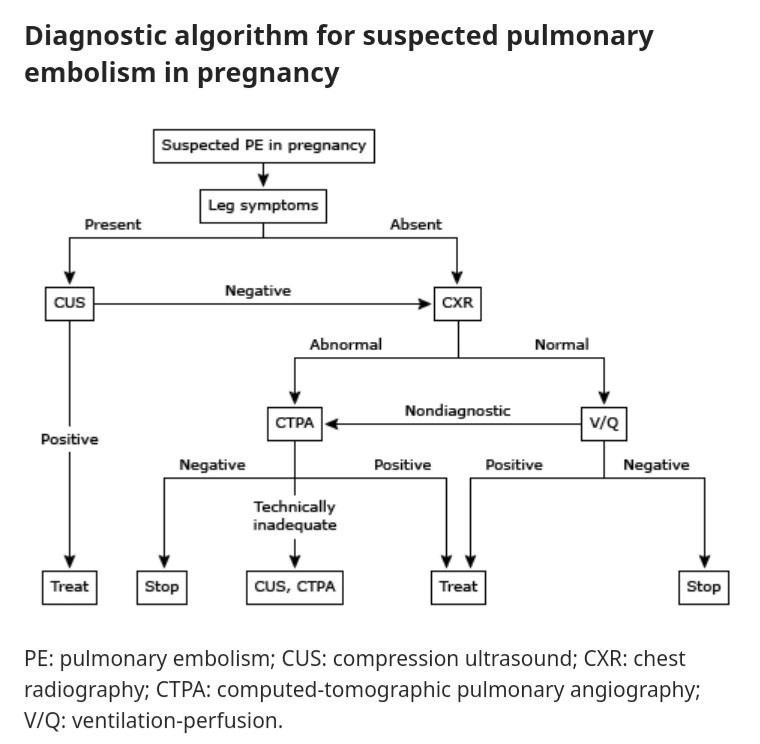
| Radiation counselling | None (ultrasound) | V/Q: ↑ childhood cancer risk, ↓ maternal breast cancer risk CTPA: ↑ maternal breast cancer risk, ↓ childhood cancer risk |
Compression ultrasound: a thrombosed vein cannot be compressed by the probe and contains echogenic thrombus.
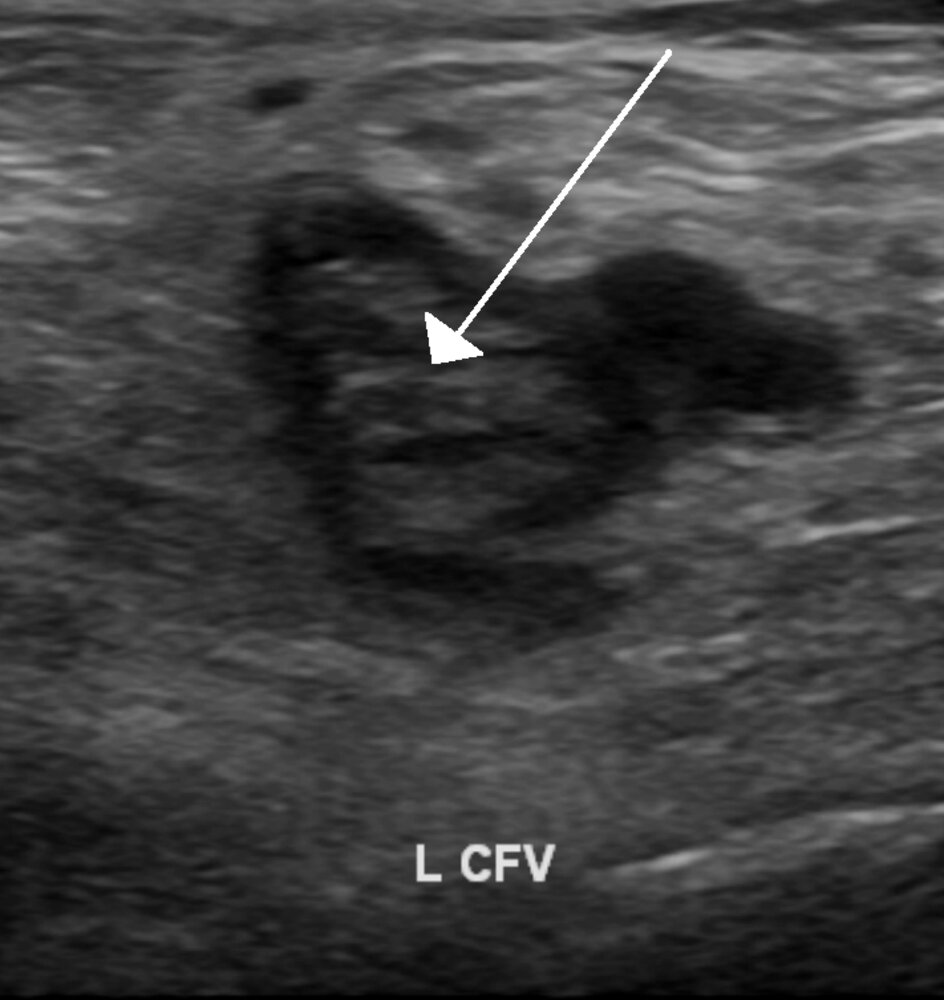
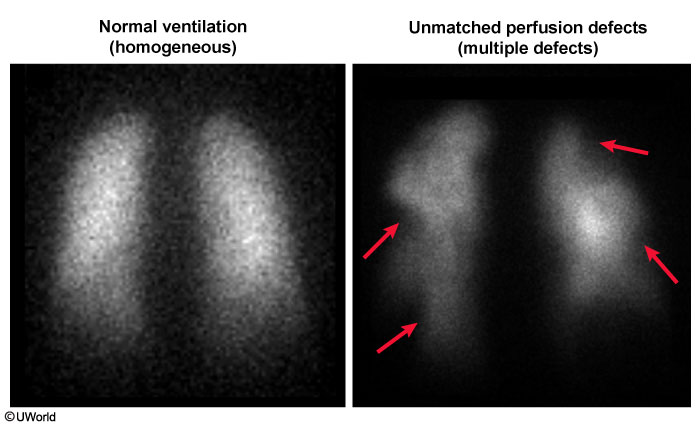
PE confirmation: V/Q scanning shows unmatched perfusion defects, while CTPA shows a filling defect inside the contrast-filled pulmonary arteries.
CTPA vs V/Q decision pathway
[Illustration | Clinical Description: Diagnostic algorithm flowchart comparing CTPA and V/Q scan pathways, indicating radiation risks to the maternal breast and fetal childhood cancer risk for pregnant patients with suspected pulmonary embolism]
Management
LMWH timeline
- At suspicion: start LMWH immediately, before the diagnosis is confirmed. Adjust the dose to booking weight.
- During pregnancy: continue for the rest of the pregnancy.
- Planned delivery: withhold LMWH 24 hours before induction or caesarean.
- Spontaneous labour: do not give LMWH.
- Postpartum: continue for 6–12 weeks after delivery, with a minimum of 3–6 months of treatment in total.
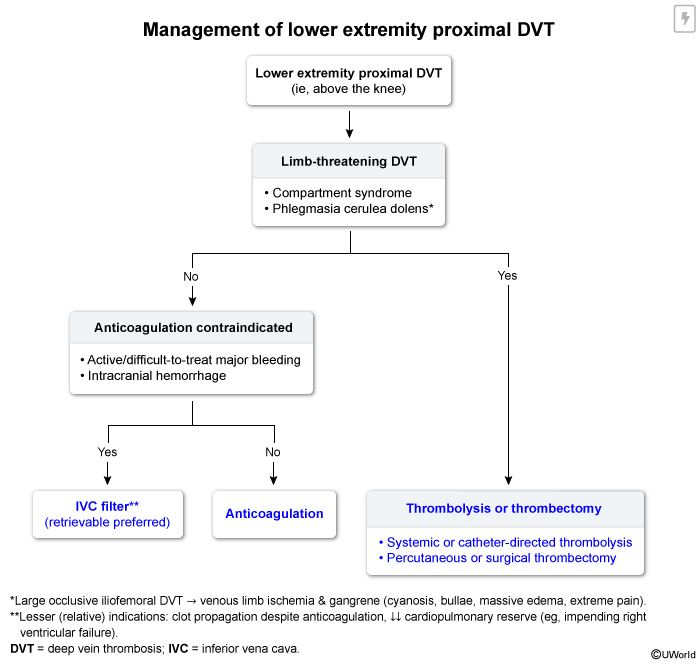
Choice of anticoagulant
| Anticoagulants in Pregnancy | ||||
|---|---|---|---|---|
| Feature | LMWH | Unfractionated heparin | Warfarin | DOACs |
| Status in pregnancy | Treatment of choice | Alternative | Contraindicated | Not recommended |
| Key point | Dose adjusted to booking weight; start at suspicion, continue to 6–12 weeks postpartum | Short-acting — can be stopped 6 h before labour, so useful near delivery; IV route in massive PE | Teratogenic; risk of fetal haemorrhage | May be considered postpartum if not breastfeeding |
| Important – فكرة سؤال | |
|
Warfarin is teratogenic and causes fetal haemorrhage; that is why LMWH is the treatment of choice. |
تذكر |
See the Anticoagulation During Pregnancy: Comparison of Agents for the route, timing, and fetal effects of LMWH, unfractionated heparin, and warfarin.
Massive PE with haemodynamic instability
- ABCDE resuscitation.
- Consider IV unfractionated heparin or systemic thrombolysis.
Prophylaxis
- Risk assessment: at booking, intrapartum, and postpartum.
- Risk-factor thresholds for LMWH thromboprophylaxis (UK guidelines):
- ≥4 risk factors in the 1st–2nd trimester
- ≥3 risk factors in the 3rd trimester
- ≥2 risk factors postpartum
| Mnemonic – جملة تذكرية: "4 → 3 → 2 Countdown" | |
|
Count down toward delivery: the closer the woman gets to the postpartum peak, the fewer risk factors are needed to start LMWH. |
جملة تذكرية |
Specific situations
- Caesarean section: a 10-day course of LMWH, especially after emergency procedures.
- Antithrombin deficiency / antiphospholipid syndrome: high-dose LMWH, often with haematology input.
| Important – Question Idea: Previous VTE — provoked vs unprovoked | |
The provoking trigger decides when prophylaxis starts — a favourite exam discriminator. |
تذكر |
The Diagnostic Criteria for Antiphospholipid Antibody Syndrome (APS) lays out the clinical and laboratory criteria needed before labelling a patient with APS.
Key Points for Exams
- Burden: VTE causes about one-third of UK maternal deaths. Pregnancy raises the risk 4–5×, and the risk peaks postpartum, especially in the first week.
- Anatomy: ~90% of DVTs are left-sided and 70% iliofemoral, because of May-Thurner compression of the left iliac vein.
- Virchow's triad = "SHE": Stasis, Hypercoagulability (↑ V, VII, VIII, X, vWF, fibrinogen; ↓ protein S), Endothelial injury.
- D-dimer is useless in pregnancy: it is physiologically raised, so never use it to rule out VTE.
- Suspected DVT: compression duplex ultrasound first-line. If it is negative but suspicion persists, repeat at 1 week on interim anticoagulation.
- Suspected PE: ECG + CXR ± ABG, then CTPA or V/Q scan. A DVT confirmed on ultrasound can spare chest imaging.
- Imaging safety: V/Q = ↑ childhood cancer risk, ↓ maternal breast cancer risk. CTPA = the reverse.
- LMWH is first choice: start at suspicion, adjust the dose to booking weight, and continue to 6–12 weeks postpartum (minimum 3–6 months in total).
- Warfarin is contraindicated (teratogenic, fetal haemorrhage). DOACs are not recommended in pregnancy; they may be considered postpartum only if not breastfeeding.
- Delivery: stop LMWH 24 h before induction or caesarean; avoid it in spontaneous labour. UFH can be stopped 6 h before labour.
- Massive PE: ABCDE, then IV UFH or systemic thrombolysis.
- Prophylaxis: countdown 4 → 3 → 2 risk factors; 10 days of LMWH after caesarean; previous provoked VTE → LMWH from 28 weeks; unprovoked → throughout pregnancy.
احصل على التجربة الكاملة
اشترك للوصول لفيديوهات الشرح التفصيلي والبطاقات التعليمية التفاعلية وأسئلة الممارسة مع تتبع التقدم.