شرح المدرسين

Summary
Pregnancy induces significant physiological changes in the renal system to meet the increased metabolic demands of both the mother and the fetus. These adaptations include alterations in renal hemodynamics, changes in renal anatomy, and modifications in the urinary tract's functional capacity.
سجل دخولك لإضافة ملاحظات خاصة لكل قسم
· اشترك الآن
Physiological Changes
Pregnancy induces significant physiological changes in the renal system to meet the increased metabolic demands of both the mother and the fetus. These adaptations include alterations in renal hemodynamics, changes in renal anatomy, and modifications in the urinary tract's functional capacity.
- ↑ Renal plasma flow → ↑ GFR → ↓ BUN and creatinine
- ↑ Aldosterone → ↑ plasma volume and hypernatremia
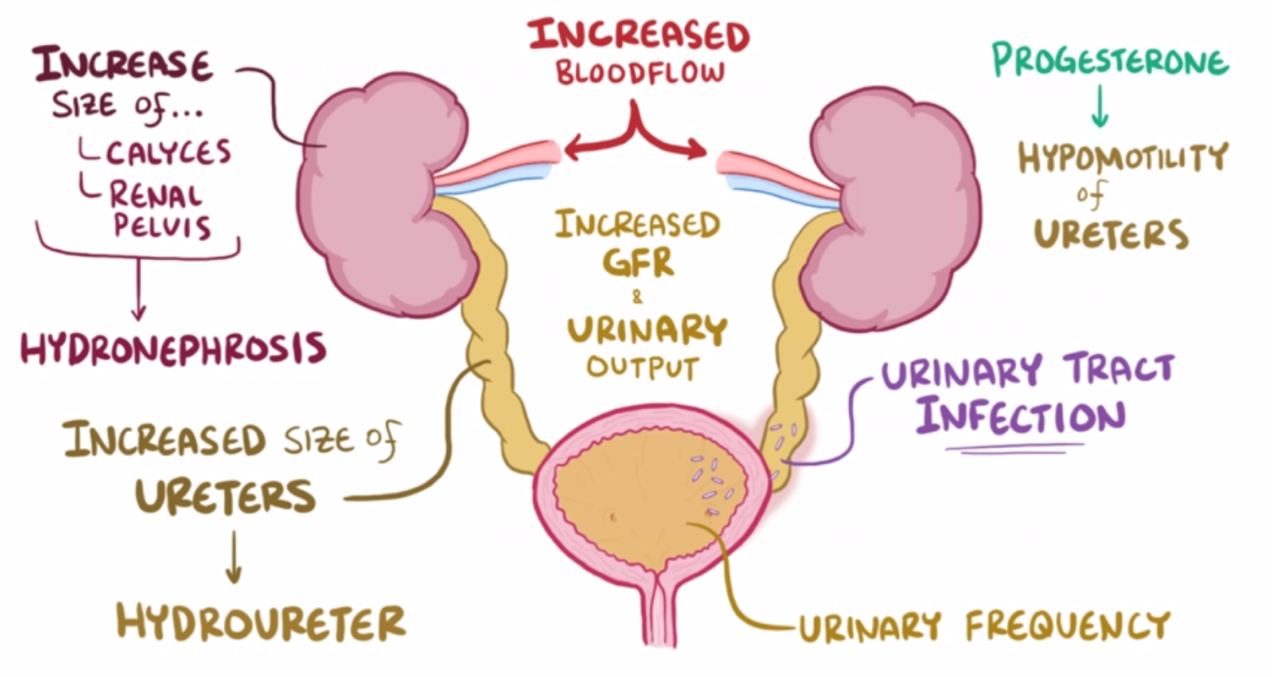
- ↑ Progesterone and intraabdominal pressure → dilation of kidney, pelvis, and calyceal systems → reduced tone and peristalsis
- Hydronephrosis and hydroureter
- Hypomotility of the ureters → urinary stasis → pyelonephritis
- ↑ Urinary frequency
- ↑ Glucose levels in urine: Increased glomerular filtration results in overload of the glucose carrier responsible for its resorption.
- Mild proteinuria: Increased GFR and glomerular permeability to albumin increases protein excretion.
سجل دخولك لإضافة ملاحظات خاصة لكل قسم
· اشترك الآن
احصل على التجربة الكاملة
اشترك للوصول لفيديوهات الشرح التفصيلي والبطاقات التعليمية التفاعلية وأسئلة الممارسة مع تتبع التقدم.
فيديوهات الشرح
بطاقات تفاعلية
أسئلة ممارسة
اشترك الآن