شرح المدرسين

Summary
Pregnancy is an incredible journey that brings excitement, many changes, and preparation for a new life. This guide will simplify important topics like gravidity and parity, fetal and gestational ages, the stages of pregnancy (trimesters), and the importance of birth weight and gestational age categories.
Gravidity and Parity
- Gravidity: the total number of times a woman has been pregnant, regardless of the outcome.
- Nulligravida: No history of pregnancy.
- Primigravida: History of one pregnancy.
- Multigravida: History of two or more pregnancies.
- Parity: the number of pregnancies a woman has carried to a viable gestational age (20 weeks or more), regardless of whether the baby was born alive or stillborn.
- Nullipara: No completed pregnancies beyond 20 weeks.
- Primipara: One completed pregnancy beyond 20 weeks.
- Multipara: More than one completed pregnancy beyond 20 weeks.
- Grand Multipara: A term reserved for women who have given birth five or more times.
Pregnancy calculations
- Normal duration of pregnancy: 40 weeks (280 days) ( From conception: 38 weeks (266 days))
- Embryonic Age: The actual age of the fetus, calculated from the date of conception.
- Gestational Age: Estimated from the first day of the last menstrual period (LMP), assuming a 28-day cycle with ovulation occurring on day 14.
Naegele's Rule and Its Adjustments
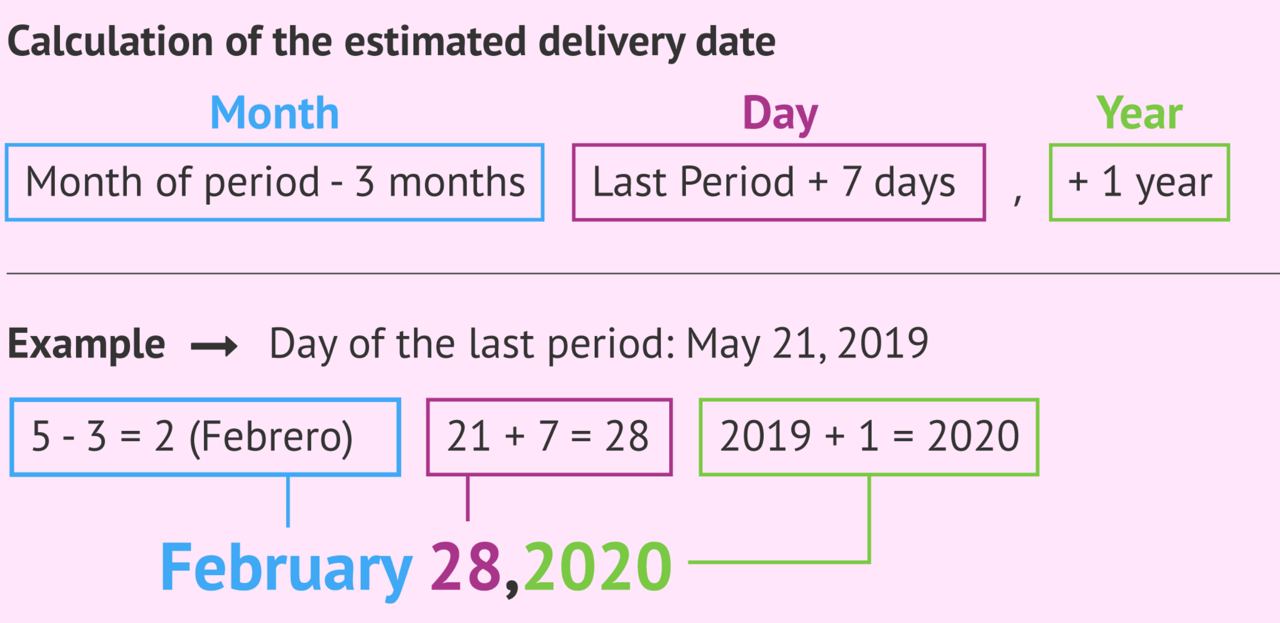
Naegele's Rule is a simple and commonly used method for estimating the due date of a pregnancy. It provides a general idea of when a baby might be born based on the first day of the last menstrual period (LMP). Adjustments can be made to account for variations in menstrual cycle lengths to improve the accuracy of the estimated due date (EDD).
Standard Naegele's Rule
The EDD is calculated by:
- Counting back three months from the first day of the LMP.
- Adding seven days to the result.
- If the LMP is February 20:
- Subtract 3 months = November 20.
- Add 7 days = November 27 as the EDD.
- If the LMP is May 28:
- Subtract 3 months = February 28.
- Add 7 days = March 4 as the EDD.
This calculation assumes a regular 28-day menstrual cycle.
Adjusting for Longer Cycles
If a woman has a menstrual cycle longer than 28 days, the EDD is adjusted by adding the difference between her cycle length and the standard 28 days.
Example for a 30-Day Cycle
- LMP is February 20.
- Basic Naegele's Calculation:
- Subtract 3 months = November 20.
- Add 7 days = November 27 (initial EDD).
- Cycle Length Difference:
- 30 days (actual cycle) - 28 days (standard cycle) = 2 days.
- Adjusted EDD:
- November 27 + 2 days = November 29.
Adjusting for Shorter Cycles
For a shorter menstrual cycle, the EDD is adjusted by subtracting the difference between the actual cycle length and the standard 28 days.
Example for a 26-Day Cycle
- LMP is February 20.
- Basic Naegele's Calculation:
- Subtract 3 months = November 20.
- Add 7 days = November 27 (initial EDD).
- Cycle Length Difference:
- 28 days (standard cycle) - 26 days (actual cycle) = 2 days.
- Adjusted EDD:
- November 27 - 2 days = November 25.
Gestational age at birth
- Periviability – Earliest stage of fetal maturity where there is a reasonable chance, although perhaps not a high likelihood, of extrauterine survival. This period is generally between 22 and <26 weeks gestational age (GΑ).
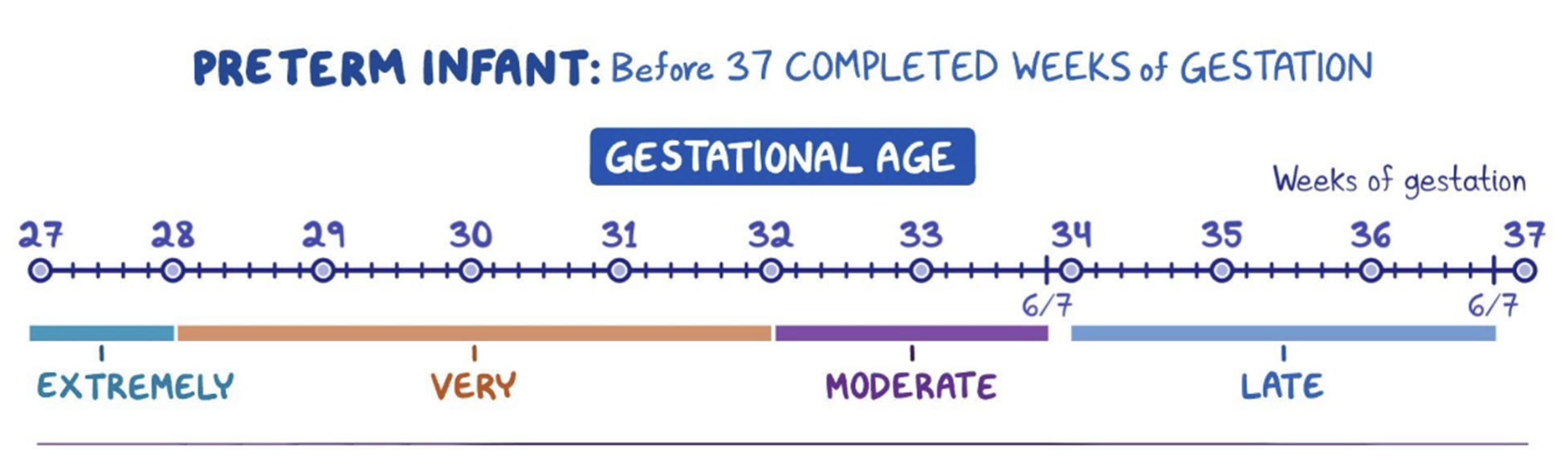
- Preterm birth: live birth before the completion of 37 weeks of gestation (< 37 0/7 weeks' gestation)
- Postterm birth: live birth after the completion of 42 weeks of gestation (≥ 42 0/7 weeks' gestation)
Preterm Classifications
- Extremely Preterm (EPT): <28 weeks.
- Very Preterm (VPT): <32 weeks.
- Moderate Preterm: 32 weeks to 33 weeks and 6 days.
- Late Preterm: 34 weeks to 36 weeks and 6 days.
Term classification
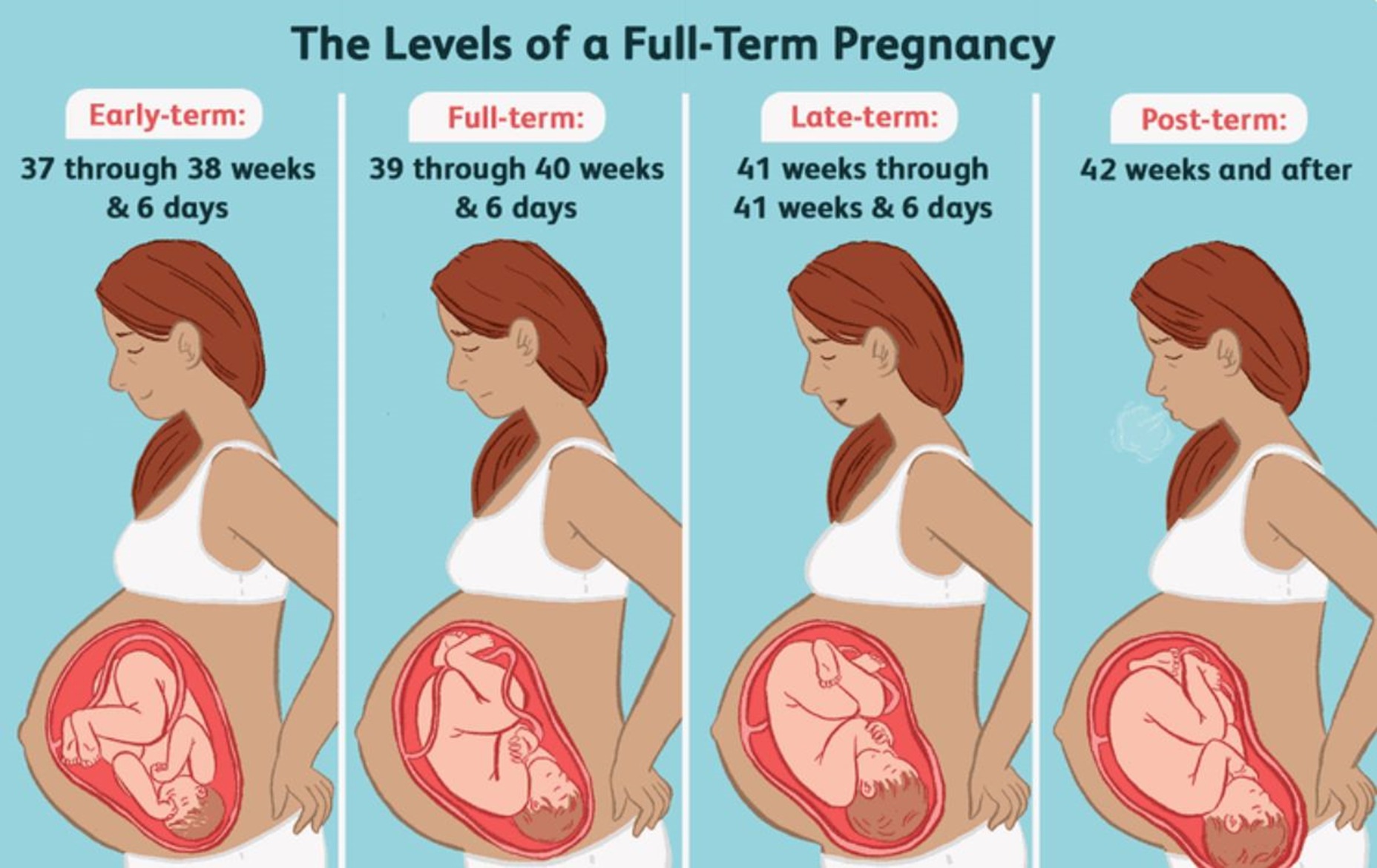
- Early Term: 37+0 to 38+6 weeks of gestation.
- Full Term: 39+0 to 40+6 weeks of gestation.
- Late Term: 41+0 to 41+6 weeks of gestation.
- Postterm: 42+0 weeks of gestation
Birth Weight Classification
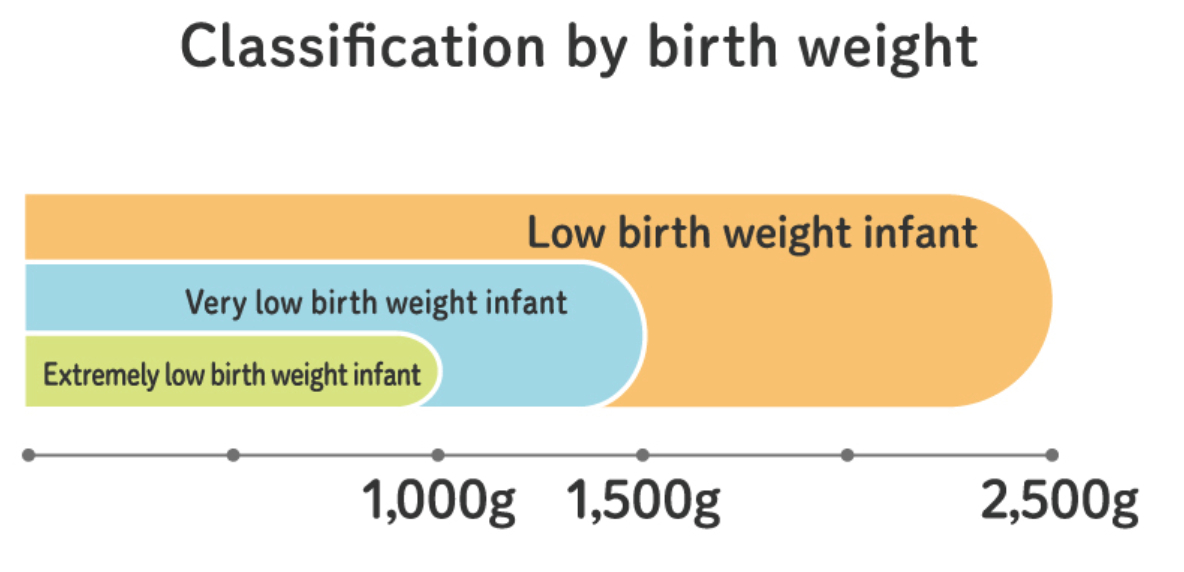
- Extremely Low Birth Weight (ELBW): BW < 1000 g.
- Very Low Birth Weight (VLBW): BW < 1500 g.
- Low Birth Weight (LBW): BW < 2500 g.
Trimesters
- First Trimester: 1 to 13 weeks and 6 days. Crucial for early development, including the formation of most major organs.
- Second Trimester: 14 to 27 weeks and 6 days. Marked by noticeable growth of the fetus, development of fetal features, and movements.
- Third Trimester: 28 to 40 weeks. Final adjustments and growth, preparing both mother and baby for delivery.
احصل على التجربة الكاملة
اشترك للوصول لفيديوهات الشرح التفصيلي والبطاقات التعليمية التفاعلية وأسئلة الممارسة مع تتبع التقدم.