سجل دخولك لإضافة ملاحظات خاصة لكل قسم
· اشترك الآن
Background
- Fluid therapy is the administration of fluids to a patient as a treatment or preventative measure (can be administered via intravenous, intraperitoneal, intraosseous, subcutaneous and oral routes)
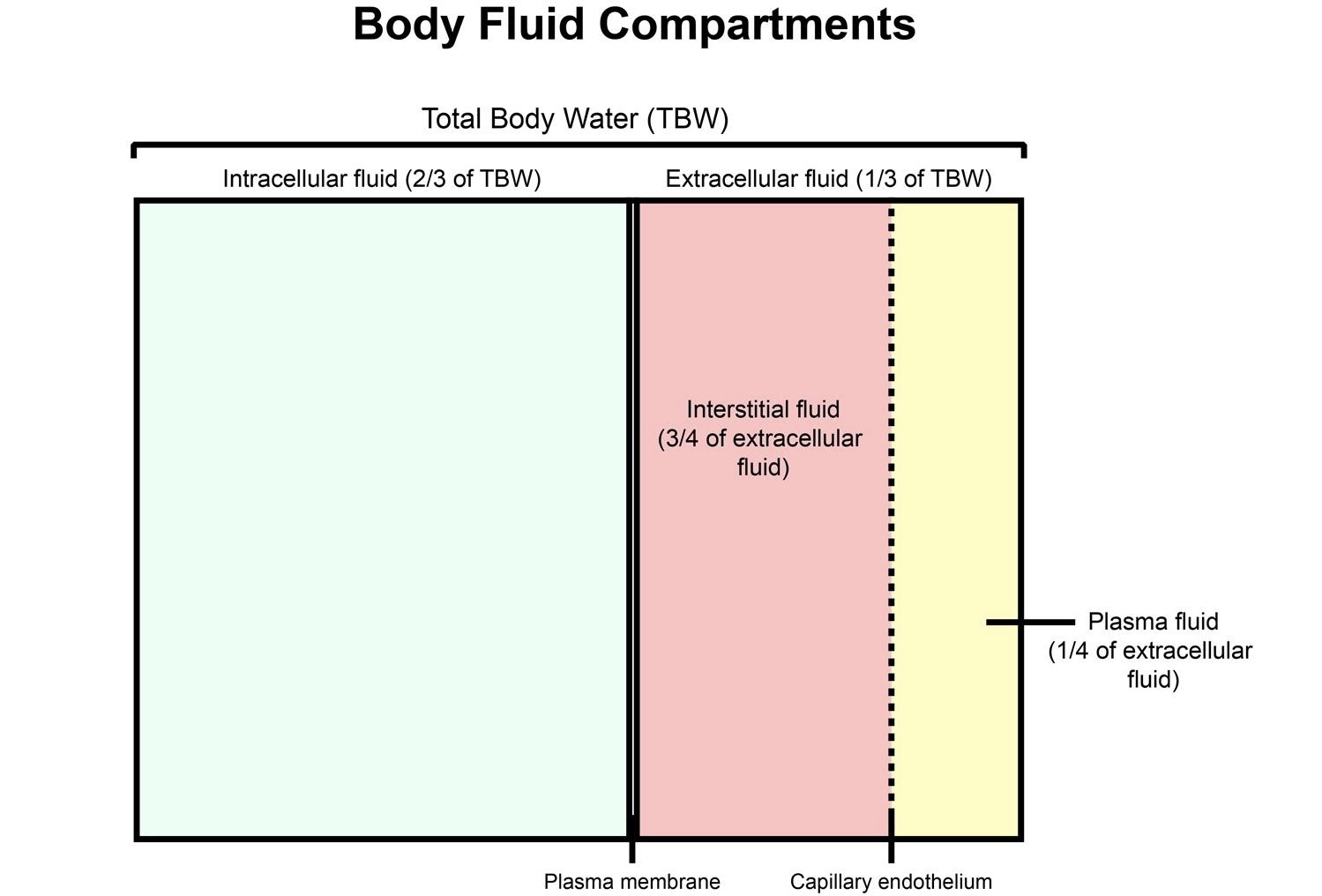
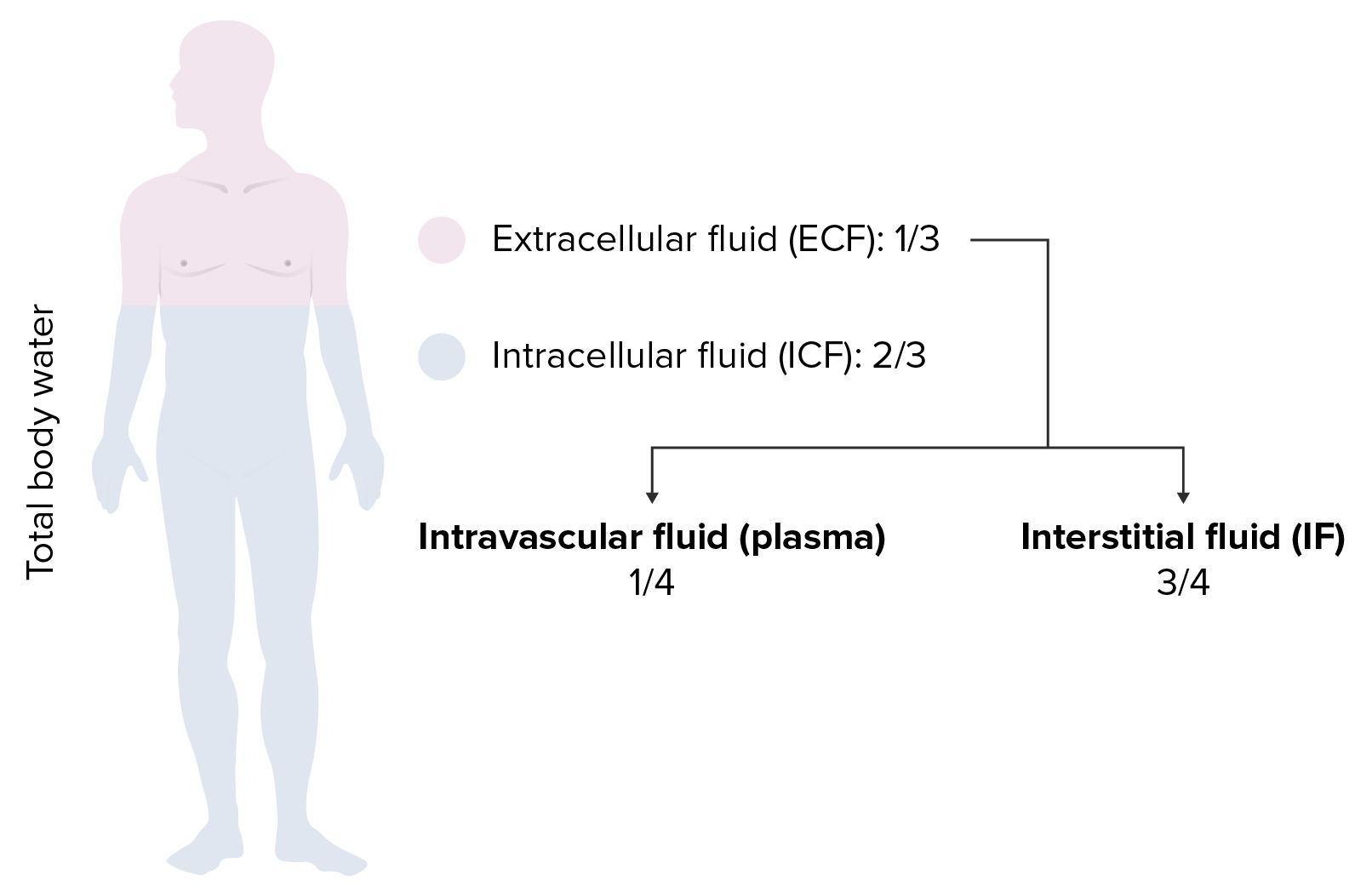
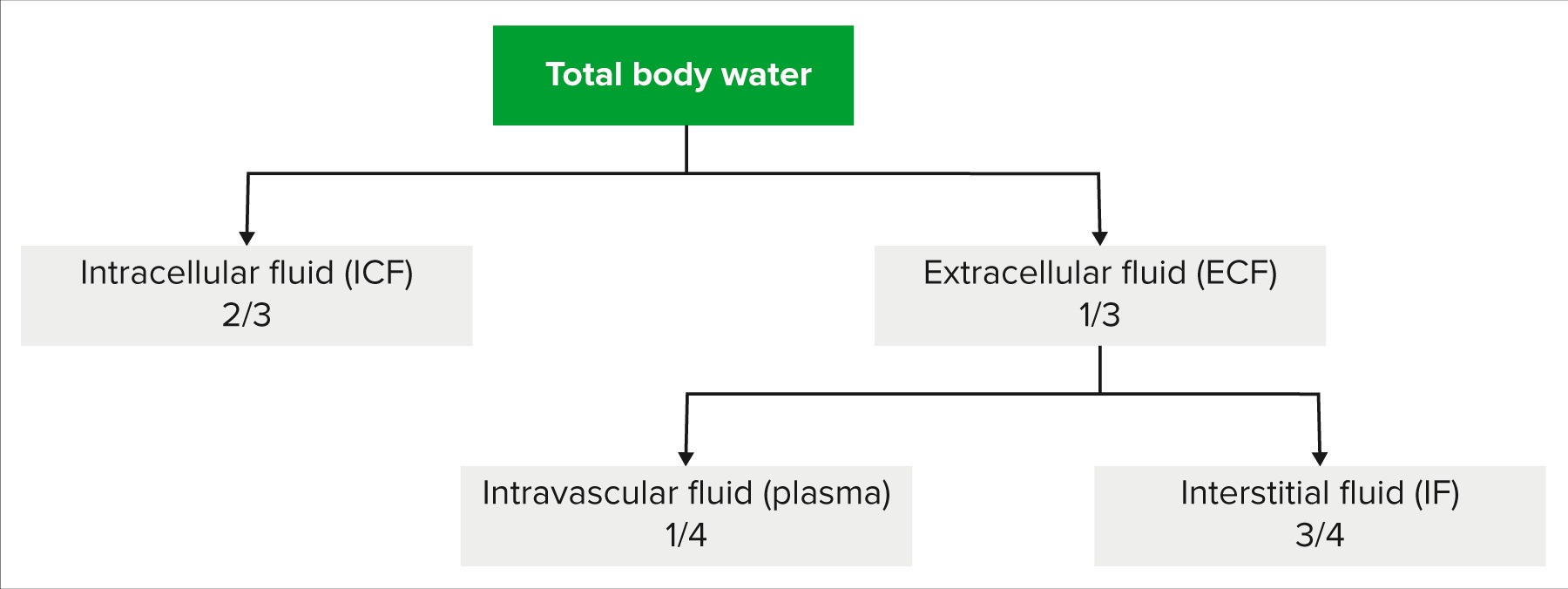
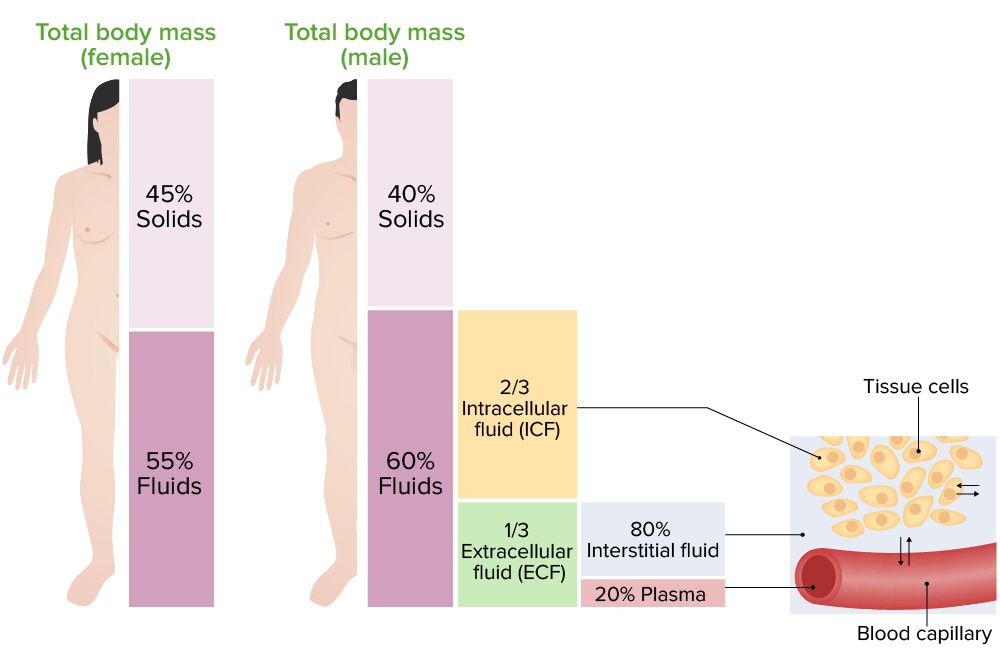
- Fluid compartments in the body vary according to age and gender
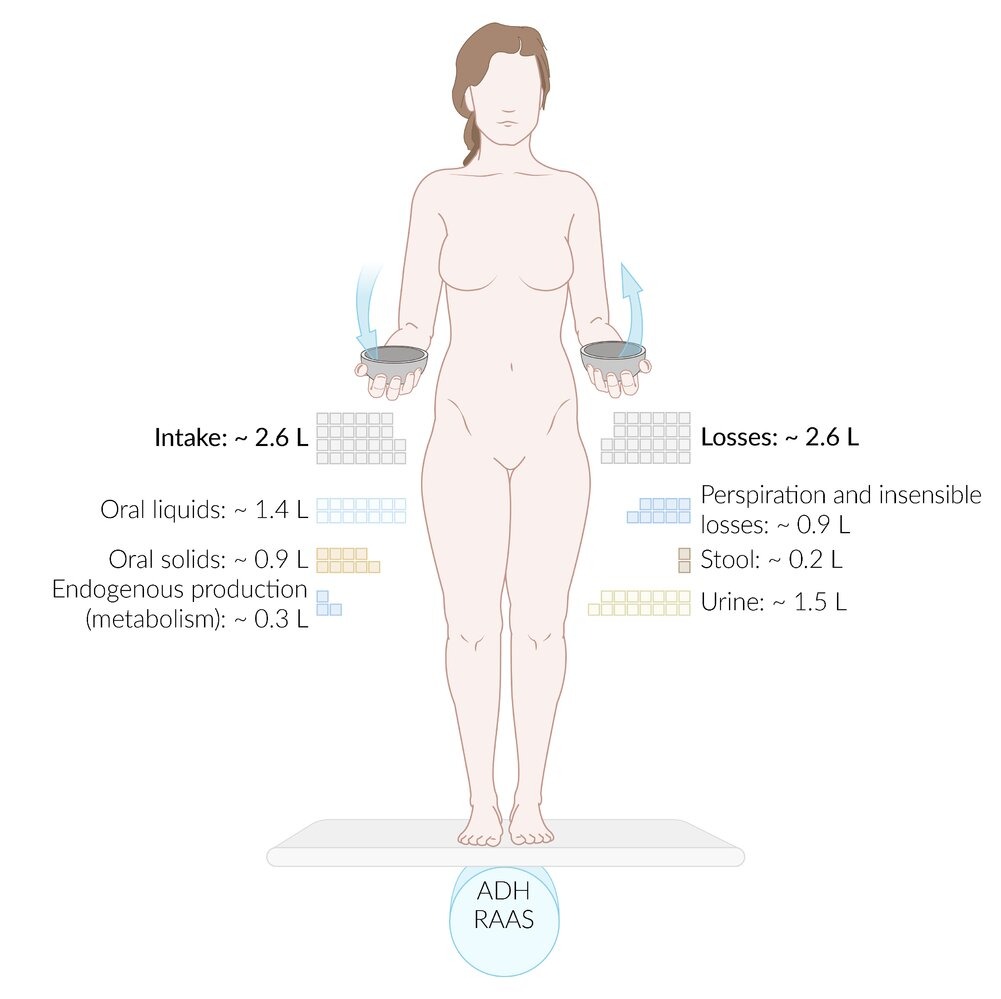
- Fluid enters and leaves the body through different routes that yield a certain amount (divided into sensible losses that can be seen, felt, and measured and insensible losses)
| Fluid Compartments According to Age and Gender | |
|---|---|
| Category | Details |
| Children |
|
| Adult Males |
|
| Adult Females |
|
| Elderly |
|
| Sensible and Insensible Fluid Gain and Loss | ||
|---|---|---|
| Route | Average Gain (mL) | Average Loss (mL) |
| Sensible | ||
| Oral fluids | 800 - 1500 | |
| Solid food | 500 - 700 | |
| Urine | 800 - 1500 | |
| Intestinal | 0 - 250 | |
| Insensible | ||
| Water oxidation | 250 | |
| Respiratory and skin | 600 | |
سجل دخولك لإضافة ملاحظات خاصة لكل قسم
· اشترك الآن
The extracellular space
- The extracellular space is subdivided into three spaces:
- Intravascular space (inside blood vessels) – 20% of the extracellular fluid
- Interstitial space – the functional tissue space between and around cells – 80% of the extracellular fluid
- The “third space” – the “third” extracellular space (the “third space” refers to areas of the body that do not normally contain fluid and where fluid collection is not functional or desirable. This includes areas such as the peritoneal cavity, pleural cavity, pericardial cavity and joints)
- Third-spacing refers to fluid shifting into this non-functional third space (edema, ascites, effusions)
- When fluid moves into a non-functional space, this may come at the expense of the intravascular space, resulting in hypotension and reduced perfusion of tissues
سجل دخولك لإضافة ملاحظات خاصة لكل قسم
· اشترك الآن
Types of fluid therapy
- Crystalloid solutions
- Aqueous solutions with mineral salts and other water-soluble molecules which are able to enter through the compartments of the body (the most commonly used fluids in a hospital setting)
- Colloid solutions
- Contain large insoluble molecules and preserve a high colloid osmotic pressure in the blood. Therefore, they should theoretically preferentially increase the intravascular volume
- One example of a colloid is human albumin solution, which may be used in patients with decompensated liver disease. Albumin is an important component of plasma and increases the plasma volume. It increases the oncotic pressure of the plasma, drawing in and retaining fluid. In decompensated liver disease, the patient’s liver is not producing adequate albumin, leading to reduced oncotic pressure in the intravascular space, resulting in reduced circulating blood volume. Human albumin solution may be used to help correct this, although the effects are only temporary
| Types of Crystalloid Solutions | Notes |
|---|---|
| Isotonic crystalloids (e.g., lactated Ringer’s solution, 0.9% NaCl) |
|
| Hypertonic saline solutions | - |
| Hypotonic solutions (D5W, 0.45% NaCl) |
|
سجل دخولك لإضافة ملاحظات خاصة لكل قسم
· اشترك الآن
Osmolarity versus tonicity of a fluid
- Osmolality
- The concentration of dissolved particles per unit mass of solution (mOsm/kg); preferred term to describe the osmotic pressure of biological systems
- Osmolarity
- The concentration of solutes per unit volume of solvent (mOsm/L); often used interchangeably with osmolality in clinical practice
- Tonicity
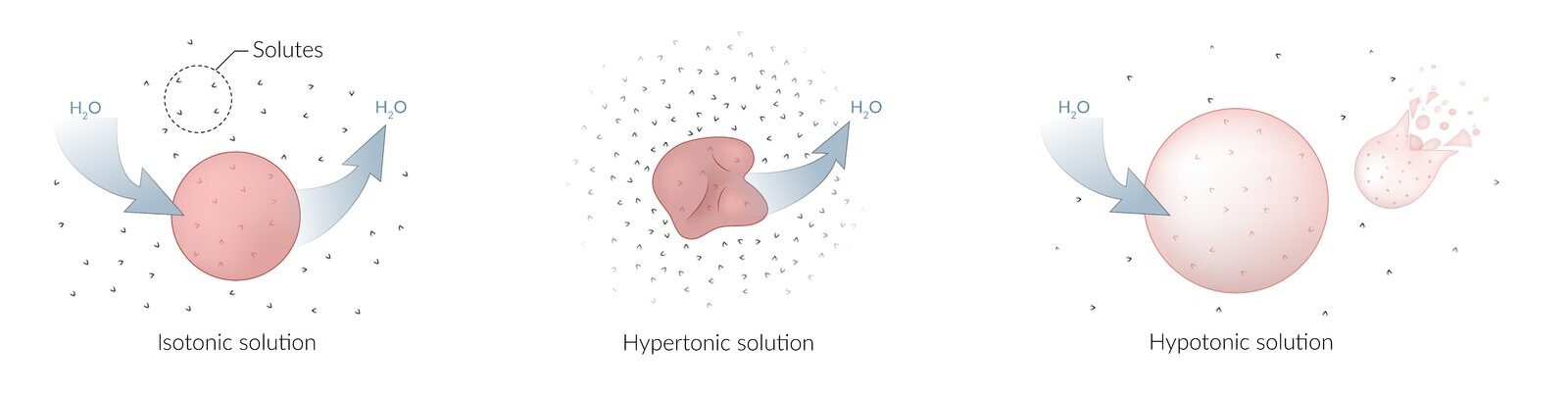
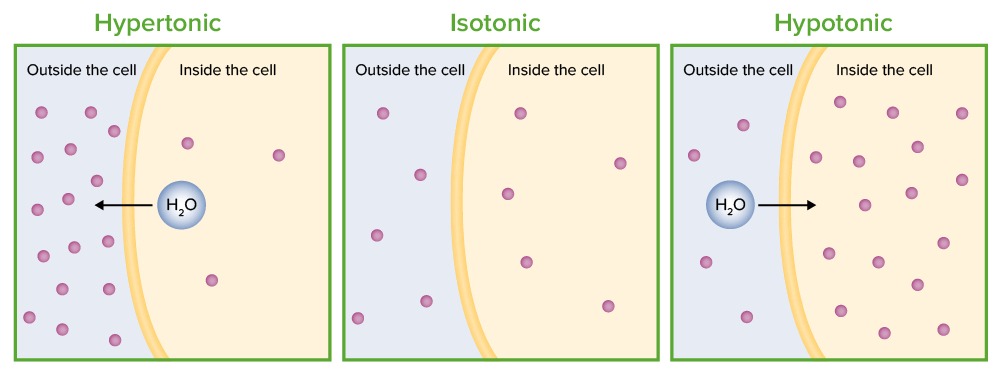
- The capacity of an extracellular fluid to create an osmotic gradient that will cause water to move into or out of the intracellular compartment; cannot be measured and has no units
- The osmolarity and tonicity of a solution are not the same thing. Administering solutions with inappropriate tonicity can lead to life-threatening fluid and electrolyte imbalances
| Content and Composition of Commonly Used IV Fluid Solutions | |||||
|---|---|---|---|---|---|
| Solution | Cl | Na | K | Ca | Lactate |
| Normal saline | 154 mEq | 154 mEq | - | - | - |
| ½ saline | 77 mEq | 77 mEq | - | - | - |
| ¼ saline | 39 mEq | 39 mEq | - | - | - |
| 3% saline | 512 mEq | 512 mEq | - | - | - |
| Ringer lactate | 109 mEq | 130 mEq | 4 mEq | 3 mEq | 28 mEq |
| Osmolarity versus Tonicity | ||
|---|---|---|
| Solution | Osmolarity | Tonicity |
| Isoosmolar | Equivalent to the intracellular compartment | Can be isotonic or hypotonic |
| Hyperosmolar | Higher than the intracellular compartment | Can be hypertonic, isotonic, or hypotonic |
| Hypoosmolar | Lower than the intracellular compartment | Can only be hypotonic |
سجل دخولك لإضافة ملاحظات خاصة لكل قسم
· اشترك الآن
Route of parenteral fluid therapy
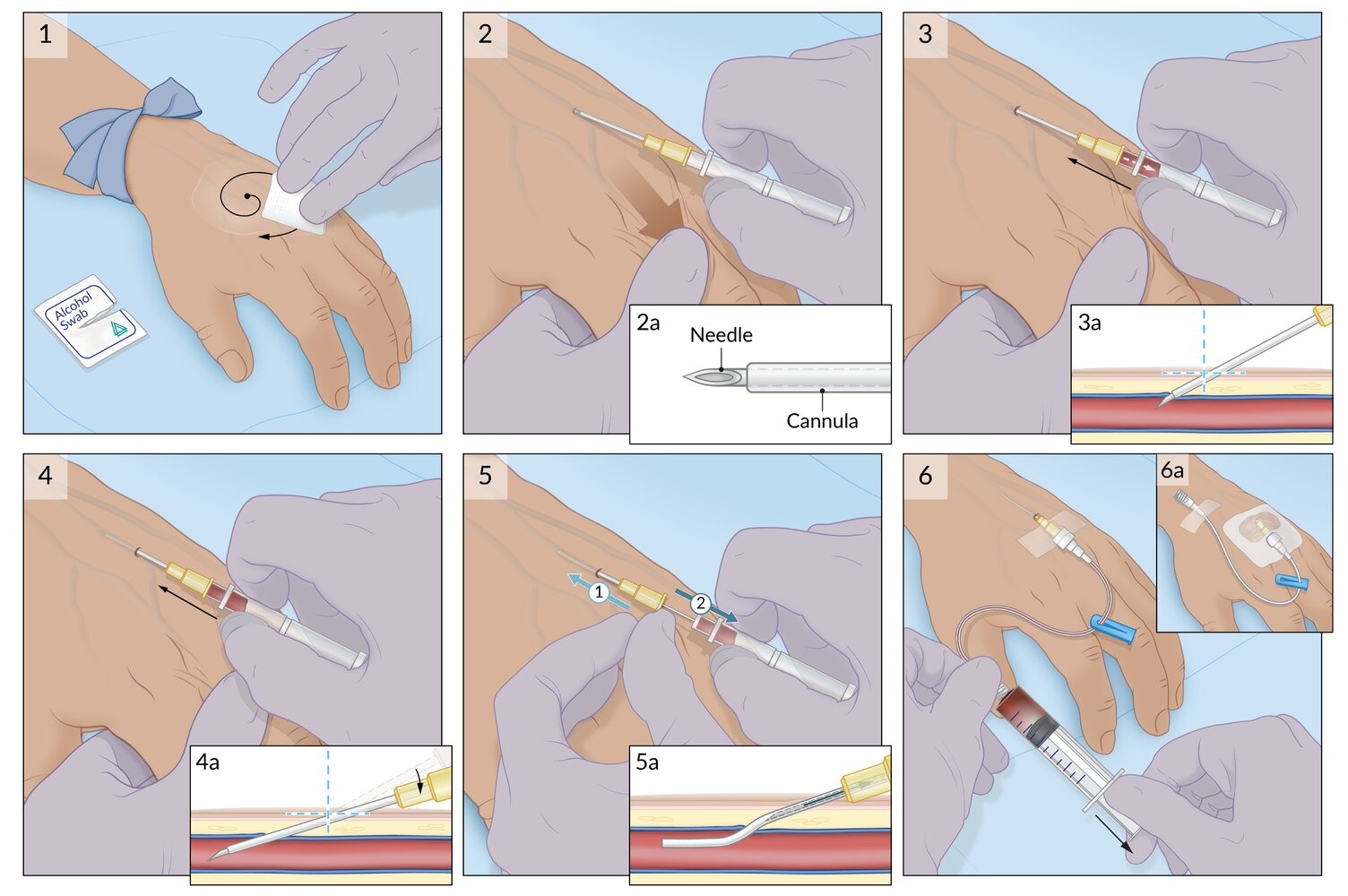
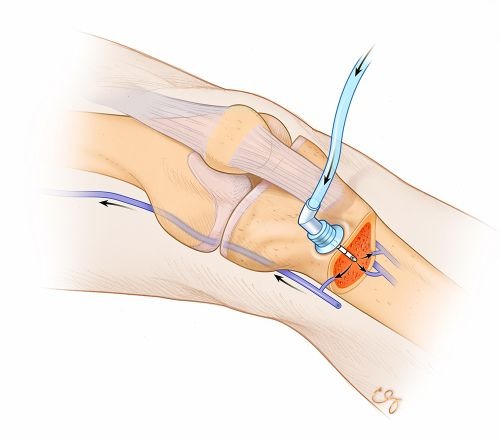
- Rapid introduction of large volumes of fluid through multiple large-bore (16G or wider) peripheral venous catheters is preferred to resuscitate patients with hypovolemic shock
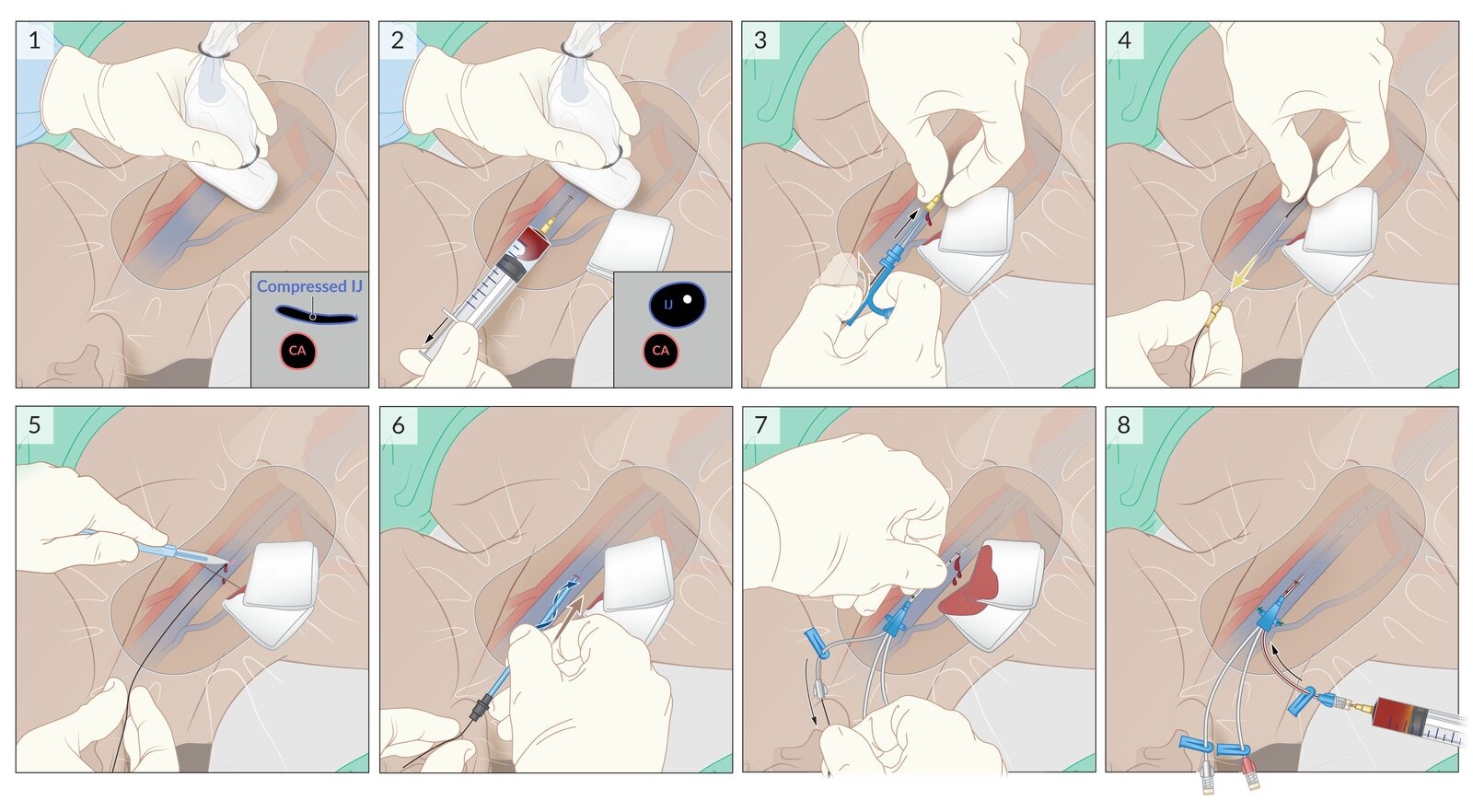
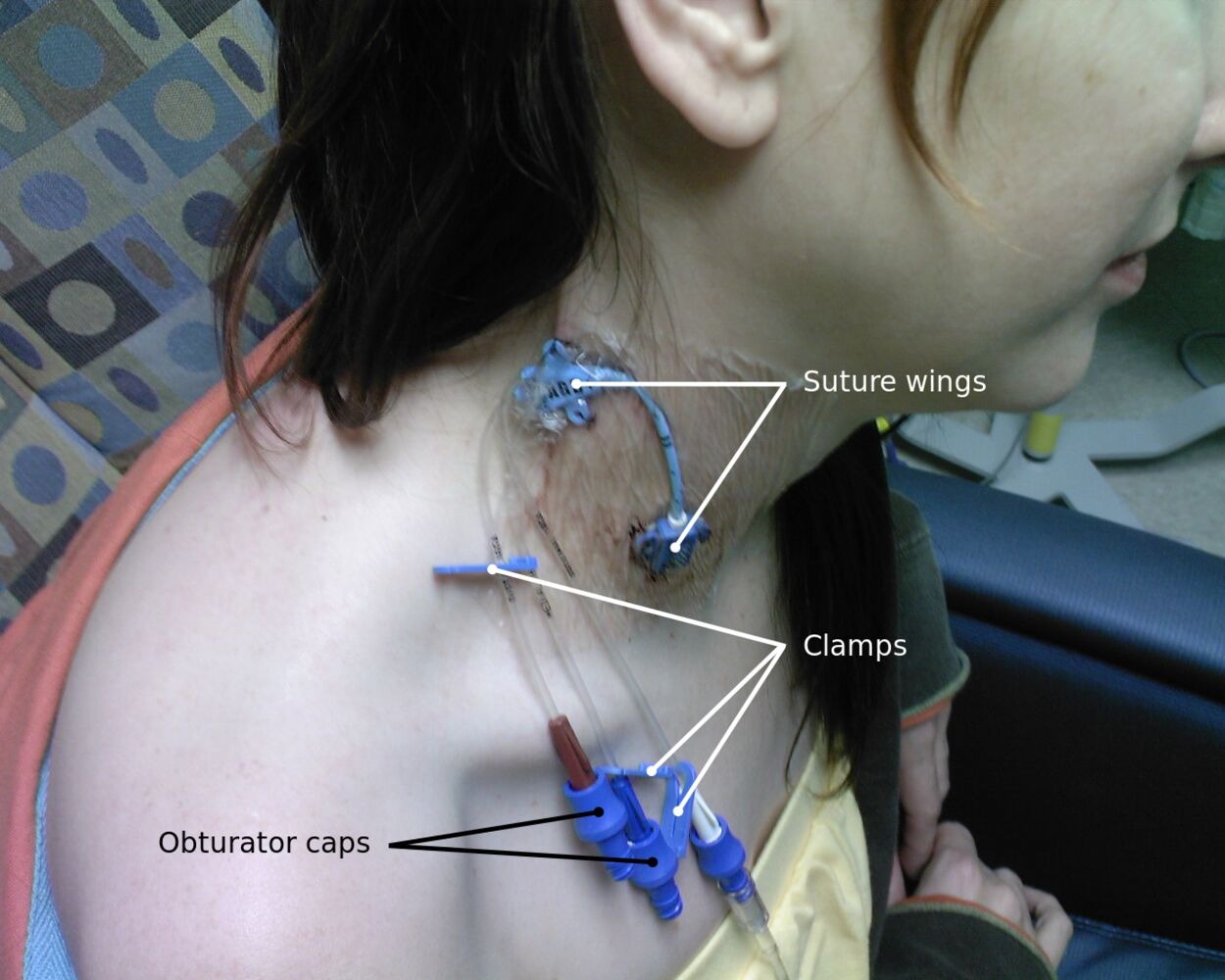
| Route of Parenteral Fluid Therapy | |
|---|---|
| Route | Details |
| Peripheral IV Access |
|
| Intraosseous Access |
|
| Central Venous Access |
|
سجل دخولك لإضافة ملاحظات خاصة لكل قسم
· اشترك الآن
احصل على التجربة الكاملة
اشترك للوصول لفيديوهات الشرح التفصيلي والبطاقات التعليمية التفاعلية وأسئلة الممارسة مع تتبع التقدم.
فيديوهات الشرح
بطاقات تفاعلية
أسئلة ممارسة
اشترك الآن