شرح المدرسين

SUMMARY
Acute rheumatic fever (ARF) is a delayed, nonsuppurative, immune-mediated (autoimmune) complication that develops 2–4 weeks after group A β-hemolytic streptococcal (GABHS, Streptococcus pyogenes) pharyngitis. Via molecular mimicry it produces inflammation of the heart, joints, central nervous system, skin, and blood vessels.
- Peak age: 5–15 years — the group most susceptible to streptococcal throat infection.
- Trigger: GABHS pharyngitis only — streptococcal skin infection (impetigo) does not cause ARF.
- Diagnosis: Jones criteria — evidence of recent strep infection PLUS 2 major, or 1 major + 2 minor criteria.
- Hallmark complication: carditis with valvulitis — early mitral regurgitation, late mitral stenosis.
- Treatment: eradicate GABHS + control inflammation, then long-term benzathine penicillin secondary prophylaxis.
Overview
| Acute rheumatic fever | |
| Epidemiology | Endemic in developing countries |
| Pathogenesis | Occurs 2-4 weeks after acute group A streptococcal pharyngitis Molecular mimicry: Anti-streptococcal antibodies attack cardiac & neuronal antigens |
| Clinical features | Acute/subacute
|
| Prevention | Prompt treatment of streptococcal pharyngitis with penicillin |
Definition, Epidemiology & Etiology
Definition
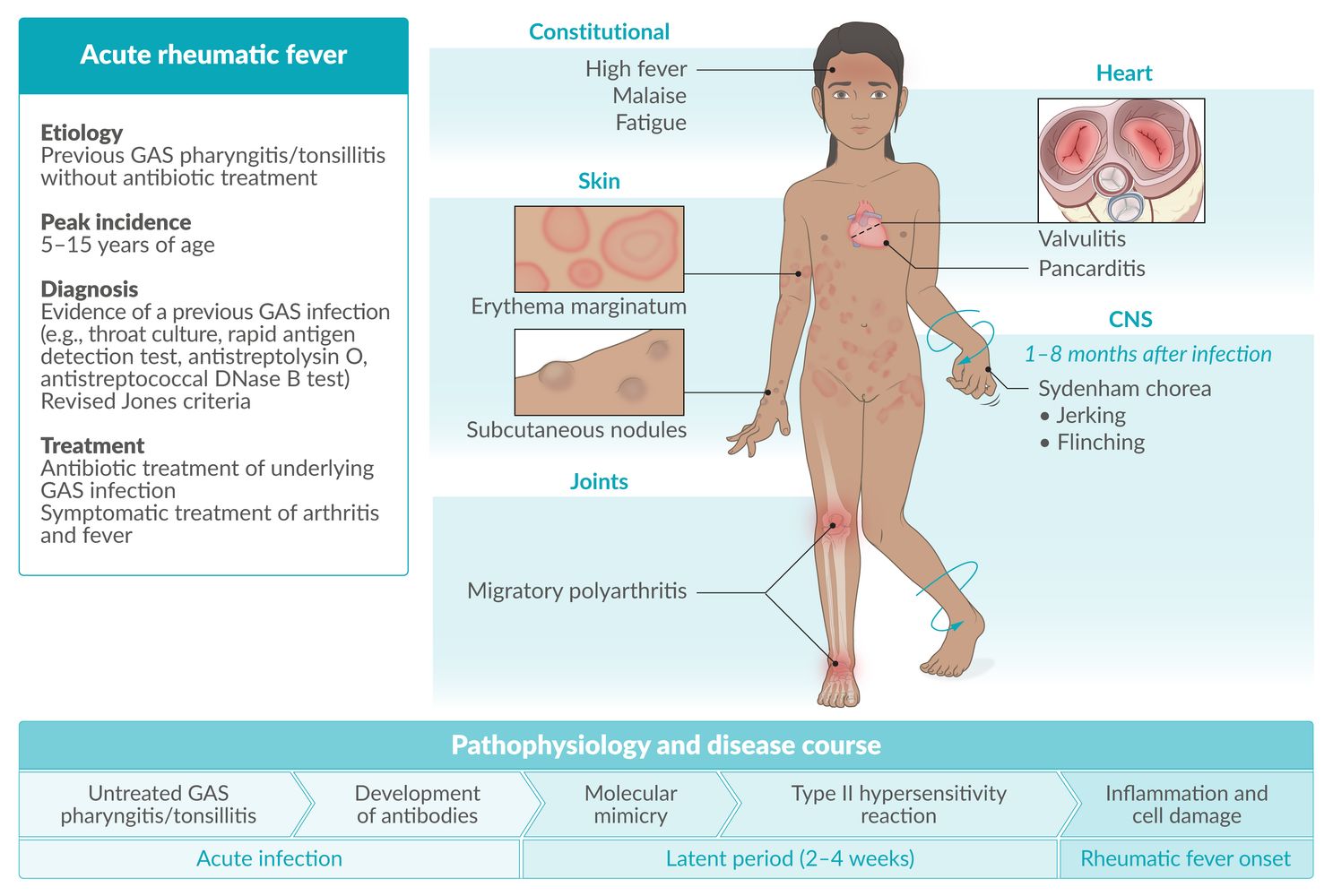
Acute rheumatic fever is a delayed, nonsuppurative, autoimmune complication occurring 2–4 weeks after an upper respiratory infection with GABHS (Streptococcus pyogenes), characterized by inflammation of the heart, blood vessels, joints, CNS, and skin.
Epidemiology
ARF is most common in children 5–15 years of age — the age group most susceptible to streptococcal throat infection. Overall incidence is roughly equal in males and females; however, Sydenham chorea and the late development of mitral stenosis are more common in females.
Etiology & Pathophysiology
The major risk factor is pharyngitis caused by certain rheumatogenic strains of GABHS. The precise cause is unknown, but the disease is autoimmune and represents molecular mimicry, in which streptococcal antigens resemble host autoantigens (in heart, brain, joints, and skin) and trigger a cross-reactive immune response.
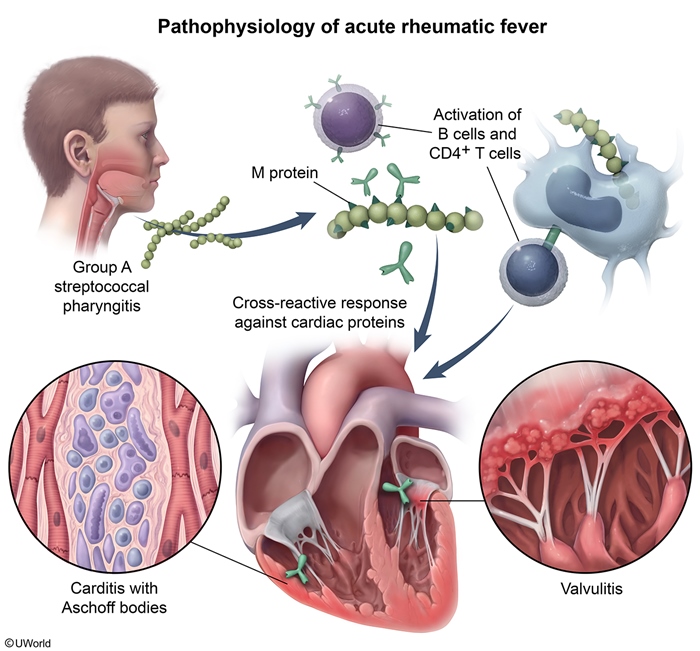
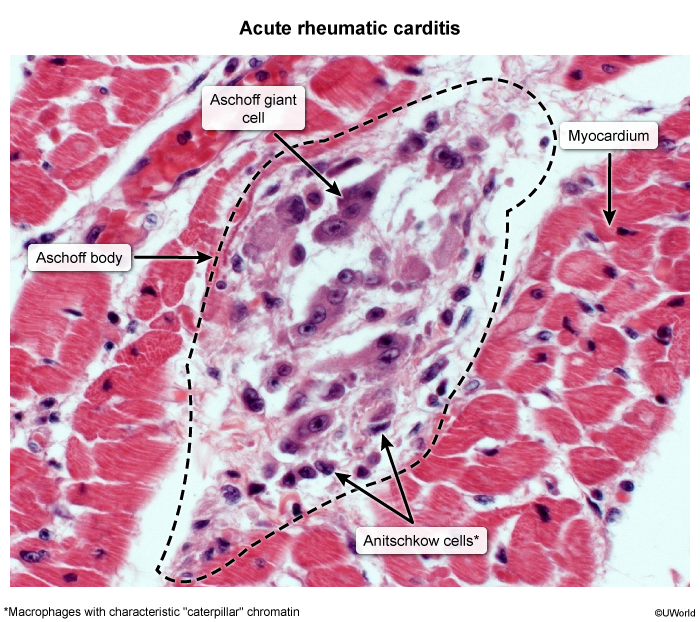
The characteristic myocardial lesion is the Aschoff body — a granulomatous focus containing plump activated macrophages known as Anitschkow cells ("caterpillar cells").
| فخ امتحاني – Exam Trap | |
|
They always try to confuse you on the exam by saying the patient had impetigo instead of pharyngitis. Remember that streptococcal skin infections cause PSGN but can never cause rheumatic fever. |
تذكر |
Clinical Features — Major Criteria (JONES)
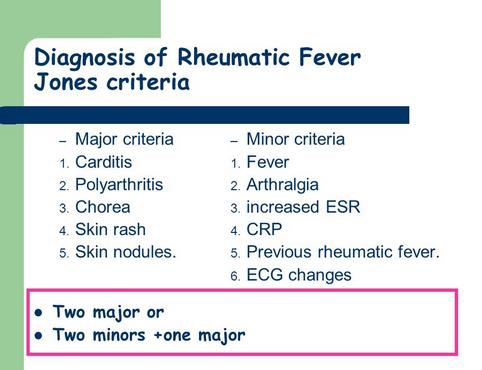
The clinical features are classified as major and minor (Jones criteria). The five major criteria are recalled with the classic mnemonic below.
| Major Jones Criteria — JONES | |
| J — Joints (migratory polyarthritis) O — ♥ (looks like a heart) = Carditis N — Nodules (subcutaneous) E — Erythema marginatum S — Sydenham chorea |
جملة تذكرية |
Cardiac involvement (carditis)
Carditis is the hallmark and most important complication. The inflammation may involve all layers of the heart (pancarditis: endocardium, myocardium, pericardium). Valvulitis typically causes insufficiency of the left-sided valves (mitral and aortic); mitral regurgitation is the most common early valvular manifestation and the tricuspid/pulmonic valves are rarely affected. Myocarditis manifests as tachycardia out of proportion to fever; severe disease causes cardiac dilatation and heart failure. Pericarditis and pericardial effusions are less common.
| Clinical Note – ملاحظة سريرية | |
|
Mitral regurgitation is the most common early valvular lesion in the acute phase. Years later, it may progress to mitral stenosis. Focus on the nature and timing of murmurs in exam questions. |
ملاحظة |
Polyarthritis
Classically migratory, asymmetric, and exquisitely painful, and often the earliest manifestation of ARF. It occurs in ~70% of patients, most commonly involving the elbows, knees, ankles, and wrists. It does not last more than 1 month and responds quickly to NSAIDs and aspirin.
| Clinical Note – ملاحظة سريرية | |
|
Arthritis is migratory and responds remarkably quickly to NSAIDs—to the point that if the patient does not improve within two days, you must reconsider your diagnosis and think of another differential. |
ملاحظة |
Sydenham chorea
Occurs later — months after GABHS pharyngitis (the longest-latency criterion) and reflects involvement of the basal ganglia and caudate nuclei. It may begin as hand clumsiness and progress to choreoathetoid movements with emotional lability.
Skin involvement
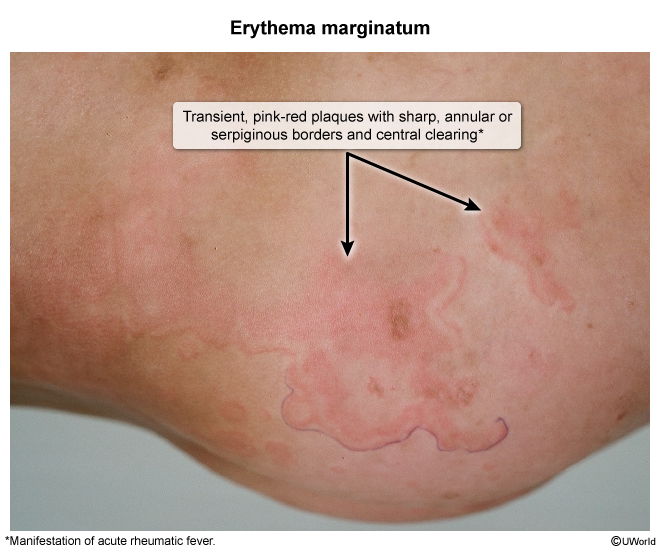
Erythema marginatum is an evanescent, nonpruritic rash that starts as pink-to-red macules which coalesce and spread centrifugally with central clearing over the trunk and proximal limbs.
Subcutaneous nodules are rarely seen and are associated with severe cardiac involvement. They are small, mobile, and painless, occurring over the bony prominences of the extensor surfaces of the extremities (e.g., elbows, knees).
Clinical Features — Minor Criteria (PEACE)
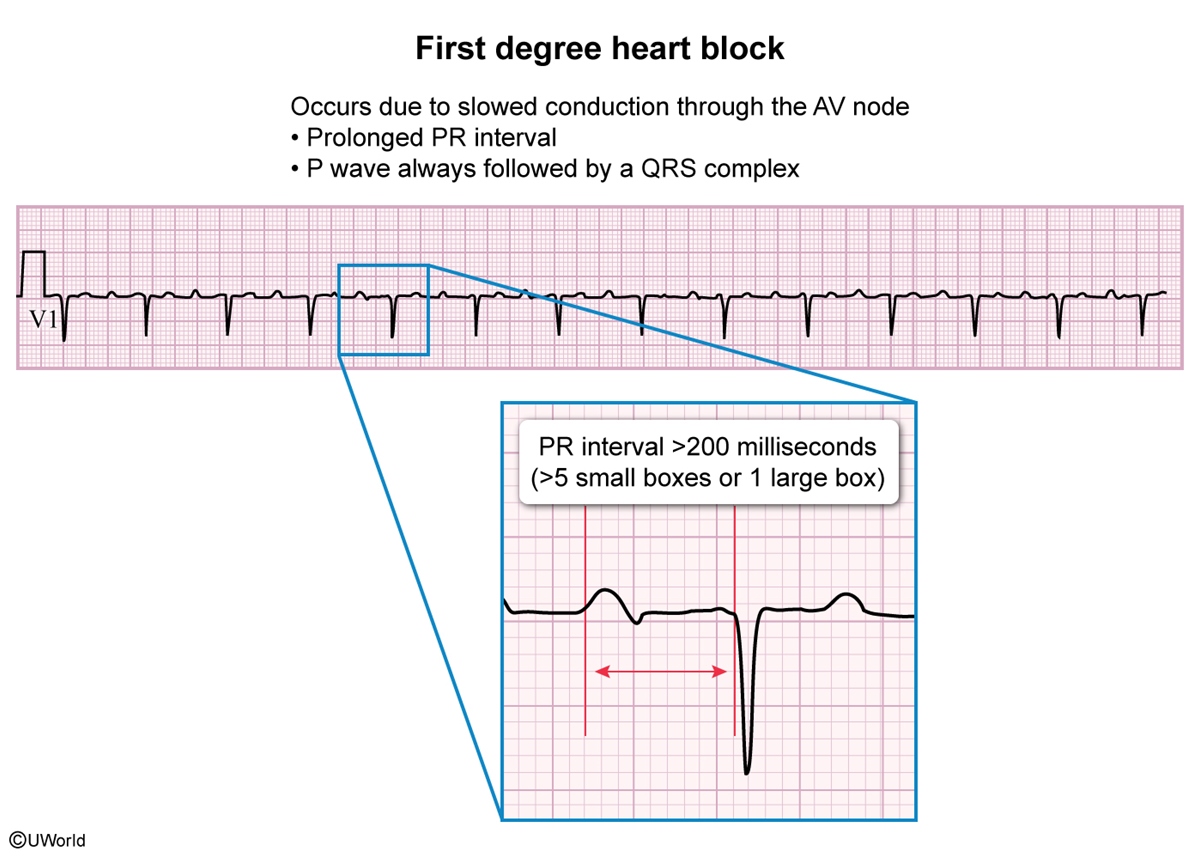
The minor criteria are less specific clinical and laboratory findings: fever, arthralgia, leukocytosis, raised acute-phase reactants (ESR and CRP), and a prolonged PR interval on ECG. Use the mnemonic below.
| Minor Jones Criteria — PEACE | |
| P — Prolonged PR interval (first-degree AV block) E — Elevated ESR A — Arthralgia C — CRP elevated E — Elevated temperature (fever) |
جملة تذكرية |
The prolonged PR interval reflects conduction-system involvement and appears as first-degree AV block on the ECG.
Diagnosis
ARF is a clinical diagnosis made with the Jones criteria. Diagnosis requires evidence of a recent streptococcal infection PLUS either 2 major criteria, or 1 major + 2 minor criteria. The master table below consolidates both sets.
Applying Template: Classification Table
| Jones Criteria for Acute Rheumatic Fever: Diagnosis: evidence of recent GABHS infection PLUS either 2 major, or 1 major + 2 minor criteria | |
| Major Criteria | JONES |
| J — Joints | Migratory polyarthritis of large joints (knees, ankles, elbows, wrists); occurs in ~70%; earliest manifestation |
| O — ♥ Carditis | Pancarditis; valvulitis causes mitral regurgitation (most common early lesion); the hallmark and most important complication |
| N — Nodules | Subcutaneous, small, mobile, painless nodules over extensor bony prominences; associated with severe carditis |
| E — Erythema marginatum | Evanescent, nonpruritic pink-red macules with central clearing over trunk and proximal limbs |
| S — Sydenham chorea | Late (months later); choreoathetoid movements with emotional lability from basal-ganglia involvement |
| Minor Criteria | PEACE |
| P — Prolonged PR interval | First-degree AV block on ECG |
| E — Elevated ESR | Raised ESR (acute-phase reactant); leukocytosis may also be present |
| A — Arthralgia | Joint pain without objective arthritis (not counted if polyarthritis is used as a major criterion) |
| C — CRP elevated | Raised CRP (acute-phase reactant) |
| E — Elevated temperature | Fever |
Laboratory & imaging workup
Serum: nonspecific inflammatory markers — elevated ESR and CRP; elevated WBC count (leukocytosis).
Serologic markers (evidence of recent GABHS): anti-streptolysin O (ASO) titers, anti-DNase B antibodies, antihyaluronidase, antistreptokinase.
Imaging: echocardiography — evidence of carditis such as decreased ventricular function, valvular insufficiency, or pericardial effusion.
Refer to the Jones criteria for acute rheumatic fever for the full major-versus-minor breakdown used at the bedside.
Management
1. Eradication of GABHS infection
Benzathine penicillin G: single IM injection, or oral penicillin for 10 days. This eradicates the organism regardless of throat-culture status.
2. Control of inflammation
- NSAIDs / aspirin — for joint pain and swelling, but only after the diagnosis of ARF is certain (they can mask a migratory arthritis and confound diagnosis).
- Corticosteroids — reserved for severe cardiac involvement such as congestive heart failure and severe valvular dysfunction.
3. Supportive therapy
- Congestive heart failure: diuretics, dietary salt restriction, digoxin, and bed rest.
- Sydenham chorea: if severe, treat with haloperidol.
4. Long-term management
Continuous antimicrobial (secondary) prophylaxis is given to prevent recurrent episodes of ARF; the duration depends on the severity of heart disease (detailed in the Prognosis & Secondary Prophylaxis section).
Prognosis & Secondary Prophylaxis
Prognosis
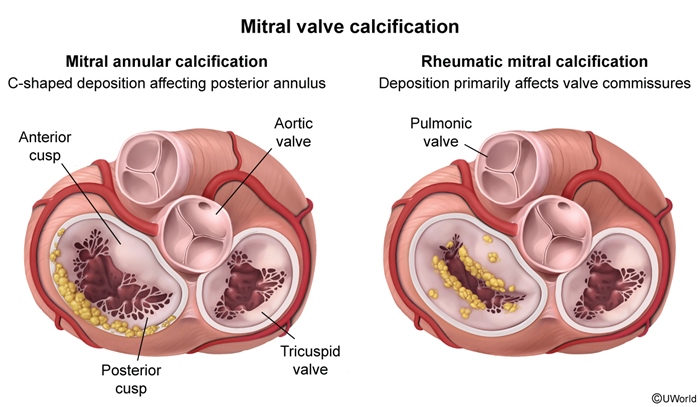
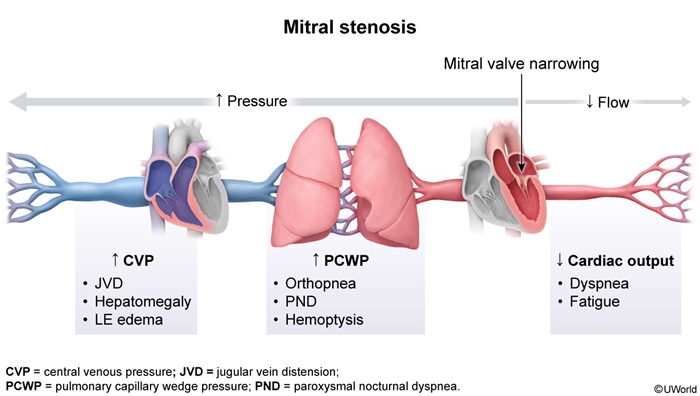
There are no chronic sequelae of the joint, skin, and CNS manifestations of ARF. In contrast, cardiac inflammation often leads to severe valvular dysfunction, which may require intervention either immediately or many years later. Valvular insufficiency or stenosis is usually delayed (typically >3 years after ARF) and, if severe, may require valve replacement or valvuloplasty.
Secondary prophylaxis
The preferred agent is intramuscular benzathine penicillin G every 4 weeks. Duration is stratified by whether carditis and residual valvular disease are present.
Applying Template: Treatment Steps
| Secondary Antibiotic Prophylaxis for Rheumatic Fever (Applying Template: Treatment Steps) | |
|---|---|
| RF without carditis | |
| Regimen | Duration |
| Benzathine penicillin G IM every 4 weeks | 5 years or until age 21 (whichever is longer) |
| RF with carditis, no residual valvular disease | |
| Regimen | Duration |
| Benzathine penicillin G IM every 4 weeks | 10 years or until age 21 (whichever is longer) |
| RF with carditis + persistent valvular disease | |
| Regimen | Duration |
| Benzathine penicillin G IM every 4 weeks | 10 years or until age 40 (whichever is longer) |
Key Points for Exams
- Trigger is pharyngitis only: rheumatogenic GABHS pharyngitis causes ARF; streptococcal skin infection (impetigo) causes PSGN but never ARF.
- Latency: ARF appears 2–4 weeks after pharyngitis; Sydenham chorea is the longest-latency feature (months later).
- Mechanism: molecular mimicry (type II hypersensitivity); Aschoff bodies with Anitschkow cells are the pathologic hallmark.
- Diagnosis: Jones criteria — recent strep infection PLUS 2 major, or 1 major + 2 minor. Remember JONES (major) and PEACE (minor).
- Carditis is the most important complication — mitral regurgitation early, mitral stenosis years later; stenosis and chorea are commoner in females.
- Arthritis is migratory and dramatically NSAID-responsive; failure to improve within ~2 days should prompt reconsideration of the diagnosis.
- Management: penicillin to eradicate GABHS + NSAIDs/aspirin (steroids for severe carditis); then benzathine penicillin G IM every 4 weeks for secondary prophylaxis (5 yr / 10 yr / to age 21 or 40 depending on carditis and valvular disease).
| ARF carditis vs. viral myocarditis | |
Timing is the discriminator. ARF carditis appears 2–4 weeks AFTER a GABHS pharyngitis (immune-mediated, with other Jones criteria present), whereas viral myocarditis occurs DURING/concurrent with the viral illness. If a patient has cardiac inflammation during an active upper-respiratory infection and no other Jones criteria, think viral myocarditis, not ARF. |
تذكر |
احصل على التجربة الكاملة
اشترك للوصول لفيديوهات الشرح التفصيلي والبطاقات التعليمية التفاعلية وأسئلة الممارسة مع تتبع التقدم.