شرح المدرسين

Summary
Cystic fibrosis (CF) is a chronic, progressive, multisystem autosomal recessive disorder caused by mutations in the CFTR gene, with major manifestations in the respiratory, gastrointestinal (GI), and reproductive systems. It is the most common lethal genetic disease in Caucasians, and most cases are diagnosed by 2 years of age.
Overview
The unifying defect is impaired CFTR-mediated chloride transport across epithelia, which produces thick, viscid secretions that obstruct ducts and airways throughout the body. Before the era of newborn screening, most children presented with meconium ileus, respiratory symptoms, and failure to thrive.
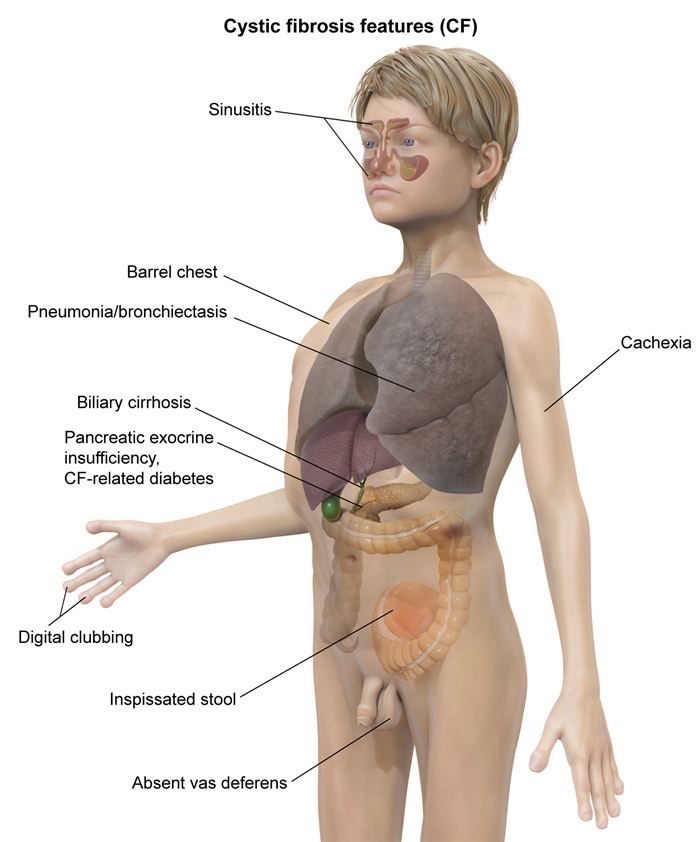
| Diagnostic hallmarks of CF | |
Autosomal recessive; the most common lethal genetic disease in Caucasians; most cases diagnosed by 2 years of age. |
ملاحظة |
Pathophysiology & Genetics
CF results from mutation of the CFTR gene (CF transmembrane conductance regulator) on the long arm of chromosome 7, inherited in an autosomal recessive pattern. Nearly 2,000 mutations have been identified at the CF locus.
The most common mutation is the ΔF508 (F508del) deletion, causing loss of a single phenylalanine at position 508. It is present in nearly 80% of all CF cases, although homozygosity for the mutation is only about 50%.
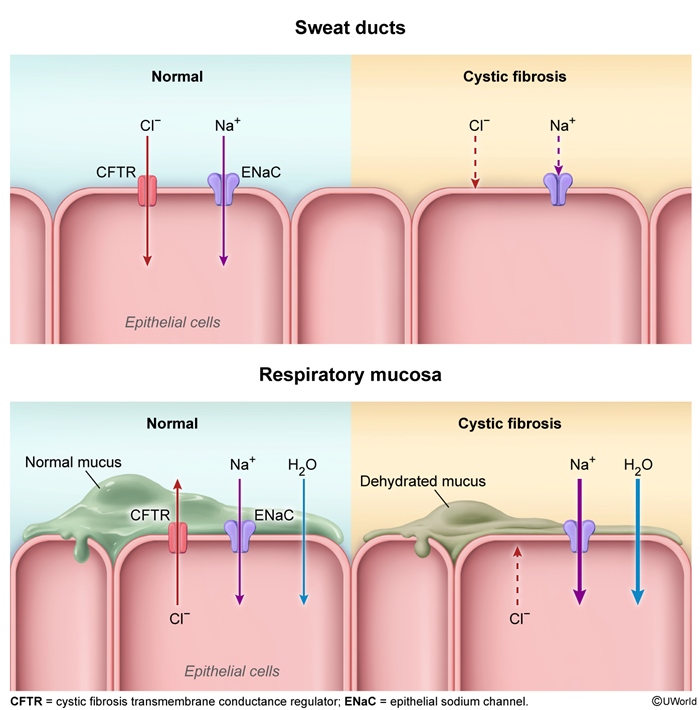
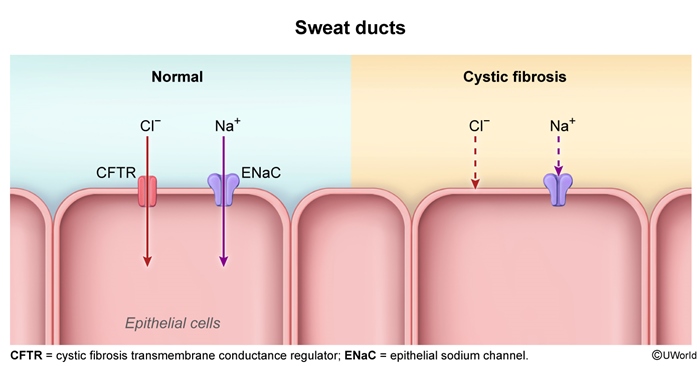
These mutations cause abnormal ion transport across epithelial surfaces — impermeable chloride channels with overactive sodium (and water) reabsorption. The result is viscid secretions that block ducts and air passages. The most affected tissues are the lungs, pancreas, intestinal mucous glands, liver, reproductive tracts, and sweat glands.
| CFTR is an ATP-gated chloride channel | |
Normal CFTR is an ATP-gated Cl⁻ channel on the apical membrane of epithelial cells. In sweat ducts it reabsorbs luminal Cl⁻; loss of function leaves Cl⁻ (and Na⁺) in sweat → high sweat chloride. In airway and GI epithelia it secretes Cl⁻; loss produces thick, dehydrated secretions. This dual role is the single most tested pathophysiology concept for CF. |
تذكر |
Clinical Manifestations
Most patients are now identified before symptom onset through newborn screening. Historically the classic presentations were meconium ileus, recurrent respiratory infection, and failure to thrive. The organ-specific findings are consolidated below.
| Cystic Fibrosis: Organ-Specific Manifestations | |
|---|---|
| Feature | Description |
| Respiratory | Pansinusitis (near-universal); nasal polyps (~50%); digital clubbing; chronic viscid mucus + recurrent infection → chronic diffuse bronchiectasis (leading cause of morbidity/mortality). PFTs: ↓ forced expiratory flow early → ↓ peak expiratory flow, ↑ residual volume. |
| GI / Pancreas | Exocrine pancreatic insufficiency (50% at birth, 90% by age 9) → steatorrhea, fat-soluble vitamin (A, D, E, K) deficiency, failure to thrive; CF-related diabetes (~50% by adulthood); meconium ileus (10–20% of newborns); DIOS (20–25%); rectal prolapse (~20%); biliary cirrhosis, cholelithiasis, portal hypertension (5–15%). |
| Sweat glands | Very high salt content — sweat Na⁺ and Cl⁻ > 60 mEq/L (normal < 40 mEq/L); infants may develop severe hyponatremia ("salty-tasting baby"). |
| Reproductive | Males: congenital bilateral absence of the vas deferens → obstructive azoospermia and infertility. Females: thick cervical mucus → reduced fertility. |
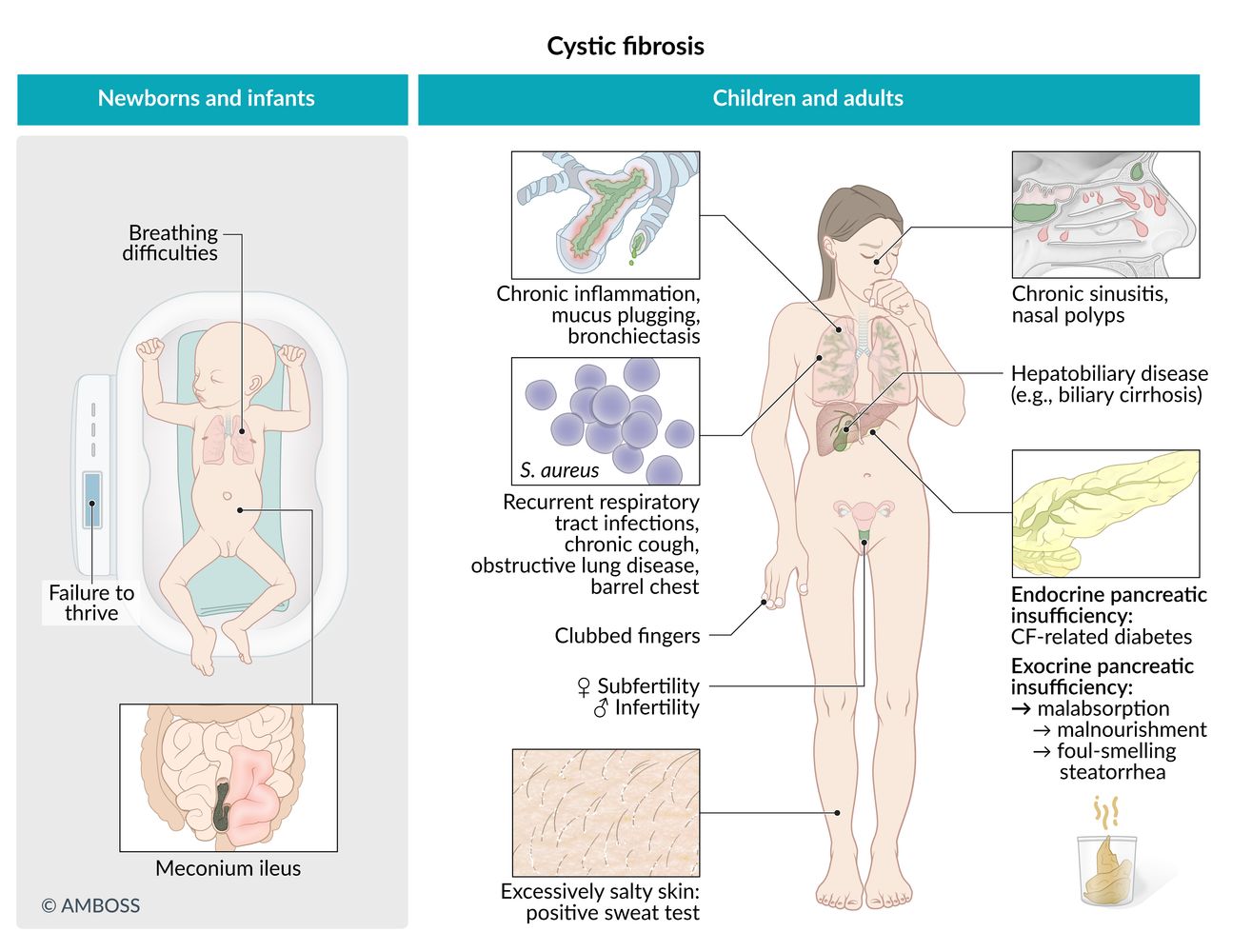
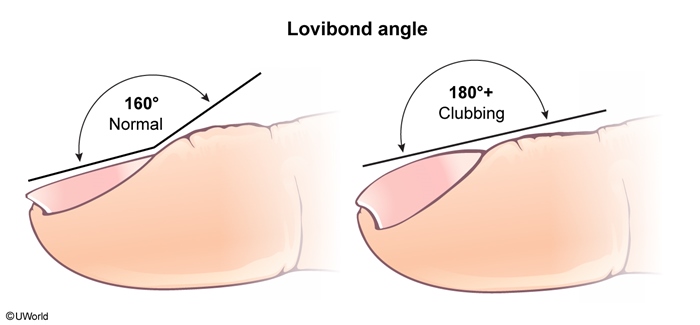
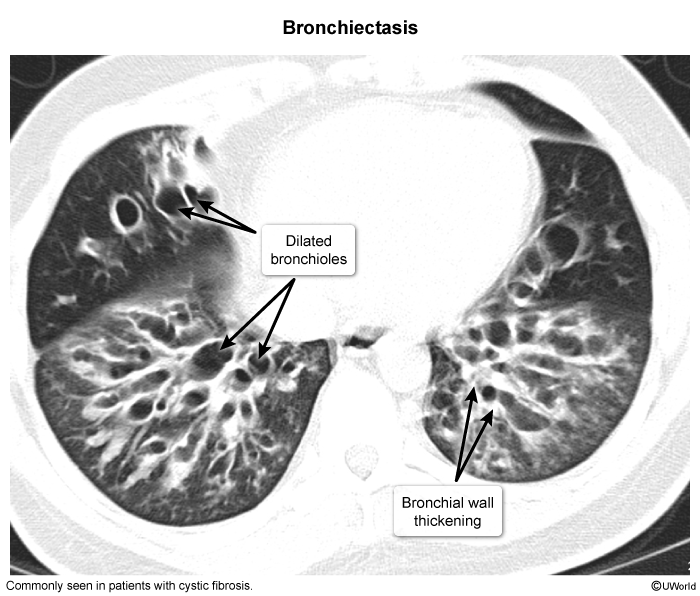
Respiratory disease is the leading cause of morbidity and mortality. The lower airway is normal at birth, but recurrent inflammation and infection drive progressive bronchiectasis, and chronic hypoxia produces near-universal digital clubbing.
The airway pathogen mix shifts predictably with age — an exam favourite.
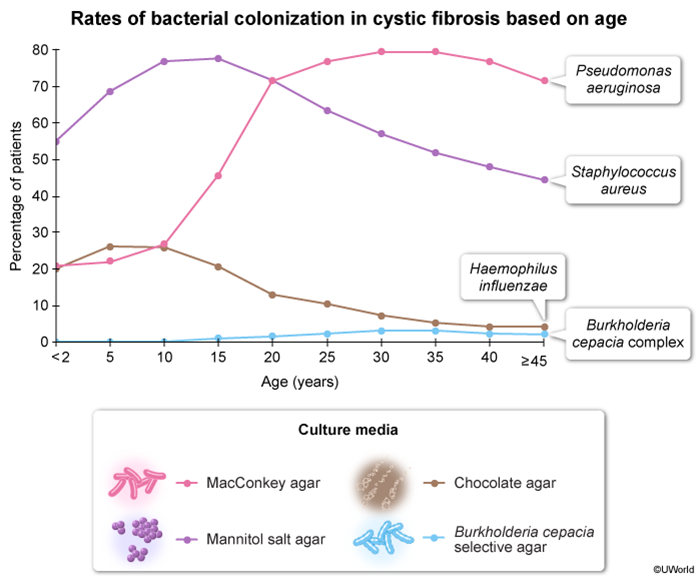
| Exam Pitfall: Age-Based Bacterial Succession | |
|
Always pay close attention to the age group in the question. S. aureus (along with H. influenzae and gram-negatives such as Klebsiella) is the most common pathogen in early childhood, but Pseudomonas aeruginosa — particularly the mucoid strain — becomes the predominant organism in adults. An adult CF patient presents with exacerbation? Think of Pseudomonas first, and watch out for MRSA as well. |
تذكر |
GI obstruction spans the age spectrum: inspissated meconium in the newborn (meconium ileus) and its later equivalent (DIOS) in older children and adults.
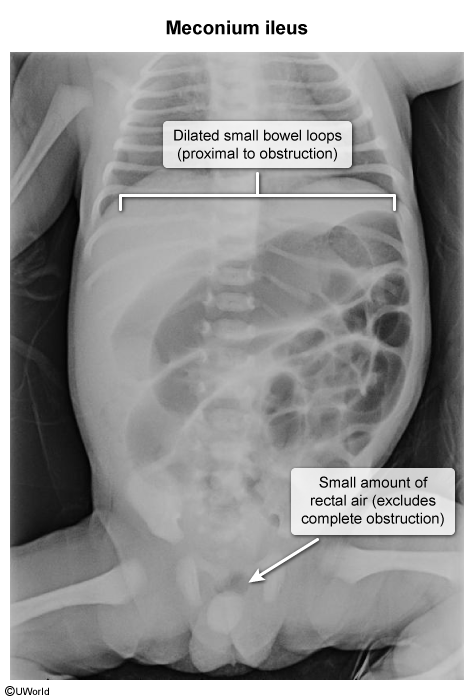
| Clinical Note: Meconium ileus vs. DIOS | |
|
Distinguish between meconium ileus (occurs in newborns and is the first presentation of CF at 10–20%) and DIOS (distal intestinal obstruction syndrome = meconium ileus equivalent) which occurs in older children and adults. Both are obstructions due to viscid secretions, but the main difference is the age group. |
Note |
Exocrine pancreatic insufficiency causes fat malabsorption, so remember the fat-soluble vitamins at risk.
| Fat-soluble vitamin deficiencies — ADEK | |
|
Pancreatic insufficiency → fat malabsorption → deficiency of the fat-soluble vitamins. Memory hook: ADEK — “All Dogs Eat Kibble.”
|
جملة تذكرية |
Diagnosis & Screening
Diagnosis requires at least one clinical/screening criterion plus at least one laboratory criterion:
| Accepted findings — need ≥ 1 from EACH group | |
| Clinical / screening (≥ 1) |
|
| Laboratory (≥ 1) |
|
Screening: Newborn screen measures blood immunoreactive trypsinogen (IRT) — few false negatives but > 90% false positives, so any single positive result must trigger confirmatory testing.
Special tests / gold standard: The sweat chloride test uses quantitative pilocarpine iontophoresis (in newborns > 36 weeks' gestation). A value > 60 mEq/L confirms CF (< 40 mEq/L is normal). Main false-negative causes: laboratory error (most common), edema from hypoproteinemia, and rare CFTR mutations that spare the sweat glands.
Genetic testing: performed on blood, buccal brushings, or chorionic villus sampling; panels of 25–100 common mutations detect ~95% of patients. Identifying a single mutation neither rules in nor rules out CF.
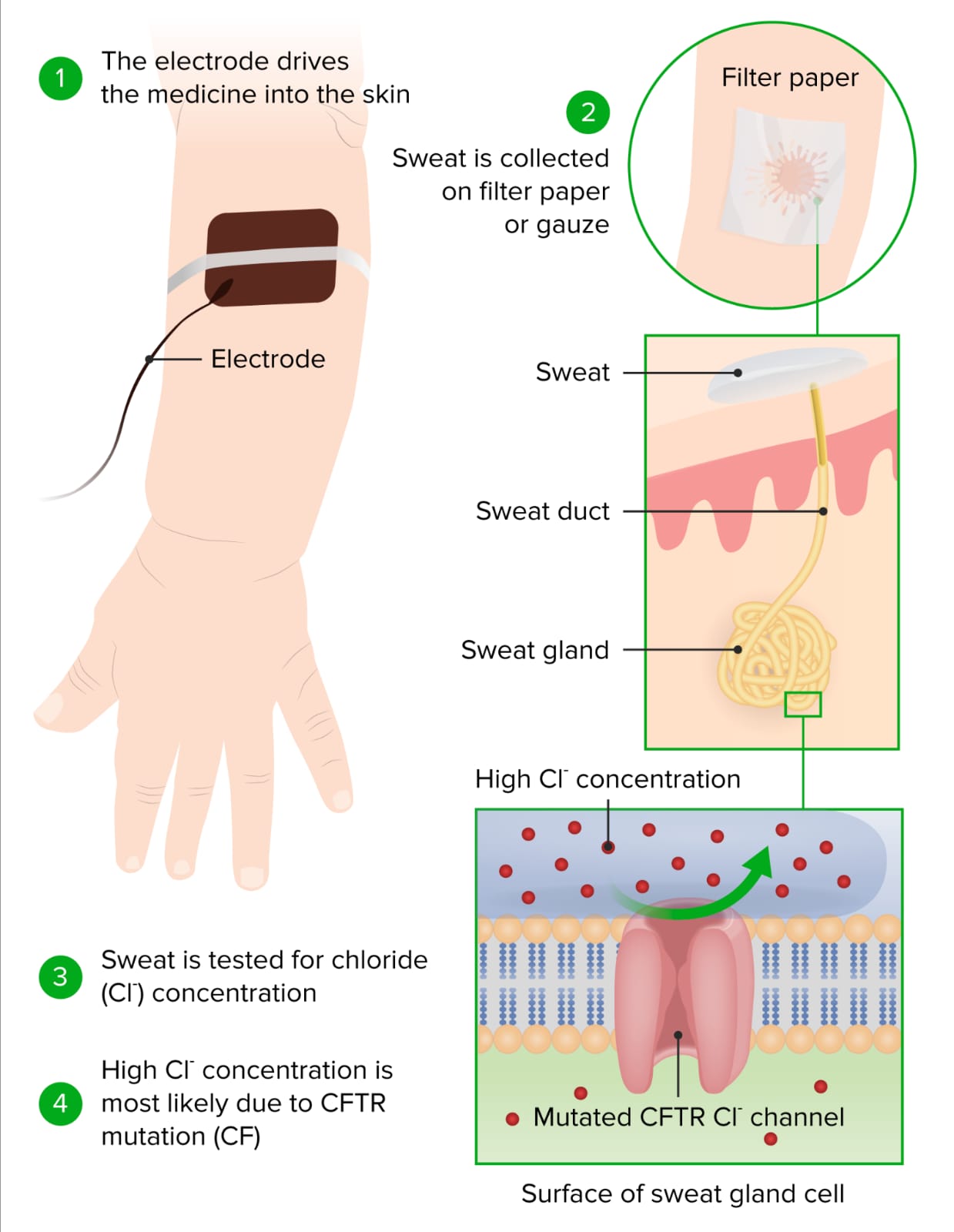
When to order a sweat chloride test — the highest-yield triggers:
- Meconium ileus in a newborn
- Nasal polyps (± pansinusitis)
- Failure to thrive
- Recurrent S. aureus or Pseudomonas pneumonia
CF shares chronic sinopulmonary disease with primary ciliary dyskinesia (Kartagener syndrome). See the cystic fibrosis vs primary ciliary dyskinesia comparison for the extrapulmonary features that separate them.
| Exam trap: Sweat chloride and screening | |
|
The sweat chloride test is the gold standard; a value > 60 mEq/L confirms diagnosis (< 40 is normal). The most common cause of false negative is laboratory error, followed by edema from hypoproteinemia. Newborn screening measures IRT and has > 90% false positives, so any positive result requires confirmation with the sweat test. |
تذكر |
Management
Goals: preserve lung function, optimize nutrition, prevent and treat complications, and maintain quality of life. Care is multidisciplinary.
Respiratory disease
- Airway clearance: postural drainage and percussion, chest-wall oscillating vest.
- Mucus-altering agents: inhaled dornase alfa (DNase) and hypertonic saline (7%) to thin secretions.
- Antibiotics (inhaled, oral, IV) to control chronic infection and treat exacerbations (see table).
- Chronic azithromycin (anti-inflammatory, ~3×/week) reduces exacerbations and hospitalizations, improves pulmonary function, and modestly increases weight.
- High-dose ibuprofen for chronic airway inflammation. Inhaled corticosteroids are not recommended for routine use.
- Bilateral lung transplantation for end-stage lung disease — the most common cause of death; CF is the leading indication for lung transplant in children.
| Antibiotics for acute pulmonary exacerbations | ||
|---|---|---|
| Antistaphylococcal cover | Antipseudomonal cover | |
| First-line agents | Nafcillin or cefazolin; vancomycin if MRSA | Piperacillin-tazobactam OR cefepime, PLUS ciprofloxacin or tobramycin |
| Target organisms | S. aureus (incl. MRSA) | P. aeruginosa (mucoid strain) |
| Note - Mutation-specific (CFTR-modulator) therapy | |
|
Ivacaftor (a potentiator) increases channel opening, while correctors such as lumacaftor / tezacaftor improve protein folding and trafficking. Because ΔF508 is a folding/trafficking defect, it typically needs a corrector combined with a potentiator to move functional CFTR to the cell membrane. |
ملاحظة |
Gastrointestinal / nutrition
A normal weight-to-height ratio is an important prognostic factor for preserving lung function. Provide a high-calorie diet, pancreatic enzyme replacement, fat-soluble vitamins (A, D, E, K), and insulin if CF-related diabetes develops.
Complications
Complications track the two dominant disease burdens — airway destruction and secretion-driven obstruction:
- Pneumothorax — ~10% of patients; carries a poor prognosis.
- Hemoptysis — 10–15% of patients (from bronchiectatic airways).
- Pulmonary hypertension and cor pulmonale — from chronic hypoxia; end-stage lung disease → respiratory failure.
- DIOS (distal intestinal obstruction syndrome).
- Rectal prolapse.
- CF-related diabetes.
The underlying structural lesion driving most pulmonary complications is irreversible bronchiectasis.
Key Points for Exams – نقاط مهمة للامتحانات
- Genetics: autosomal recessive; CFTR on chromosome 7; ΔF508 is the most common mutation (~80% of patients carry it, ~50% homozygous).
- Gold standard diagnosis: sweat chloride > 60 mEq/L. Newborn screen = IRT (> 90% false positives → always confirm).
- Pathogen timeline: S. aureus and H. influenzae early → mucoid P. aeruginosa predominant later; watch for MRSA and Burkholderia cepacia.
- Pancreatic insufficiency: ↓ fecal elastase (non-invasive marker) → steatorrhea, fat-soluble vitamin (A, D, E, K) deficiency, and failure to thrive — a classic toddler with recurrent cough + poor growth.
- Reproductive: males infertile from congenital bilateral absence of the vas deferens.
- Prognosis: end-stage lung disease is the most common cause of death; CFTR modulators (e.g., ivacaftor) target the underlying defect.
| CF infertility = obstructive azoospermia with NORMAL hormones | |
Congenital bilateral absence of the vas deferens (CBAVD) causes obstructive azoospermia — zero sperm in the ejaculate but normal FSH, LH, and testosterone (spermatogenesis is intact; the outflow tract is missing). Atypical/mild CF can present in adulthood only as male infertility, so CBAVD warrants CFTR testing. |
تذكر |
For a single consolidated revision sheet, the complete cystic fibrosis overview brings together genetics, multisystem clinical features, diagnosis, and management in one place.
احصل على التجربة الكاملة
اشترك للوصول لفيديوهات الشرح التفصيلي والبطاقات التعليمية التفاعلية وأسئلة الممارسة مع تتبع التقدم.