Summary
- Pathogen: Listeria monocytogenes, a facultative intracellular gram-positive rod that keeps multiplying at refrigerator temperatures.
- Transmission: the mother eats contaminated food (raw milk, soft cheese, deli meats). The fetus is infected across the placenta or, less often, during vaginal delivery.
- Who is at risk: pregnancy weakens cell-mediated immunity, so pregnant women are about 10 times more likely than the general population to get listeriosis.
- Clinical outcomes: the mother often has only a mild flu-like or diarrheal illness, but the pregnancy can end in miscarriage, stillbirth or preterm birth. The newborn can develop early-onset sepsis (granulomatosis infantiseptica) or late-onset meningitis.
- Diagnosis: culture of blood, CSF, amniotic fluid or placenta. Stool culture has no role.
- Treatment: IV ampicillin, often with gentamicin, for both mother and newborn.
- Do not miss: Listeria is intrinsically resistant to cephalosporins. A febrile pregnant woman who has eaten a high-risk food needs blood cultures and IV ampicillin straight away.
- Prevention: food safety during pregnancy. Listeriosis is a nationally notifiable disease.
Overview
Definition
Listeriosis is infection with L monocytogenes. In obstetrics the concern is pregnancy-associated listeriosis: maternal bacteremia seeds the placenta and fetus, causing congenital (fetal) and neonatal infection.
Epidemiology
- Incidence: about 3 pregnancy-associated cases per 100,000 births per year in the US.
- Overall US burden: about 1,250 infections and 172 deaths each year.
- Relative risk: about 10 times higher in pregnancy than in the general population. Most cases occur in the third trimester.
Pathogen
- Gram-positive rod (bacillus): a facultative anaerobe and a facultative intracellular organism.
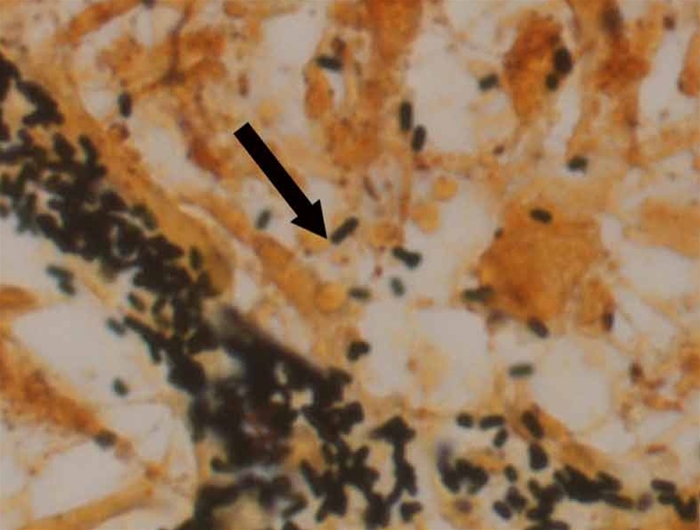
- Cold enrichment: it grows in refrigerated food, so the fridge does not make contaminated food safe.
- Tumbling motility at room temperature (flagella). It does not move at body temperature.
- Narrow zone of beta-hemolysis on blood agar, like group B Streptococcus (GBS). Unlike GBS, it is catalase-positive.
- It is one of the classic intracellular pathogens, cleared mainly by cell-mediated immunity.
Risk groups for invasive disease
- Pregnancy: suppressed cell-mediated immunity.
- Extremes of age: neonates and adults older than 50.
- Impaired cell-mediated immunity: glucocorticoids, transplant drugs, TNF-alpha inhibitors, hematologic malignancy, HIV.
| Mnemonic – جملة تذكرية | |
|
Who gets invasive disease? "PINE"
Cephalosporins miss the "LAME" bugs (so add ampicillin for Listeria)
"Listeria loves the fridge": deli meats and hot dogs, soft cheese and raw milk, smoked seafood, pâté, sprouts and melons. |
جملة تذكرية |
Transmission and Pathogenesis
Transmission
- Maternal: eating contaminated food:
- unpasteurized dairy and soft cheeses
- deli and processed meats, hot dogs, refrigerated pâté
- refrigerated smoked fish
- ready-to-eat vegetables (sprouts, cut melon)
- Fetal:
- Transplacental spread from an infected mother. This is the main route and causes in utero infection and early-onset disease.
- Direct exposure to infected vaginal secretions and/or blood during delivery. This route is linked to late-onset disease.
- Incubation: invasive disease in pregnancy has a median incubation of about 19–28 days and can take up to 70 days. The food exposure is often weeks in the past.
Pathogenesis
- The bacterium survives stomach acid and invades the intestinal epithelium. Acid-suppressing drugs raise the risk.
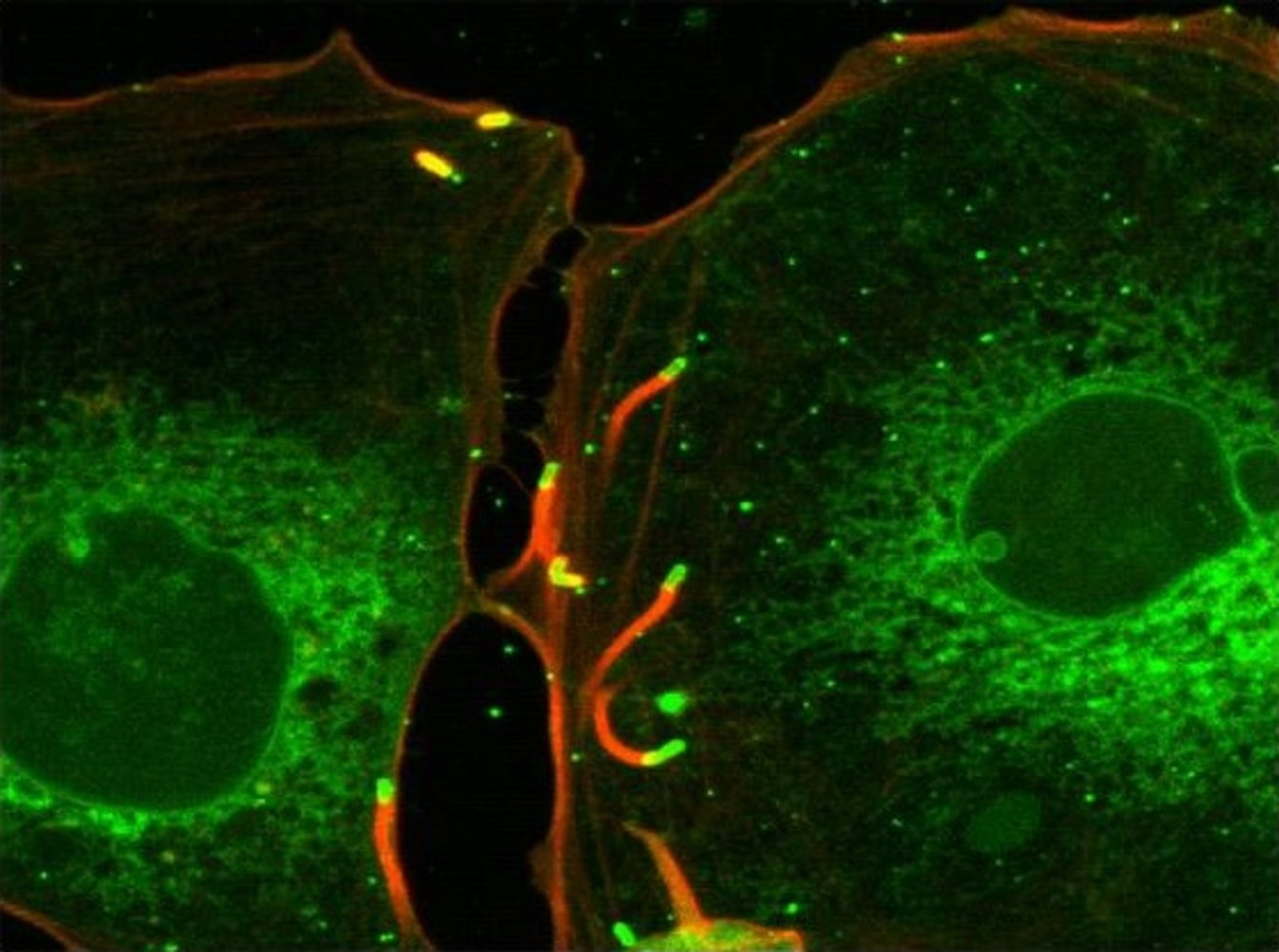
- Inside macrophages, listeriolysin O makes pores in the phagosome membrane. The bacterium escapes into the cytoplasm before lysosomes can destroy it.
- It polymerizes host actin into a tail that pushes it straight into the next cell, so it is never exposed to antibodies or complement.
- Clearance therefore depends on cytotoxic T cells and interferon-gamma–activated macrophages. This explains why pregnancy, newborns and immunosuppression are at risk.
- Maternal bacteremia seeds the placenta, causing intervillous microabscesses and chorioamnionitis, and then fetal bacteremia. The fetal kidneys excrete bacteria into the amniotic fluid.
Clinical Features
Template: Medical Comparison. Maternal disease is mild, but fetal and neonatal disease can be severe.
| Clinical Features – Maternal vs Neonatal Listeriosis | |||
|---|---|---|---|
| Feature | Maternal infection | Early-onset neonatal | Late-onset neonatal |
| Timing | Any trimester; most often third trimester | At birth or within the first week (often within 1–2 days) | After the first week (about 1–4 weeks of life) |
| Route | Ingestion of contaminated food → bacteremia | Transplacental (in utero) infection | Exposure to vaginal secretions/blood during delivery |
| Presentation | Asymptomatic or flu-like: fever, chills, myalgia, back pain, diarrhea | Sepsis, respiratory distress/pneumonia, skin papules/pustules; granulomatosis infantiseptica | Meningitis or meningoencephalitis; often term infant of a well mother |
| Outcome | Mother usually recovers fully | Highest mortality; stillbirth or early neonatal death | Lower mortality; risk of neurologic sequelae |
| Pregnancy result | Miscarriage, stillbirth, preterm labor, intraamniotic infection | Preterm delivery common | Usually term delivery |
Maternal infection
- Often asymptomatic or mild: a flu-like illness (fever, chills, myalgia, back pain, headache), often preceded by diarrhea.
- Intraamniotic infection: maternal fever, uterine tenderness, maternal and/or fetal tachycardia.
- Pregnancy outcomes: spontaneous abortion, stillbirth and preterm delivery.
Early-onset neonatal infection
- Granulomatosis infantiseptica: disseminated abscesses and granulomas in several organs (liver, spleen, lungs, brain, skin). It often ends in stillbirth or death soon after birth.
- Sepsis: temperature instability, apnea, poor feeding and activity.
- Respiratory distress and pneumonia, skin lesions (papules and pustules), and possible early meningitis.
Late-onset neonatal infection
- Meningitis or meningoencephalitis after the first week of life, usually acquired during delivery.
- Listeria is one of the three main causes of neonatal meningitis, alongside GBS and E coli.
- Neonates with meningitis show fever, irritability, seizures or a bulging fontanelle. They do not show nuchal rigidity.
| Important – فكرة سؤال | |
|
Preterm fetus + brown-green ("pea soup"), meconium-like amniotic fluid + placental microabscesses → think Listeria. A preterm fetus rarely passes meconium, so this staining is a clue to fetal listeriosis. A stillbirth a week or two after a picnic, deli meat or a short diarrheal illness points the same way. |
تذكر |
Diagnosis
Approach
- Step 1: Suspect listeriosis in a febrile pregnant woman, especially with flu-like or GI symptoms or a high-risk food or recall exposure. Also suspect it in any septic or meningitic neonate.
- Step 2: Draw blood cultures before antibiotics (best initial test in the mother) and a CBC.
- Step 3: Start empiric IV ampicillin without waiting for results (see Management).
- Step 4: Do a lumbar puncture if the mother has neurologic signs, and in every septic neonate. Consider amniocentesis for amniotic fluid culture when fetal infection is suspected.
- Step 5: After delivery or pregnancy loss, culture the placenta and send it for histology. Tell the laboratory that Listeria is suspected, because it can be dismissed as a diphtheroid contaminant.
Tests
- Culture (gold standard, confirmatory): L monocytogenes grown from blood, CSF, amniotic fluid or placenta.
- Gram stain: gram-positive rods on CSF Gram stain. The stain is often negative because bacterial counts are low, so always culture.
- CSF findings: pleocytosis, high protein, low glucose. Unusually for a bacterium (other than TB), Listeria can give a lymphocyte-predominant CSF. Compare the CSF patterns of meningitis.
- PCR: supports the diagnosis.
- Placental histology: intervillous microabscesses, acute chorioamnionitis, gram-positive rods.
- Not useful: stool culture, vaginal swabs and routine serology.
Differential diagnosis
- Group B Streptococcus: also causes neonatal sepsis and meningitis with narrow beta-hemolysis. It differs as gram-positive cocci in chains, catalase-negative and CAMP-positive. It spreads by ascending infection from an asymptomatic carrier and is cephalosporin-sensitive.
- E coli: a gram-negative rod that spreads by ascending infection after the membranes rupture.
- TORCH agents: CMV, toxoplasmosis and parvovirus B19 cause chronic villitis, calcifications or hydrops, not acute microabscesses. See congenital TORCH infections.
Management
Pregnant woman with a possible exposure
| Pregnant Woman Exposed to a Listeria-Contaminated or Recalled Food | |
|---|---|
| Asymptomatic | |
| Testing | Action |
| None (no blood or stool cultures) | No antibiotics; no extra fetal surveillance; report symptoms that appear within 2 months |
| Mild GI or flu-like symptoms, afebrile | |
| Testing | Action |
| Blood cultures may be drawn | Expectant management or testing; treat with IV antibiotics if cultures are positive |
| Fever >38.1 °C (100.6 °F) ± symptoms, no other cause | |
| Testing | Action |
| Blood cultures, then start treatment at once; fetal heart rate monitoring | Treat presumptively: high-dose IV ampicillin ± gentamicin |
Antibiotic regimens
- First-line (mother): ampicillin 2 g IV every 4–6 hours (at least 6 g/day) for at least 14 days.
- Add gentamicin 5 mg/kg/day IV for synergy, especially when the CNS is involved.
- CNS infection: ampicillin 2 g IV every 4 hours for at least 21 days.
- Penicillin allergy: desensitization when feasible.
- Preferred alternative: trimethoprim-sulfamethoxazole 3–5 mg/kg IV every 6 hours plus gentamicin.
- Second-line: vancomycin plus gentamicin.
- Newborn: IV ampicillin plus gentamicin at weight-based neonatal doses. This is the standard empiric neonatal sepsis regimen, so it already covers Listeria. Treat for at least 21 days when meningitis is present.
- Ineffective: cephalosporins do not cover Listeria (low-affinity penicillin-binding proteins). Listeria is one of the cephalosporin-resistant organisms.
- Empiric meningitis therapy in adults: add ampicillin to vancomycin plus a third-generation cephalosporin when the patient is older than 50 or pregnant. Use cefepime instead of the cephalosporin when the patient is immunocompromised.
- Oral antibiotics are not acceptable for invasive disease.
- Hold iron supplements, especially IV iron, until treatment is finished, because iron favors Listeria growth.
Obstetric care
- Admit the febrile mother for IV therapy with electronic fetal heart rate monitoring.
- Prompt maternal treatment aims to clear bacteremia before the fetus is infected. Delivery timing follows the usual obstetric indications.
| فخ امتحاني | |
|
Listeria has intrinsic resistance to cephalosporins, because its penicillin-binding proteins do not bind to them. This means if a neonate, pregnant woman, patient over 50, or immunocompromised patient has meningitis, ceftriaxone alone does not cover it—you must add Ampicillin. And if the question states "no improvement on cefotaxime + vancomycin", the answer is likely Listeria. |
تذكر |
| Clinical Note - ملاحظة سريرية | |
|
Pregnant woman presenting with fever and flu-like symptoms or diarrhea after eating soft cheese or deli meat? Draw blood cultures and start IV ampicillin immediately—do not wait for results. Stool culture or vaginal swab have no role in diagnosis. As for the pregnant woman who ate a recalled product and has no symptoms, she needs neither testing nor treatment—just observe her for two months. |
ملاحظة |
Prevention and Prognosis
Prevention
- Avoid unpasteurized milk and soft cheeses (eg, queso fresco).
- Avoid undercooked meats, contaminated water and unsafe ready-to-eat foods:
- deli meats and hot dogs unless reheated until steaming
- refrigerated pâté and smoked seafood
- raw sprouts and premade salads
- Heat kills Listeria; refrigeration does not. Wash hands after handling raw meat, soil or decaying vegetation.
- Nationally notifiable disease: cases must be reported to health authorities. Listeriosis is one of the foodborne reportable diseases, and surveillance traces outbreaks to a single source.
Prognosis
- Mother: usually recovers completely with treatment.
- Fetus: infection earlier in gestation tends to cause granulomatosis infantiseptica and fetal death. Third-trimester infection more often causes fetal distress, preterm delivery or early-onset sepsis.
- Neonate: mortality is higher with early-onset than late-onset disease. Survivors may have neurodevelopmental sequelae such as developmental delay.
Key Points for Exams
- L monocytogenes is a gram-positive rod with tumbling motility, narrow beta-hemolysis and a positive catalase test, and it grows in the fridge.
- Classic sources: deli meats, hot dogs, soft cheese and unpasteurized dairy, smoked seafood, sprouts and melons.
- Pregnancy suppresses cell-mediated immunity, so risk is about 10 times higher, peaking in the third trimester.
- Listeriolysin O lets the bacterium escape the phagosome, and actin tails carry it from cell to cell. T cells clear it.
- The mother has a mild flu-like or diarrheal illness, but the fetus suffers miscarriage, stillbirth or preterm labor.
- Early-onset disease (transplacental) causes granulomatosis infantiseptica, sepsis and respiratory distress. Late-onset disease (intrapartum, after the first week) causes meningitis.
- A preterm fetus with meconium-like ("pea soup") amniotic fluid and placental microabscesses suggests Listeria.
- Diagnose by culture of blood, CSF, amniotic fluid or placenta. Gram stain is often negative, and stool culture has no role.
- Listeria CSF can be lymphocyte-predominant, which is unusual for a bacterium.
- Treat with IV ampicillin ± gentamicin (TMP-SMX plus gentamicin for penicillin allergy), for at least 14 days, or at least 21 days for CNS disease.
- Cephalosporins are ineffective. Add ampicillin to empiric meningitis cover for neonates, adults older than 50, pregnant women and the immunocompromised.
- A meningitic infant who does not improve on cefotaxime plus vancomycin probably has Listeria.
- An exposed pregnant woman with no symptoms needs no testing or treatment. One with fever above 38.1 °C needs blood cultures and treatment at once.
- Listeriosis is a nationally notifiable disease, and it is prevented through food safety.
احصل على التجربة الكاملة
اشترك للوصول لفيديوهات الشرح التفصيلي والبطاقات التعليمية التفاعلية وأسئلة الممارسة مع تتبع التقدم.