Summary
Urinary incontinence (UI) is the involuntary leakage of urine due to impaired bladder control, affecting up to 50% of older women and 25% of older men. It results from disruptions in the balance between bladder (detrusor) function and urethral closure, which are normally coordinated through voluntary and involuntary neural mechanisms. Types include stress UI (leakage with increased intra-abdominal pressure), urge UI (due to involuntary detrusor contractions), mixed UI (combining features of both), overflow incontinence (from bladder overdistention), and functional incontinence (due to physical or cognitive barriers). Evaluation involves a detailed history, physical exam, urinalysis, bladder diaries, and possibly urodynamic studies. Management starts with conservative measures followed by medications (e.g., anticholinergics, beta-3 agonists) and surgical options (e.g., slings, Botox, neuromodulation) based on incontinence type. Prevention includes postpartum pelvic floor rehabilitation, managing chronic illnesses, and promoting bladder health.
Clinical Overview
Definition
Urinary incontinence (UI) is the involuntary leakage of urine due to a failure of bladder control. It is a prevalent condition that significantly impacts physical, psychological, and social well-being. Though often underreported and undertreated, especially among women, UI affects up to 50% of older women and 25% of older men.
Micturition and Continence Mechanisms
Micturition is a finely coordinated process involving the bladder (specifically, the detrusor muscle), urethra, and pelvic floor, regulated by both voluntary and involuntary neural control. During the bladder filling phase, detrusor activity is suppressed, allowing low-pressure storage of urine, while urethral resistance and pelvic floor tone increase to maintain continence. This ensures that urethral pressure remains higher than bladder pressure, preventing leakage.
Continence is maintained by a balance between detrusor relaxation and urethral closure pressure. In a normal anatomical position—where both the bladder and proximal urethra reside within the pelvis—any rise in intra-abdominal pressure (e.g., from coughing or sneezing) is transmitted equally to both structures, preserving the pressure gradient and ensuring continence.
As the bladder fills, stretch receptors in the bladder wall detect increasing volume and send signals to the brain. The decision to void is centrally mediated, with higher cortical centers either permitting or inhibiting the micturition reflex based on social context and neurological integrity.
When micturition is voluntarily initiated, the pelvic floor and urethral sphincters relax, while the detrusor muscle contracts in a sustained and coordinated manner, resulting in effective and complete bladder emptying. During the filling phase, pelvic floor and urethral muscles actively contract to increase outlet resistance, and detrusor contractions are normally suppressed until voiding is appropriate.
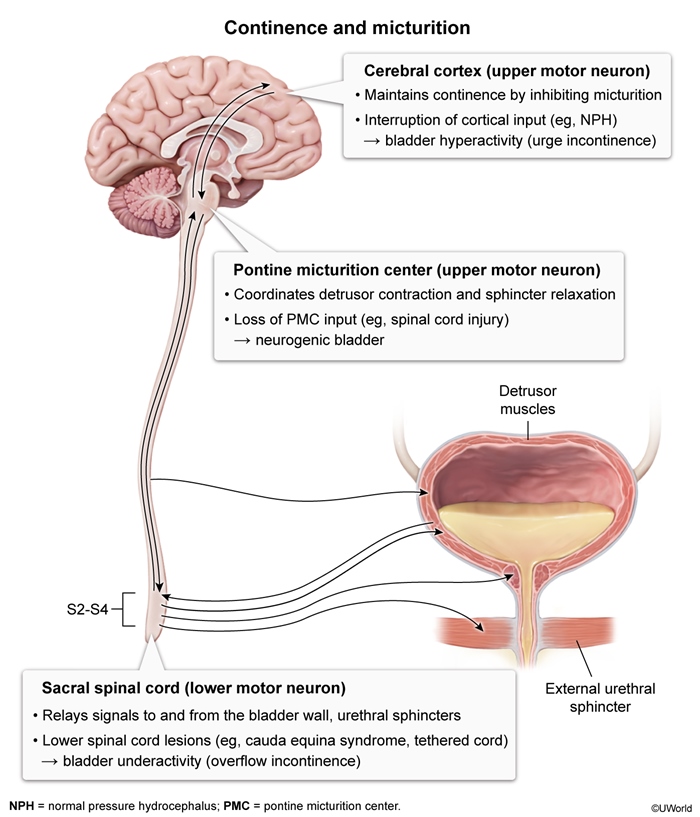
Types, Mechanisms & Clinical Features
The classification and presentation of urinary incontinence depends on the underlying pathophysiology. Understanding the mechanism driving each type is essential for guiding treatment decisions.
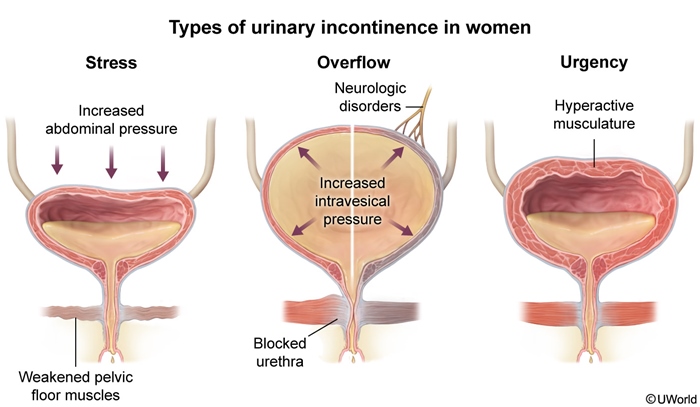
1. Stress Urinary Incontinence (SUI)
- Mechanism: Urethral sphincter incompetence or pelvic floor weakness causes urine leakage when intra-abdominal pressure increases (e.g., during coughing, sneezing, or exertion).
- Most common type (~40–50% of all UI cases).
- Risk factors: Vaginal childbirth (parity), estrogen deficiency (postmenopause), obesity, pelvic surgery, aging, chronic increase in intra-abdominal pressure (smoking, chronic cough, COPD).
- Clinical features: Small-volume leakage (typically <5 mL) during activities increasing intra-abdominal pressure. Typically occurs during the day; rarely at night.
2. Urge Urinary Incontinence (UUI)
- Mechanism: Involuntary detrusor muscle contractions (overactive bladder) result in a sudden urge to void, often with significant leakage before reaching the toilet.
- Associated conditions: Overactive bladder syndrome, neurologic disorders (Parkinson's disease, multiple sclerosis, spinal cord lesions, stroke), bladder outlet obstruction.
- Triggers: Running water, cold exposure, hand washing (particularly in OAB syndrome).
- Clinical features: Urgency, frequency (>8 voids/day), nocturia (>2 episodes/night), and large-volume leakage (typically >100 mL per episode). Often preceded by a strong urge sensation.
3. Mixed Urinary Incontinence
- Combination of both SUI and UUI features occurring in the same patient.
- Common in postmenopausal and parous women.
- Requires treatment tailored to the predominant component, though both mechanisms may need addressing.
4. Overflow Incontinence
- Mechanism: Bladder overdistention due to impaired detrusor contractility (hyporeflexic bladder) or bladder outlet obstruction leads to continuous or intermittent dribbling of urine.
- Seen in: Diabetics (autonomic neuropathy), spinal cord injuries, advanced pelvic organ prolapse causing urethral kinking, post-surgical conditions (after anti-incontinence surgery), neurogenic bladder.
- Clinical features: Constant dribbling, weak or interrupted urinary stream, sensation of incomplete emptying, frequent small-volume leakage. Post-void residual (PVR) typically >200 mL.
5. Functional Incontinence
- Mechanism: Urine leakage resulting from physical or cognitive barriers that delay timely toilet access, despite intact bladder and sphincter function.
- Seen in: Dementia, mobility limitations (stroke, arthritis, Parkinson's disease), severe depression, environmental constraints (inaccessible toilets).
- Clinical features: Incontinence timing correlates with immobility or confusion rather than with symptoms of bladder dysfunction.
6. Other Causes: Reversible & Structural
Several transient, modifiable, or structural causes of UI must be identified and treated before attributing incontinence to primary bladder dysfunction:
| DIAPPERS: Reversible/Transient Causes of Urinary Incontinence | |
|
D = Delirium / Dementia Reversible causes account for ~30% of UI in older adults and must be screened before pursuing surgical options. |
جملة تذكرية |
Structural causes include urogenital fistulas, urethral diverticulum, and congenital anomalies (e.g., ectopic ureter).
Evaluation and Diagnosis
History
- Symptom type (stress vs. urgency symptoms), onset, triggers, frequency, volume.
- Medication and comorbidity review (e.g., diabetes, neurologic disorders, prior pelvic surgery).
- Obstetric history (parity, vaginal vs. cesarean delivery, perineal trauma).
- Quality of life impact and bother score.
Physical Examination
- Pelvic exam to assess for atrophy, masses, prolapse (grade of pelvic organ descent).
- Bladder stress test (cough test): Observe for urine leakage with Valsalva or cough at full bladder.
- Neurologic examination (gait, sensation, rectal tone, bulbocavernosus reflex) to rule out neurogenic causes.
- Abdominal examination for masses, suprapubic distention, and bladder palpability.
Investigations
Serum: Fasting glucose (diabetes screening); serum calcium, TSH (endocrine causes).
Urine: Urinalysis and urine culture to exclude urinary tract infection. **First-line test**.
Imaging & Special Tests:
- Post-void residual (PVR) volume: PVR >200 mL suggests retention or obstruction; indicative of overflow incontinence. Obtained via catheterization or bladder ultrasound. **First-line screening for overflow.**
Note Exam trap: Always focus on the PVR value in exam questions. High PVR (>200 mL) → Overflow; normal PVR → Urge or Stress UI based on symptom pattern. ملاحظة - Voiding diaries (bladder log): Patient tracks frequency, voided volumes, incontinence episodes, and triggers over 3–7 days. Helps quantify severity and symptom pattern.
- Urodynamic testing (cystometry, uroflow): Assesses bladder compliance, detrusor overactivity, urethral pressure, and functional bladder capacity. **Gold standard** for confirming detrusor overactivity or sphincter insufficiency; reserved for complex or refractory cases or preoperative SUI assessment.
- Advanced imaging: Cystoscopy(for suspected fistula, foreign body, mass), MRI, or Voiding cystourethrography (VCUG) reserved for complex anatomic questions.
Management
Conservative Therapy (First-Line for All Types)
- Lifestyle modifications: Weight loss (even 5–10% body weight reduction improves SUI), fluid restriction to <1.5–2 L/day, reduce caffeine and alcohol, smoking cessation, bowel regularity.
- Bladder training (urge suppression): Scheduled voiding intervals (typically 1–2 hours initially) with gradual expansion by 15–30 min intervals. Most effective for urge UI; compliance is key.
- Pelvic floor muscle exercises (Kegel exercises): Sustained voluntary contraction of the pubococcygeus muscle for 3–5 seconds, repeated 8–10 times, 3 times daily. Especially effective for SUI and mixed incontinence. Requires proper technique (pelvic floor physical therapy with biofeedback recommended for optimal results).
- Physical therapy and biofeedback: Specialized pelvic floor rehabilitation improves awareness and strength. Consider for patients with poor muscle control or as adjunct to other modalities.
Pharmacologic Treatment
| Pharmacologic Treatment of Urinary Incontinence | |||
|---|---|---|---|
| Drug Class | Examples | Indication | Side Effects / Monitoring |
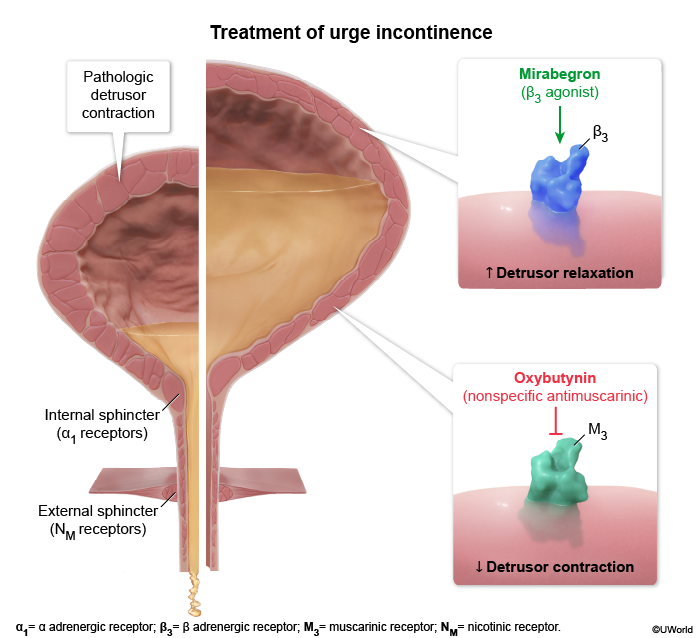
| Anticholinergics | Oxybutynin, Solifenacin | Urge UI | Dry mouth, constipation, cognitive impairment (especially in elderly); avoid in age >75 |
| Beta-3 agonists | Mirabegron | UUI | Fewer anticholinergic effects; monitor blood pressure closely |
| SNRI | Duloxetine | SUI | Nausea, insomnia, fatigue; monitor for serotonin syndrome |
| Topical estrogen | Estriol, Estradiol (vaginal cream) | Urogenital atrophy in postmenopausal women | Improves tissue integrity; localized absorption; not for systemic hormone therapy |
| Clinical Pearl | |
| Anticholinergic use in elderly patients significantly increases delirium, constipation, and fall risk. If used, employ lowest effective dose and strongly consider alternatives in patients >75 years old. | ملاحظة |
Surgical Options
For Stress Urinary Incontinence:
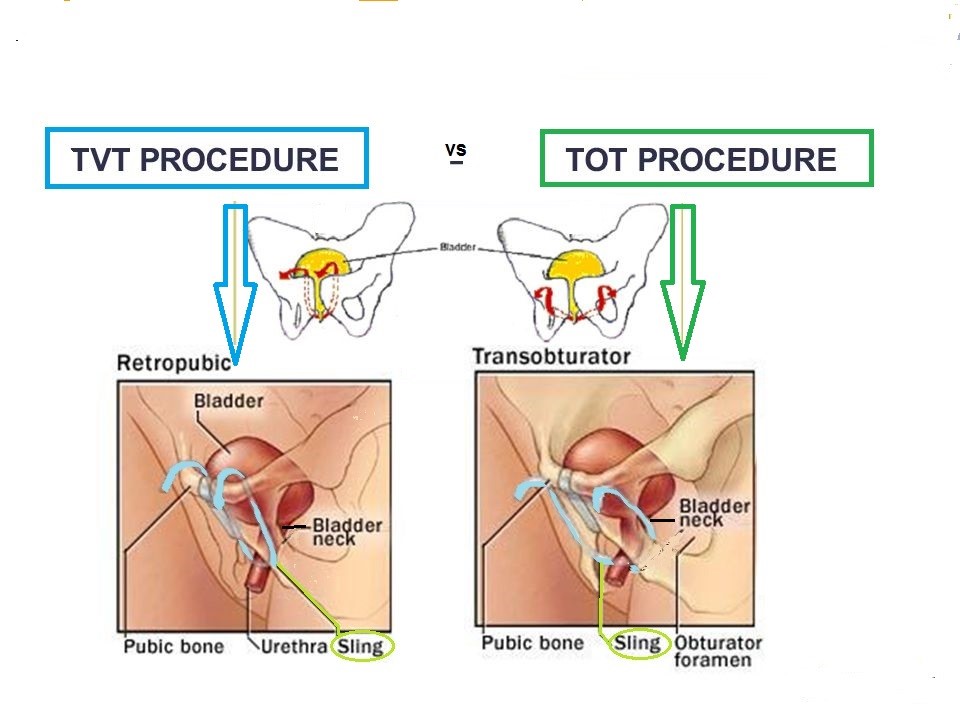
- Mid-urethral slings: Gold standard for SUI. Options include TVT (Tension-free Vaginal Tape—retropubic approach, tape passes above urethra) and TOT/TVT-O (Transobturator Tape—sling exits laterally through obturator foramen). Both achieve >80–90% success rates. Complications include urinary retention (1–3%), voiding dysfunction, and mesh erosion (rare).
- Colposuspension (Burch procedure): Sutures elevate urethrovesical junction, restoring the normal angle. Less commonly used now due to lower success rates (~70%) compared to slings, but may be combined with other gynecologic procedures.
- Periurethral bulking agents: Inject expanding materials (collagen, silicone, polyacrylamide) to increase urethral coaptation. Temporary effect; may require repeated injections. Used in select cases (elderly patients, poor surgical candidates).
For Refractory Urge Urinary Incontinence:
- Intradetrusor botulinum toxin A (Botox) injections: Directly paralyzes detrusor muscle, reducing involuntary contractions. Effective for overactive bladder refractory to anticholinergics. Effects last 3–6 months; requires repeat injections. Risk of urinary retention requiring temporary catheterization.
- Sacral neuromodulation (InterStim): Implantable device that delivers electrical stimulation to sacral nerves (S3 level). Effective for refractory urge and mixed incontinence. Requires trial period; permanent implant is minimally invasive. Cost and device complications (infection, migration) are limiting factors.
- Augmentation cystoplasty: Surgical expansion of bladder capacity using bowel. Reserved for severe neurogenic bladder or after failed conservative/medical therapy. High morbidity; risk of mucus production and malignancy.
For Overflow Incontinence:
- Address underlying obstruction (e.g., myomectomy for fibroids, urethral dilation for stricture, prostatectomy for BPH).
- Intermittent self-catheterization (ISC): Patient-performed catheterization 4–6 times daily to prevent overdistention and infection. Preferred for chronic retention management.
- Bethanechol (cholinergic agonist): Enhances detrusor contractility; limited efficacy and often reserved for acute postoperative retention.
Prevention & Complications
Prevention Strategies
- Postpartum pelvic floor rehabilitation: Begin Kegel exercises within 6 weeks postpartum; evidence supports reduction in SUI incidence by up to 50%.
- Management of chronic diseases: Tight glycemic control in diabetes (reduces autonomic neuropathy risk), smoking cessation (reduces chronic cough), COPD management, weight optimization.
- Medication review: Avoid high-risk medications (diuretics used unnecessarily, sedating anticholinergics, alpha-blockers in women).
- Bladder health education: Promote double-voiding, adequate hydration (not excessive), timed voiding before bed/outings, pelvic floor awareness.
- Environmental modifications: Accessible, well-lit toilets; remove physical barriers in older adults' homes.
Complications
- Psychological: Depression, anxiety, social withdrawal, reduced self-esteem, sexual dysfunction, and caregiver stress in dependent patients.
- Dermatologic: Perineal skin breakdown, maceration, bacterial or fungal infections, and pressure ulcers in severely incontinent or immobile patients.
- Social & Economic: Social isolation, reduced work productivity, increased healthcare costs, caregiver burden, and quality-of-life deterioration. Incontinence is a major risk factor for institutionalization in older adults.
- Infectious: Recurrent UTIs due to urine retention (overflow incontinence) or frequent catheterization.
Key Points for Exams – نقاط مهمة للامتحانات
- SUI is most common. 40–50% of incontinent women. Risk factors: parity, obesity, postmenopause. Treatment: Kegels first; sling if fails.
- DIAPPERS for reversible causes. ~30% of UI in elderly is reversible: infection, medications, constipation, atrophy, delirium. Treat the cause first.
- PVR >200 mL = overflow. Post-void residual differentiates types: PVR >200 mL → overflow; normal PVR + urgency → urge UI; normal PVR + activity → stress UI.
- Anticholinergics risky in elderly (>75 y). Oxybutynin, solifenacin → cognitive impairment, falls. Use mirabegron (beta-3 agonist) instead; monitor BP.
- Mid-urethral slings (TVT/TOT) gold standard for SUI. 80–90% success. Better than colposuspension. Risks: retention (1–3%), mesh erosion (rare).
- Mixed incontinence: treat dominant component first. ~30% have mixed (stress + urge). Identify from history/diary; treat dominant type first.
احصل على التجربة الكاملة
اشترك للوصول لفيديوهات الشرح التفصيلي والبطاقات التعليمية التفاعلية وأسئلة الممارسة مع تتبع التقدم.