شرح المدرسين

Summary
Uterine leiomyomas (fibroids) are benign, hormone-dependent myometrial tumors arising from monoclonal smooth muscle proliferation. They are the most common gynecologic tumor and leading indication for hysterectomy worldwide, affecting ~20% of women over 35, with significantly higher prevalence in Black women.
Key clinical features: ~50% are asymptomatic. Symptomatic presentations depend on fibroid location: submucosal causes heavy menstrual bleeding and infertility; subserosal causes pelvic pressure symptoms; intramural causes variable combinations. Complications include anemia, infertility, pregnancy loss, and rare malignant transformation.
Diagnosis is primarily by pelvic ultrasound (first-line). Management ranges from observation to medical therapy (hormonal agents, GnRH agonists), minimally invasive procedures (uterine artery embolization, radiofrequency ablation), or surgery (myomectomy, hysterectomy), tailored to symptom severity, fertility goals, and fibroid characteristics. In pregnancy, fibroids may undergo red (hemorrhagic) degeneration in the first trimester and increase risk of preterm labor, malpresentation, and cesarean delivery.
Definition & Pathophysiology
Definition: Uterine leiomyomas are benign, monoclonal neoplasms of smooth muscle origin, often intermingled with variable fibrous connective tissue. They are the most common tumor of the female genital tract and the leading indication for hysterectomy worldwide.
Pathophysiology: Fibroids originate from a single myometrial smooth muscle cell undergoing clonal expansion and are exquisitely estrogen- and progesterone-dependent. Key drivers include:
- Upregulated estrogen and progesterone receptors → higher local sensitivity to ovarian hormones
- Enhanced growth factor signaling (transforming growth factor-β, IGF, EGF) and angiogenic activity
- Increased extracellular matrix (ECM) deposition → firm, fibrotic consistency and mechanical bulk
- Genetic mutations: MED12 gene mutations present in ~70% of fibroids; HMGA2 and FHIT mutations also implicated
- Progesterone resistance in some fibroids → impaired anti-proliferative response to progesterone, contributing to growth despite hormonal therapy
Fibroids typically grow during reproductive years and regress after menopause due to declining ovarian hormone production. They may be single or multiple, ranging from microscopic nodules to masses distorting the uterine contour.
Epidemiology & Risk Factors
Epidemiology:
- Prevalence: ~20% of women over age 35; 70–80% lifetime risk by age 50
- Peak incidence: 30–50 years
- Ethnicity: Significantly higher prevalence, earlier onset, and greater severity in Black women (underexplored genetic and environmental factors)
- Menopause: Fibroids typically regress after menopause due to hormone decline
Risk Factors: Use this high-yield, organized risk profile for exam preparation:
| Risk Factor Category | Top Modifiable/Non-Modifiable Factors |
| Demographic & Ethnic | Black ethnicity (2–3× higher prevalence and severity); Age 30–50 years |
| Reproductive | Nulliparity; Early menarche (<12 years) |
| Metabolic/Hormonal | Obesity (2–3× higher risk); High lifetime estrogen exposure; Hypertension |
| Genetic | Positive family history; MED12 mutations (~70%); HMGA2, FHIT mutations |
| Protective | Multiparity; Long-term OCP use; Progesterone-based contraception |
Classification & Clinical Presentation
Anatomical Classification by Location: Fibroid location is the single most important predictor of symptoms and determines treatment choice. Review this classification table:
| Uterine Fibroid Classification by Location | |
|---|---|
| Fibroid Type | Anatomical Location & Clinical Significance |
| Intramural (40–50%) | Within myometrial wall; least likely to cause heavy bleeding; may distort cavity if large or cause variable pressure effects |
| Submucosal (20–25%) | Beneath endometrium, protruding into uterine cavity; STRONGLY associated with abnormal uterine bleeding (AUB) and infertility; accessible via hysteroscopy |
| Subserosal (20–25%) | Beneath serosal surface, projecting outward; causes mass effect → bladder/bowel pressure symptoms; low bleeding risk |
| Cervical (rare) | Located within cervical stroma; may obstruct cervical canal and labor |
| Pedunculated | Attached by stalk (intracavitary or subserosal); risk of torsion, acute degeneration, acute pain; subserosal pedunculated may become parasitic |
Anatomical illustration:
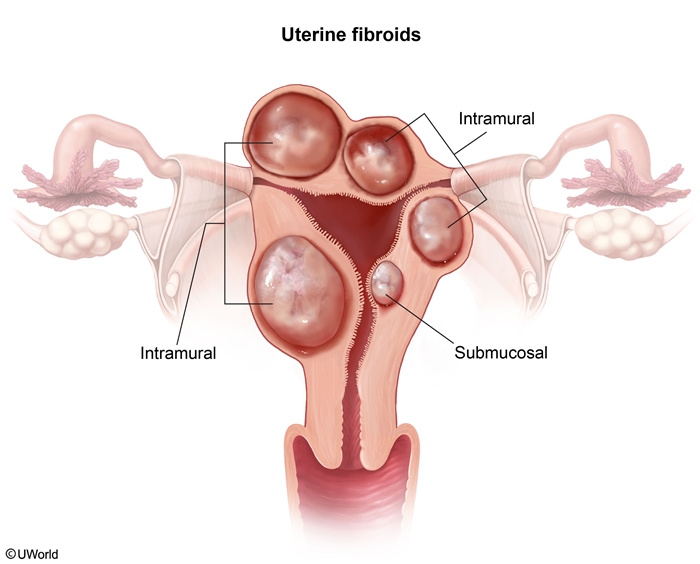
Clinical Presentation: Approximately 50% are asymptomatic, discovered incidentally on imaging. Symptoms depend on fibroid number, size, and location:
Menstrual Disturbances (especially submucosal):
- Heavy menstrual bleeding (HMB / menorrhagia) — most common symptom
- Metrorrhagia, post-coital spotting, dysmenorrhea
Pressure Effects (especially subserosal or large intramural):
- Bladder compression → urinary frequency, urgency, retention
- Rectal compression → constipation
- Ureteral compression → hydronephrosis (rare with large masses)
Reproductive Issues (especially submucosal or distorting cavity):
- Infertility (~30% of fibroid-bearing women; mechanism: cavity distortion, abnormal endometrium, impaired sperm transport)
- Recurrent miscarriage (first trimester)
- Preterm labor, malpresentation (second/third trimester)
Pain: Pelvic pain/dyspareunia; acute pain from fibroid degeneration or torsion (pedunculated fibroids)
Systemic: Iron-deficiency anemia secondary to chronic menorrhagia
| B.P.P.R. — Fibroid Symptom Mnemonic | |
| B — Bleeding: Heavy menstrual bleeding (HMB), especially with submucosal fibroids P — Pressure: Bladder/bowel compression effects, especially with subserosal fibroids P — Pain: Pelvic pain, dyspareunia, and fibroid degeneration/torsion R — Reproductive: Infertility, miscarriage, preterm labor, especially with submucosal or cavity-distorting fibroids |
جملة تذكرية |
Exam Link: For the exam: submucosal = Bleeding + Reproductive; subserosal = Pressure.
Diagnostic Workup & Differentials
Clinical Examination: Bimanual pelvic exam reveals enlarged, irregularly contoured, firm, non-tender uterus (tenderness suggests adenomyosis or other process). Palpable uterine "lumps" or nodules on exam are consistent with fibroids.
Investigations — Organized by Modality:
Imaging:
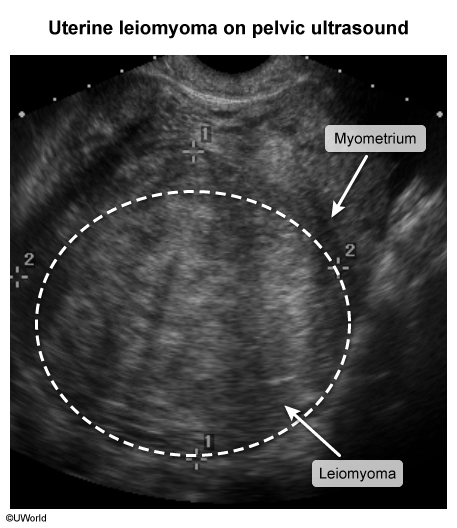
- Pelvic Ultrasound (transvaginal ± transabdominal) — FIRST-LINE: Shows well-circumscribed, hypoechoic to heterogeneous masses with posterior acoustic shadowing (characteristic of fibroids with calcification). Doppler may show increased vascularity at margins. Best for initial diagnosis and monitoring.
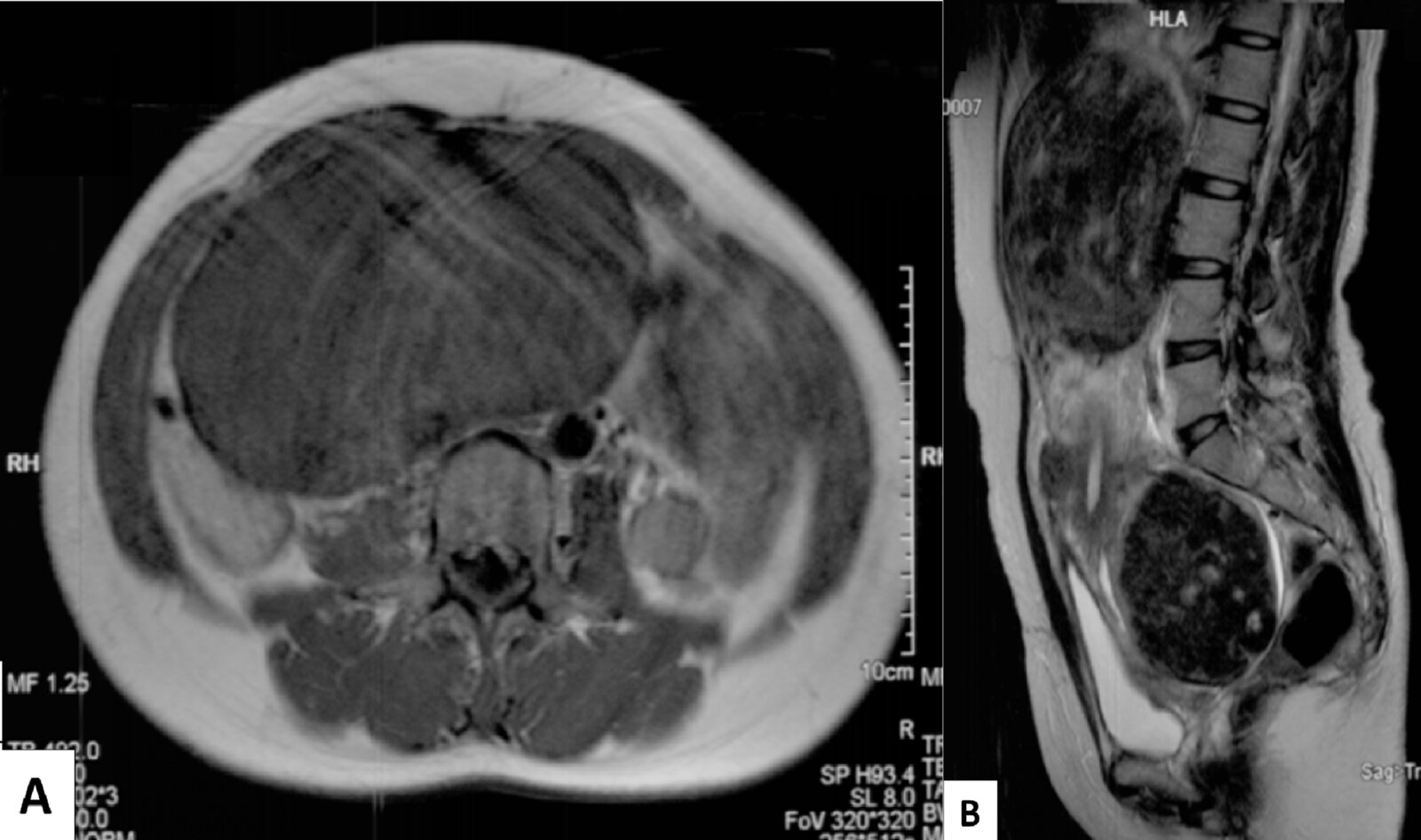
- MRI (Pelvic) — GOLD STANDARD: Indicated for complex cases (multiple fibroids, unclear location, deep intramural lesions), surgical mapping, and discrimination from adenomyosis. Superior soft-tissue contrast allows precise anatomical localization and assessment of distortion of uterine cavity and lower uterine segment (important for obstetric planning). Degeneration may show heterogeneous signal with cystic or hemorrhagic areas.
- Hysteroscopy: Best modality for visualizing submucosal fibroids, distinguishing from endometrial polyps, and assessing candidacy for hysteroscopic myomectomy. Allows direct measurement of fibroid size relative to cavity.
- Saline Infusion Sonohysterography (SIS): Improves visualization of submucosal fibroids and endometrial involvement; used when transvaginal ultrasound findings are equivocal.
Laboratory:
- CBC: Screen for anemia (iron-deficiency anemia common with HMB; low MCV, ferritin, transferrin saturation)
- β-hCG: Exclude pregnancy (hormonal changes in pregnancy can affect fibroid behavior)
- Coagulation profile: If HMB etiology is unclear (rule out bleeding disorders)
- Endometrial biopsy: Indicated only in perimenopausal/postmenopausal women with abnormal bleeding to exclude endometrial malignancy
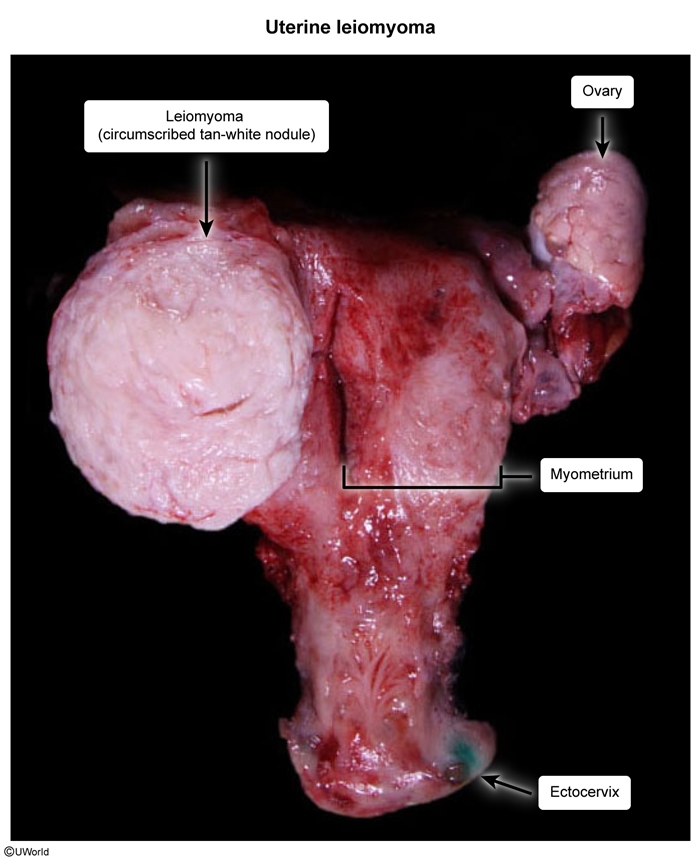
Pathology (if specimen obtained): Gross: well-circumscribed, tan-yellow mass, often with pseudocapsule. Histology: interlacing smooth muscle bundles in whorled pattern, uniform spindle-shaped cells, minimal mitotic activity (benign); increased fibrous tissue may be present.
Differential Diagnosis: Consider these entities when evaluating a patient with pelvic mass, HMB, or pressure symptoms:
- Adenomyosis: Diffuse myometrial infiltration by endometrial glands/stroma; produces uniformly globular, tender uterus (vs. irregular "lumpy" fibroid uterus); often coexists with fibroids. MRI shows junctional zone thickening >12 mm or poor definition.
- Endometrial Polyps: Benign endometrial outgrowths; cause HMB; distinguished from submucosal fibroids by hysteroscopy and histology (polyps have central vascular core, fibroids are smooth muscle).
- Endometrial Carcinoma: Abnormal uterine bleeding in postmenopausal women; requires endometrial biopsy. Fibroids are benign and do not undergo malignant transformation (leiomyosarcomas arise de novo).
- Ovarian Mass: May present with pelvic fullness/pain; distinguish by imaging location and origin (ovarian vs. uterine).
Management Protocols
Management Principles: Tailored to symptom severity, fibroid size/location, age, and fertility goals. The goal is to alleviate symptoms, preserve uterus if desired, and prevent complications.
Step 1: Expectant Management (Observation)
- Indications: Asymptomatic fibroids, small fibroids (<4 cm), women nearing menopause
- Approach: Regular follow-up with clinical exam and ultrasound every 6–12 months; reassure patient that fibroids rarely become malignant
- Advantage: Avoids unnecessary treatment; many fibroids regress after menopause
Step 2: Medical Management (Symptom Control and Preoperative Shrinkage)
No medical therapy cures fibroids; goal is symptom control and temporary shrinkage (if preparing for surgery or bridging to menopause). Compare options below:
| Medical Management Options for Uterine Fibroids | |||||
|---|---|---|---|---|---|
| Class | Combined OCPs / Progestins | Levonorgestrel IUD | GnRH Agonists (Leuprolide) | GnRH Antagonists (Elagolix/Relugolix) | Tranexamic Acid |
| Mechanism | Hormonal suppression; reduce endometrial proliferation | Local progestin delivery; reduces menorrhagia 40–50% | Hypoestrogenism; fibroid shrinkage 50–70% | Oral GnRH antagonist; milder hypogonadism with add-back therapy | Antifibrinolytic; reduces fibrin clot dissolution |
| Efficacy for HMB | Moderate | High (IUD >pill) | High (short-term) | High | Moderate-to-high |
| Fibroid Size Reduction | Minimal | Minimal | Marked (temporary) | Marked (temporary) | None |
| Fertility Impact | Neutral-to-favorable | Neutral (IUD remains in situ) | Reversible hypoestrogenism | Reversible hypoestrogenism | None |
| Duration / Use | Ongoing prophylaxis | 3–5 years (can reinsert) | 3–6 months (preop/bridging) | Ongoing if tolerated | Per-cycle or short-term |
| Adverse Effects | VTE, HOA, mood, migraine | Irregular spotting/amenorrhea | Hot flashes, bone loss, vaginal dryness | Hot flashes (less with add-back), VTE rare | VTE if high-risk |
Additional medical agents (less commonly used):
- Selective Progesterone Receptor Modulators (SPRMs, e.g., ulipristal acetate): Effective at reducing fibroid size and bleeding; not FDA-approved in U.S. due to rare hepatotoxicity risk
- NSAIDs: For dysmenorrhea associated with fibroids; do not shrink fibroids but reduce pain
Step 3: Minimally Invasive Interventions (Uterus-Preserving)
- Uterine Artery Embolization (UAE): Interventional radiology procedure blocking fibroid blood supply → shrinkage (60–70% volume reduction); preserves uterus but fertility outcomes uncertain; recover time 1–2 weeks; may cause chronic pelvic pain or ovarian failure in young women.
- Radiofrequency Ablation: Laparoscopic or transcervical destruction of fibroid tissue using thermal energy; less invasive than myomectomy; recurrence rates lower than medical therapy
- MRI-Guided Focused Ultrasound (MRgFUS): Noninvasive thermal ablation; best for small, superficial fibroids; limited by fibroid number/size; emerging technology with longer procedural times
Step 4: Surgical Options (Definitive or Fertility-Preserving)
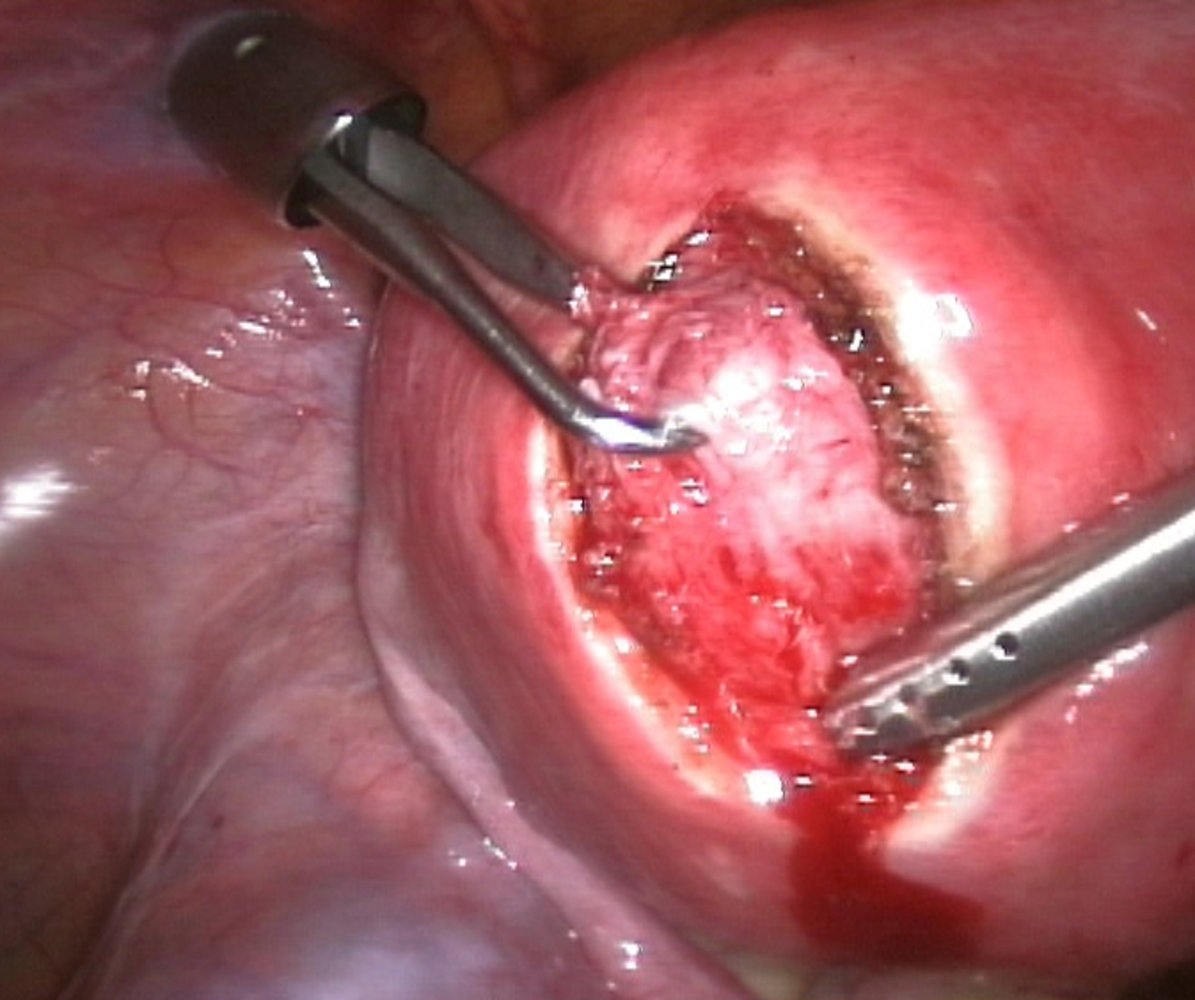
- Myomectomy (Fibroid Removal): Preserves uterus and fertility; indicated for symptomatic women desiring future pregnancy or young women with fibroids regardless of symptoms
- Hysteroscopic myomectomy: For submucosal fibroids; minimally invasive, short recovery, outpatient; limited to lesions <4 cm in cavity-distorting volume
- Laparoscopic myomectomy: For intramural or subserosal fibroids <8 cm; 2–3 small incisions, recover 2–3 weeks
- Abdominal (open) myomectomy: For multiple large fibroids or those in challenging locations; full abdominal recovery 4–6 weeks
- Recurrence rate: ~25% in 3–5 years; repeated myomectomy possible but each procedure increases intrauterine adhesions
- Hysterectomy: Definitive treatment (eliminates fibroid recurrence); indicated for women who have completed childbearing, failed conservative measures, or prefer permanent solution. Vaginal approach preferred if anatomically feasible; laparoscopic-assisted or abdominal approaches for large uteri.
Complications & Pregnancy
Complications in Non-Pregnant Women:
Hematologic: Severe iron-deficiency anemia from chronic menorrhagia (esp. submucosal fibroids); iron studies show ↓ hemoglobin, ↓ MCV, ↓ ferritin, ↑ transferrin saturation
Structural (Fibroid-Specific):
- Fibroid Degeneration: Outgrowth of blood supply → tissue necrosis, presenting as acute pelvic pain, fever, elevated WBC. Types: hyaline (most common, benign), cystic, calcific, fatty, red (hemorrhagic — exam-critical)
- Torsion: Pedunculated fibroids may twist on their stalk → acute severe pain, pelvic peritonitis-like symptoms; emergency surgical evaluation required
Reproductive:
- Infertility (~30% of fibroid-bearing women; submucosal > intramural > subserosal in risk)
- Recurrent miscarriage (first trimester; mechanism: cavity distortion, abnormal implantation, placental insufficiency)
Malignant Transformation: Extremely rare (<1%). Leiomyosarcomas (malignant smooth muscle tumors) arise de novo from myometrium, NOT from transformation of pre-existing fibroids. Suspicious features: rapid growth, high mitotic index on biopsy, tumor necrosis. Age >50 with rapid uterine enlargement warrants imaging and possible pathologic evaluation.
Urinary Tract Obstruction: Large fibroids compressing ureters → hydronephrosis, renal insufficiency (rare)
Fibroids in Pregnancy: Present in ~2–12% of pregnancies. Hormonal milieu (elevated E2, P4) often stimulates fibroid growth, especially first trimester.
First Trimester — Red Degeneration (Exam Pearl — فكرة امتحانية):
- Pathophysiology: Rapid fibroid enlargement → outpacing of blood supply → hemorrhagic infarction (necrosis) of fibroid tissue
- Clinical presentation: Acute-onset severe pelvic/lower abdominal pain, fever, leukocytosis (can mimic appendicitis or placental abruption)
- Timing: Classically weeks 8–16, but can occur anytime in pregnancy
- Imaging findings: Ultrasound or MRI shows heterogeneous, cystic/hemorrhagic appearance of previously solid fibroid; may see free fluid
- Management: Conservative: Analgesia (NSAIDs if first/second trimester; acetaminophen safer), rest, hydration, antiemetics. Resolves spontaneously over 1–2 weeks. Surgery NOT indicated unless signs of acute peritonitis/sepsis (rare)
- Exam differentiator: Red degeneration is benign, self-limited, and managed conservatively — do NOT operate unless complications develop. This is frequently tested.
Second and Third Trimester:
- Possible continued fibroid growth → preterm uterine contractions (can be difficult to distinguish from Braxton-Hicks)
- ↑ risk of placental abruption (fibroids distort placentation)
- Malpresentation (breech, transverse) — fibroids distort uterine cavity geometry
- Fetal growth restriction (placental insufficiency if fibroids impinge on implantation site)
Peripartum & Postpartum:
- Labor: Fibroids may cause obstructed labor (esp. lower segment involvement, pedunculated intracavitary lesions), dysfunctional contractions, prolonged labor → ↑ cesarean delivery rate (up to 40% in some series)
- Postpartum: ↑ risk of uterine atony and postpartum hemorrhage (PPH); massive transfusion protocols may be needed. Most fibroids regress significantly after delivery due to hormonal decline
Obstetric Management: Generally conservative. Analgesia (acetaminophen ± NSAIDs if not at labor), rest, hydration for symptomatic fibroids. Surgical intervention (myomectomy) during pregnancy is rarely needed and risks preterm labor and placental abruption; reserved for emergency situations (torsion, abscess) or when fibroid size severely impairs fetal growth. Most obstetricians defer myomectomy to postpartum period if possible.
Key Points for Exams – نقاط مهمة للامتحانات
| 1. Location = Symptoms | الموقع يحدد الأعراض | |
| • Submucosal: heavy bleeding + infertility • Subserosal: pressure only (bladder/bowel) • Intramural: variable |
ملاحظة |
| 2. Red Degeneration in Pregnancy | |
| • 1st trimester: pain + fever + leukocytosis • Management: CONSERVATIVE (NSAIDs, rest) — surgery is NOT the answer |
ملاحظة |
| 3. Diagnosis | التشخيص | |
| • First-line: pelvic ultrasound • Gold standard: MRI (if unclear or surgical planning) |
ملاحظة |
| 4. Fibroids Are Benign | الأورام حميدة | |
| • Do NOT transform into cancer (<1% risk) • Rapid growth in postmenopausal woman → suspect leiomyosarcoma |
ملاحظة |
| 5. Management | العلاج | |
| • Asymptomatic → observe • Wants fertility → myomectomy • Completed childbearing → hysterectomy (definitive) • GnRH agonists = temporary, preop shrinkage only |
ملاحظة |
| 6. High-Yield Facts | حقائق مهمة | |
| • Black women: 2–3× higher risk • Myomectomy recurrence ~25% at 3–5 yrs • Adenomyosis: diffusely tender, boggy uterus + dysmenorrhea (not nodular) |
ملاحظة |
احصل على التجربة الكاملة
اشترك للوصول لفيديوهات الشرح التفصيلي والبطاقات التعليمية التفاعلية وأسئلة الممارسة مع تتبع التقدم.