Overview
Hemophilia is a group of inherited bleeding disorders in which a stable fibrin clot cannot form because of deficiency of a single intrinsic-pathway clotting factor. All three classic types share an identical screening pattern (an isolated prolonged aPTT) but differ in the missing factor and the inheritance pattern.
- Hemophilia A — factor VIII deficiency (most common, ~80–85%).
- Hemophilia B — factor IX deficiency (Christmas disease).
- Hemophilia C — factor XI deficiency (Rosenthal syndrome; rare, usually milder).
| Hemophilia A vs B vs C | |||
|---|---|---|---|
| Feature | Hemophilia A | Hemophilia B | Hemophilia C |
| Deficient factor | Factor VIII | Factor IX | Factor XI |
| Inheritance | X-linked recessive | X-linked recessive | Autosomal recessive |
| Sex affected | Males (females carriers) | Males (females carriers) | Males = females |
| Frequency | Most common (~80–85%) | ~15–20% | Rare (<1%) |
| Incidence | 1 in 5,000 males | 1 in 30,000 males | Ashkenazi Jews |
| Severity | Mild → severe | Mild → severe | Usually mild / unpredictable |
| Eponym | Classic hemophilia | Christmas disease | Rosenthal syndrome |
These distinctions are consolidated in the Hemophilia A & B inheritance, labs, and treatment summary.
| A8 – B9 – C11 | |
Just count up: A, B, C → 8, 9, 11. |
جملة تذكرية |
Pathophysiology
Pathophysiology — an intrinsic-pathway defect
Factors VIII, IX, and XI drive the intrinsic coagulation pathway. Their deficiency impairs activation of factor X → reduced thrombin generation → an unstable fibrin clot. Because only secondary hemostasis is affected:
- Primary hemostasis (platelet plug, vWF) is intact → no petechiae, no mucosal bleeding.
- Secondary hemostasis (fibrin clot) is defective → delayed, deep-tissue bleeding into joints, muscles, and brain.
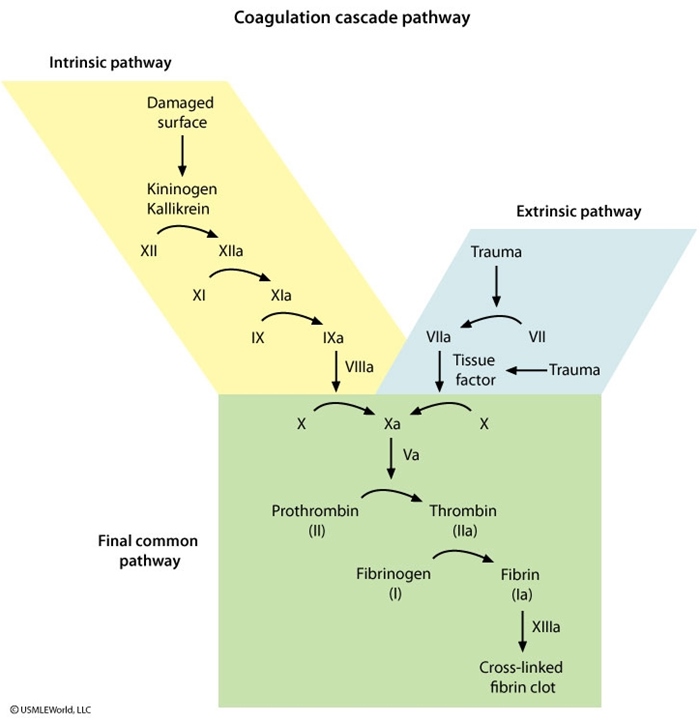
Clinical severity tracks residual factor activity:
- Severe: <1% activity → spontaneous bleeding.
- Moderate: 1–5% → bleeding after minor trauma.
- Mild: 5–40% → bleeding only after surgery or major trauma.
Genetics & epidemiology
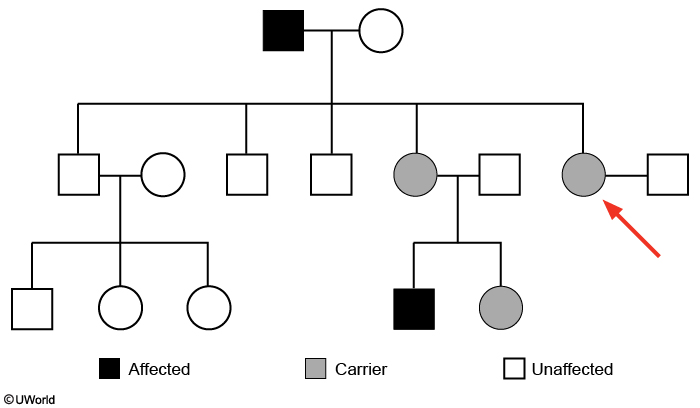
- Hemophilia A and B are X-linked recessive → almost all patients are males; mothers are typically carriers, and there is no male-to-male transmission.
- ~30% of hemophilia A arises from a de novo (spontaneous) mutation — a negative family history does not exclude the diagnosis.
- Female carriers may have mildly reduced factor levels (skewed X-inactivation) and can bleed after surgery or childbirth.
- Hemophilia C is autosomal recessive → affects males and females equally; classically seen in Ashkenazi Jews.
Clinical Presentation
Hemophilia produces deep-tissue (secondary-hemostasis) bleeding, not surface mucocutaneous bleeding. Symptoms typically begin in infancy or early childhood, when the child becomes mobile (crawling/walking) or undergoes circumcision; severity mirrors residual factor activity.
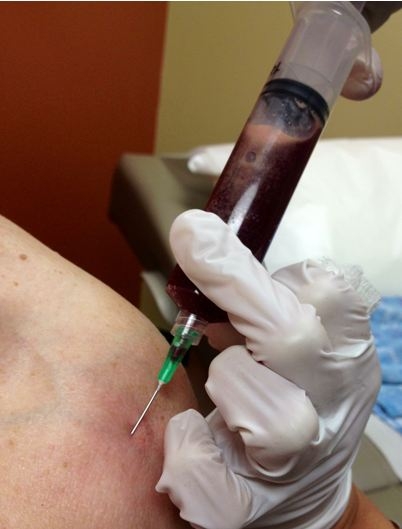
- Hemarthrosis (the hallmark) — recurrent bleeding into weight-bearing joints (knee > ankle > elbow), presenting as a warm, swollen, painful joint with limited range of motion after minimal or no trauma. Roughly 80% of bleeds are articular; repeated episodes in the same joint drive chronic hemophilic arthropathy.
- Intramuscular hematomas — especially the iliopsoas (flank/groin pain, hip held flexed, can mimic appendicitis) and calf/forearm bleeds (compartment-syndrome risk).
- Delayed bleeding — oozing that starts hours after dental extraction, circumcision, surgery, or minor trauma (the initial platelet plug forms normally, then fails because fibrin reinforcement is defective).
- Easy bruising with large, palpable deep hematomas.
- Intracranial hemorrhage — the leading cause of death; may follow trivial head injury.
- Hematuria and gastrointestinal bleeding.
| Important – فكرة سؤال | |
NO petechiae and NO mucosal bleeding in hemophilia — primary hemostasis (platelets + vWF) is intact. Their presence redirects you toward a platelet or vWF disorder, not a coagulation-factor defect. فخ امتحاني: غياب الكدمات النقطية (petechiae) هو السمة المميزة للهيموفيليا، ووجودها يوجه التشخيص نحو أمراض الصفيحات الدموية. |
تذكر |
Diagnostic Approach
Diagnosis combines the deep-bleeding pattern with a characteristic coagulation profile. The hallmark is an isolated prolonged aPTT with everything else normal:
- aPTT — prolonged ↑ (intrinsic pathway).
- PT / INR — normal.
- Platelet count — normal.
- Bleeding time / PFA-100 — normal (platelets and vWF are intact).
Mixing study: the prolonged aPTT corrects after 1:1 mixing with normal plasma → confirms a factor deficiency. Failure to correct → an inhibitor (see note). Specific factor assay (VIII, IX, or XI) is the gold standard — it confirms the diagnosis, identifies the type, and grades severity by % activity.
| Note – ملاحظة | |
|
If the mixing study does NOT correct the prolonged aPTT, suspect an inhibitor — a factor VIII alloantibody (in treated hemophiliacs), acquired hemophilia (elderly/postpartum), or a lupus anticoagulant — rather than a simple factor deficiency. |
ملاحظة |
Differential diagnosis
- von Willebrand disease — the most common inherited bleeding disorder; mucosal bleeding, prolonged bleeding time/PFA, abnormal ristocetin cofactor activity; aPTT may be prolonged because vWF carries and stabilizes factor VIII.
- Thrombocytopenia / ITP — petechiae and mucosal bleeding, low platelets, normal PT/aPTT.
- DIC — prolonged PT and aPTT, low platelets, low fibrinogen, elevated D-dimer.
- Vitamin K deficiency / warfarin — prolonged PT first (factor VII has the shortest half-life), then aPTT.
- Acquired hemophilia — factor VIII autoantibodies in the elderly or postpartum; isolated prolonged aPTT that does not correct on mixing.
| Bleeding disorders – pattern recognition | ||||
|---|---|---|---|---|
| Test / Feature | Hemophilia | von Willebrand disease | Thrombocytopenia (ITP) | DIC |
| Core defect | Factor VIII / IX deficiency | vWF deficiency (± low VIII) | Low platelet number | Consumption of factors + platelets |
| Bleeding type | Deep (joints, muscle) | Mucocutaneous | Petechiae, mucosal | Diffuse oozing + thrombosis |
| PT | Normal | Normal | Normal | Prolonged |
| aPTT | Prolonged | Normal or prolonged | Normal | Prolonged |
| Platelet count | Normal | Normal | Low | Low |
| Bleeding time / PFA-100 | Normal | Prolonged | Prolonged | Prolonged |
| D-dimer / fibrinogen | Normal | Normal | Normal | ↑ D-dimer, ↓ fibrinogen |
Refer to the Laboratory Characteristics of Coagulopathies for the full PT / aPTT / platelet / bleeding-time pattern across the bleeding disorders that mimic hemophilia.
Management
The cornerstone is replacing the deficient factor, tailored to the hemophilia type. Avoid IM injections, aspirin, and NSAIDs; use paracetamol or a COX-2–selective agent for analgesia. Dosing pearl: each 1 IU/kg of factor VIII raises plasma activity by ~2% (factor IX by ~1%); target ~50% activity for minor bleeds and ~80–100% for life-threatening bleeds or major surgery.
| Treatment by hemophilia type | |||
|---|---|---|---|
| Modality | Hemophilia A | Hemophilia B | Hemophilia C |
| First-line replacement | Recombinant factor VIII concentrate | Recombinant factor IX concentrate | Fresh frozen plasma (no widely available factor XI concentrate) |
| DDAVP (desmopressin) | Yes – mild disease only | No (ineffective) | No (ineffective) |
| Antifibrinolytics (tranexamic / aminocaproic acid) | Adjunct, esp. mucosal/dental bleeds | Adjunct, esp. mucosal/dental bleeds | Adjunct, esp. mucosal/dental bleeds |
| Prophylaxis / novel agents | Emicizumab (mimics FVIII); gene therapy | Long-acting factor IX; gene therapy | Generally on-demand only |
- Hemophilia A: recombinant factor VIII concentrate for moderate/severe bleeds and surgery. DDAVP (desmopressin) 0.3 mcg/kg IV/SC (or 150–300 mcg intranasal) — mild disease only — releases stored factor VIII and vWF from endothelium. Emicizumab, a bispecific antibody that bridges activated factor IX and factor X (mimicking factor VIII), is used for routine prophylaxis, including patients with inhibitors.
- Hemophilia B: recombinant factor IX concentrate. DDAVP is ineffective.
- Hemophilia C: fresh frozen plasma for bleeding episodes; DDAVP is ineffective.
- Adjuncts: antifibrinolytics — tranexamic acid 10 mg/kg IV or 25 mg/kg PO every 6–8 h (or aminocaproic acid) — particularly valuable for mucosal and dental bleeding.
- Prophylaxis: scheduled factor (or emicizumab) infusions in severe disease to prevent recurrent hemarthrosis and the resulting arthropathy.
The Effects of Desmopressin (DDAVP) Therapy explains why the drug works only when endogenous factor VIII / vWF stores exist to be released.
| ملاحظة سريرية – Clinical Note | |
|
دواء DDAVP فعال فقط في الهيموفيليا A الخفيفة ومرض فون ويلبراند، ولكنه عديم الفائدة في الهيموفيليا B و C. |
ملاحظة |
Complications & Prognosis
The major complications follow directly from recurrent deep bleeding and from the immune response to infused factor:
- Inhibitor (alloantibody) development — neutralizing antibodies against the infused factor, occurring in up to ~30% of severe hemophilia A. Suspect it when bleeds stop responding to replacement and the mixing study fails to correct. Treat acute bleeds with bypassing agents — activated prothrombin complex concentrate (aPCC/FEIBA) or recombinant factor VIIa — alongside immune tolerance induction; emicizumab provides effective prophylaxis regardless of inhibitor status.
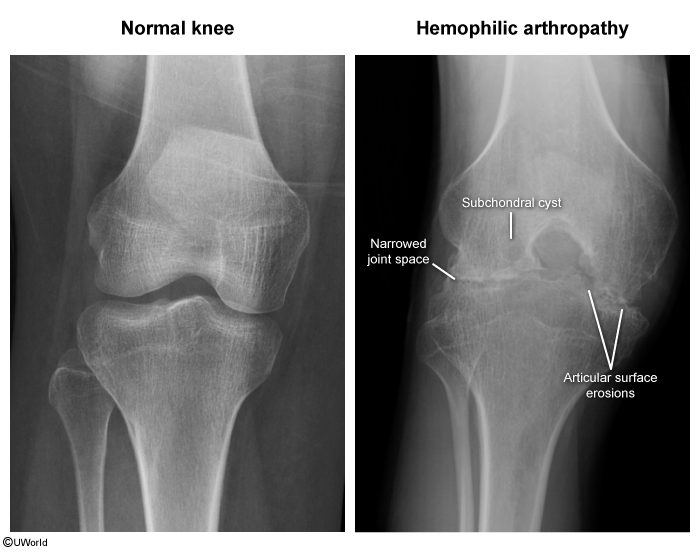
- Chronic hemophilic arthropathy — repeated hemarthrosis → synovial hypertrophy, cartilage destruction, fixed deformity, and disability. Prevented by primary prophylaxis started in early childhood.
- Intracranial hemorrhage — the leading cause of death; requires immediate factor replacement to ~100% activity before or alongside imaging.
- Compartment syndrome and pseudotumor — deep muscle bleeds raise compartment pressures; chronic encapsulated hematomas (pseudotumors) can erode adjacent bone.
- Transfusion-transmitted infection — historically HIV and hepatitis C from plasma-derived products; now rare with recombinant factor concentrates.
See the epidural, subdural, and subarachnoid hemorrhage comparison for the CT appearance and clinical features of the intracranial bleeds that threaten these patients.
Prognosis
With recombinant factor replacement and prophylaxis, life expectancy now approaches that of the general population and severe arthropathy is largely preventable. Outcomes worsen with severe disease left without prophylaxis (early disabling arthropathy, fatal hemorrhage) and with inhibitor formation, which makes bleeds substantially harder and more costly to control.
احصل على التجربة الكاملة
اشترك للوصول لفيديوهات الشرح التفصيلي والبطاقات التعليمية التفاعلية وأسئلة الممارسة مع تتبع التقدم.