Summary
Disseminated intravascular coagulation (DIC) is an acquired consumptive coagulopathy triggered systemically by tissue factor release (sepsis, trauma, obstetric emergencies, APL), leading to simultaneous microvascular thrombosis and severe bleeding. Laboratory hallmarks feature consumption of all cell lines and factors: thrombocytopenia, prolonged PT and aPTT, decreased fibrinogen, markedly elevated D-dimer (most sensitive marker), and schistocytes on peripheral smear. Uniquely, Factor VIII is decreased in DIC but normal or elevated in liver failure. Treatment relies primarily on reversing the underlying trigger (e.g., immediate ATRA for APL or broad-spectrum antibiotics for sepsis); blood products (FFP, cryoprecipitate for fibrinogen < 100 mg/dL, platelets) are reserved strictly for active hemorrhage or invasive procedures.
Overview
Disseminated Intravascular Coagulation (DIC) is an acquired consumptive coagulopathy in which the coagulation cascade is activated systemically (not locally) throughout the small vessels. This produces two opposing processes at the same time:
- Microthrombi → tissue ischemia and end-organ damage.
- Consumption of platelets and clotting factors → bleeding from multiple sites.
This simultaneous thrombosis and bleeding is the paradox that defines the disease. DIC is never a primary disorder — there is always an underlying trigger (sepsis, trauma, obstetric, malignancy).
Two clinical forms:
- Acute (decompensated): rapid onset, bleeding-dominant; seen in sepsis, trauma, obstetric emergencies.
- Chronic (compensated): slow onset, thrombosis-dominant, labs near-normal; classic in solid malignancy (Trousseau syndrome).
The Acute vs Chronic DIC comparison lays out how the coagulation studies, bleeding risk, and thromboembolism risk diverge between the two forms.
Pathophysiology
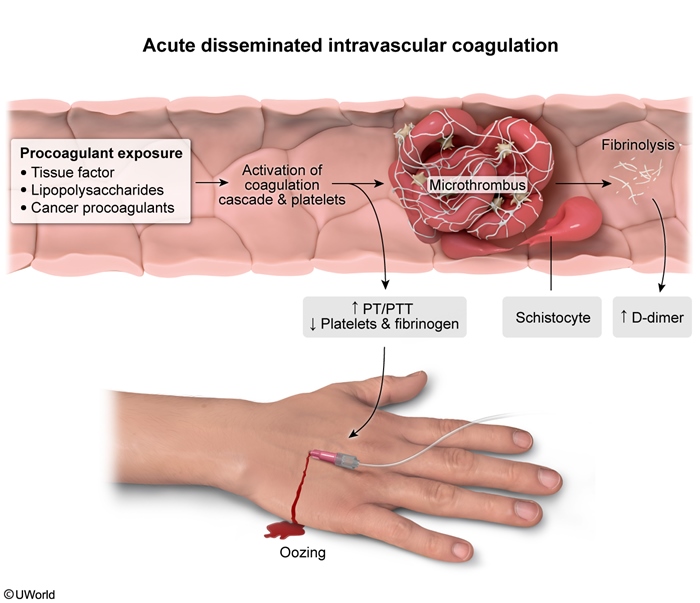
Pathophysiology — one trigger → four downstream events:
- Massive tissue factor (TF) release into the circulation (endotoxin, damaged tissue, placenta, tumor / APL granules).
- Widespread activation of the extrinsic + common pathway → diffuse microthrombi → ischemic injury (kidney, lung, skin, brain).
- Consumption of platelets, fibrinogen, factors (II, V, VIII) → bleeding from venipuncture sites, GI / GU tract, wounds.
- Secondary fibrinolysis — plasmin lyses fibrin → ↑↑ D-dimer and fibrin degradation products (FDPs), which further impair platelets and worsen bleeding.
RBCs are mechanically sheared through the fibrin mesh → schistocytes and microangiopathic hemolytic anemia (MAHA).
| ملاحظة سريرية | |
|
رغم وجود تجلّط منتشر داخل الأوعية الدقيقة، يبقى النزف هو المظهر الغالب في الـ DIC الحاد، وذلك بسبب استهلاك الصفائح وعوامل التخثّر (consumptive coagulopathy) وتفعيل انحلال الفيبرين الثانوي الذي يرفع الـ D-dimer بشدّة. |
ملاحظة |
High-Yield Etiologies
Any condition that dumps tissue factor into the blood or activates coagulation systemically can cause DIC. Four categories account for the vast majority of exam cases — know these cold:
- Sepsis (most common cause overall) — especially gram-negative bacteria (LPS/endotoxin) and meningococcemia (→ purpura fulminans, Waterhouse–Friderichsen).
- Trauma — major trauma, burns, crush and head injury (brain is rich in tissue factor).
- Obstetric — abruptio placentae, amniotic fluid embolism, retained dead fetus, septic abortion, HELLP, severe pre-eclampsia.
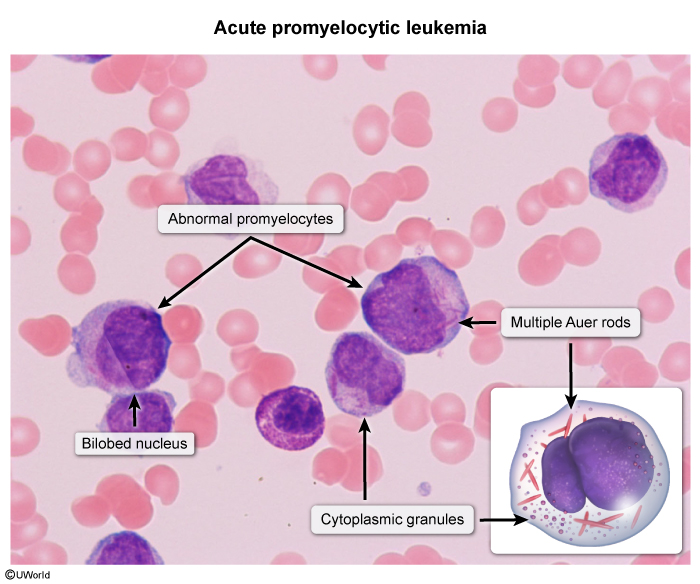
- Malignancy — acute promyelocytic leukemia (APL, AML-M3) is the classic acute trigger; mucin-secreting adenocarcinomas (pancreas, prostate, lung, GI) drive chronic DIC.
The APL connection is heavily tested: abnormal promyelocytes packed with Auer rods release tissue factor and procoagulants, igniting fulminant DIC.
| Causes of DIC — "STOP Making New Thrombi" | |
|
جملة تذكرية |
| فخ امتحاني | |
|
في ابيضاض الدم النقوي الواعد الحاد (APL / AML-M3) يجب البدء بحمض الريتينويك كامل التحوّل (ATRA) فوراً وقبل تأكيد الطفرة الجينية t(15;17)، لأنّ تأخير العلاج يؤدّي إلى DIC مميت ونزف دماغي. |
ملاحظة |
Clinical Presentation & Complications
The patient looks acutely sick, and findings reflect the two opposing processes: bleeding + microvascular thrombosis.
Bleeding (dominant in acute DIC):
- Oozing from venipuncture sites, IV lines, and surgical wounds (highly characteristic).
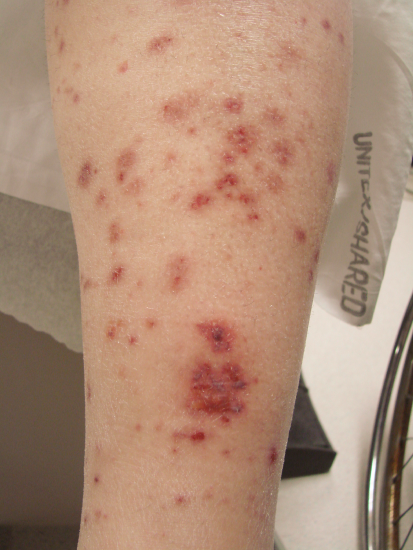
- Petechiae, purpura, ecchymoses; mucosal bleeding (gums, epistaxis).
- GI bleeding, hematuria, intracranial hemorrhage.
- Meningococcemia → purpura fulminans (confluent hemorrhagic skin necrosis).
Thrombosis / end-organ ischemia:
- Kidney: acute kidney injury, oliguria.
- Lung: ARDS, dyspnea, hypoxemia.
- Skin: digital gangrene, acral cyanosis.
- CNS: confusion, coma.
- Adrenal: bilateral hemorrhagic necrosis → Waterhouse–Friderichsen syndrome (shock + acute adrenal insufficiency).
Complications & prognosis:
- Multi-organ failure (kidney, lung/ARDS, liver, CNS) — leading cause of death.
- Massive hemorrhage — intracranial, GI, pulmonary.
- Purpura fulminans with digital / limb gangrene.
- Waterhouse–Friderichsen syndrome (classically meningococcemia).
- High mortality (30–50%), driven mainly by the underlying disease.
| ملاحظة سريرية | |
الفرفرية المتنخّرة (purpura fulminans) مع النزف الكظري ثنائي الجانب (متلازمة Waterhouse–Friderichsen) علامة إنذارية على DIC شديد مرتبط بتجرثم المكورات السحائية، وتتطلّب صادّات حيوية وتدبيراً إسعافياً فورياً. |
ملاحظة |
Diagnostic Approach (DIC vs Look-alikes)
Diagnosis is clinical + laboratory — there is no single confirmatory test. Suspect DIC in any unstable patient (sepsis, trauma, obstetric emergency, malignancy) who develops new bleeding or multi-organ dysfunction.
The DIC lab signature:
- Platelets ↓ — consumed in microthrombi.
- PT / INR ↑ and aPTT ↑ — coagulation factors consumed.
- Fibrinogen ↓ — consumed by thrombin.
- ↑↑ D-dimer / FDPs — secondary fibrinolysis; the most sensitive marker.
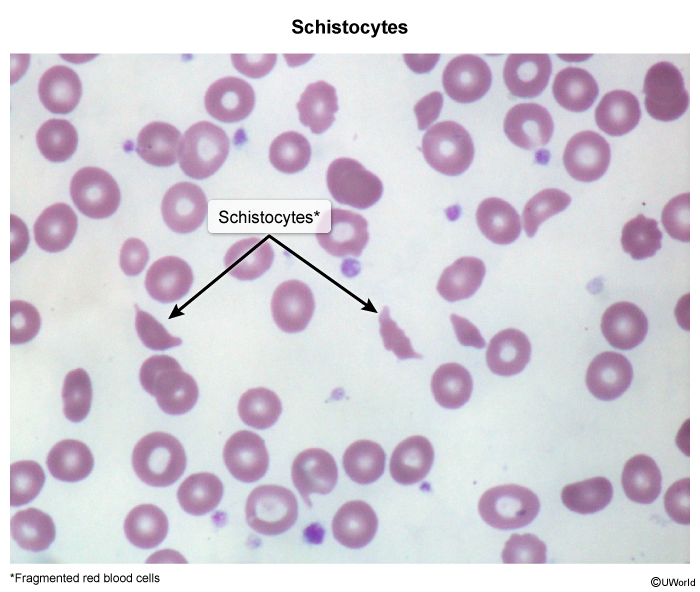
- Schistocytes on smear — RBC shearing through fibrin (MAHA), with falling hemoglobin.
The table below is the single source of truth for separating DIC from the conditions that mimic it. Read it down each column — the combination of ↓ fibrinogen + ↑↑ D-dimer + schistocytes + ↓ Factor VIII is unique to DIC.
| Master Differential — Lab Pattern of DIC vs Look-alikes (single source of truth) | ||||
|---|---|---|---|---|
| Feature | DIC | Liver failure | TTP / HUS | ITP |
| Platelets | ↓ | Normal / ↓ | ↓ | ↓ |
| PT / INR | ↑ | ↑ | Normal | Normal |
| aPTT | ↑ | ↑ (late) | Normal | Normal |
| Fibrinogen | ↓ | ↓ | Normal | Normal |
| D-dimer | ↑↑ | ↑ mild | ↑ mild | Normal |
| Schistocytes | Yes | No | Yes | No |
| Factor VIII | ↓ | Normal / ↑ | Normal | Normal |
Quick discriminators:
- vs Liver failure: both drop fibrinogen and prolong PT/PTT, but Factor VIII is low in DIC and normal/high in liver disease (made by endothelium, not hepatocytes).
- vs TTP/HUS: share schistocytes + ↓ platelets, but PT, aPTT, and fibrinogen are normal (coagulation not activated).
- vs ITP: isolated thrombocytopenia — PT, aPTT, fibrinogen all normal; no schistocytes.
| Important – فكرة سؤال | |
DIC is the ONLY coagulopathy that abnormalizes ALL FOUR screening tests:
Add: ↓ fibrinogen, ↑↑ D-dimer (most sensitive marker), and schistocytes on smear. |
تذكر |
| فخ امتحاني | |
العامل الثامن (Factor VIII) منخفض في الـ DIC لكنه طبيعي أو مرتفع في فشل الكبد؛ لأنه يُصنَّع في البطانة الوعائية لا في الكبد. هذه النقطة هي المفتاح للتفريق بين الحالتين رغم تشابه بقية الفحوص (PT/aPTT/fibrinogen). |
ملاحظة |
Management
The single most important step is to treat the underlying cause. DIC will not resolve until the trigger is controlled — everything else is supportive.
1. Treat the trigger:
- Sepsis → broad-spectrum antibiotics + source control.
- Obstetric DIC → deliver the fetus / evacuate the uterus.
- APL (AML-M3) → start ATRA (all-trans retinoic acid) immediately, even before genetic confirmation.
- Trauma → surgical hemostasis, rewarming, correct acidosis.
2. Supportive transfusion (only if actively bleeding or pre-procedure):
- Platelets → if platelets < 20 × 10⁹/L, or < 50 with bleeding.
- Fresh Frozen Plasma (FFP) → replaces all clotting factors when PT/aPTT prolonged.
- Cryoprecipitate → if fibrinogen < 100 mg/dL (rich in fibrinogen, factor VIII, vWF, XIII).
- Packed RBCs → for symptomatic anemia / active hemorrhage.
3. Anticoagulation (selective, controversial):
- Low-dose heparin — only in chronic, thrombosis-dominant DIC (e.g., Trousseau syndrome with cancer).
- Avoid heparin in acute bleeding-dominant DIC.
| ملاحظة سريرية | |
لا تُنقَل مشتقات الدم لمجرّد "تصحيح الأرقام" المخبرية؛ فالمريض غير النازف وغير المُقبل على إجراء لا يحتاج نقلاً. النقل غير المُبرّر يغذّي الاستهلاك ("feeding the fire"). عالج السبب أولاً والمريض هو الهدف وليس المختبر. |
ملاحظة |
Exam take-home points:
- DIC = simultaneous bleeding + thrombosis, always secondary to Sepsis / Trauma / Obstetric / Malignancy (APL).
- Lab signature: ↑ PT, ↑ aPTT, ↓ platelets, ↓ fibrinogen, ↑↑ D-dimer (most sensitive), schistocytes; the only coagulopathy that abnormalizes all four screening tests.
- Factor VIII low in DIC vs normal/high in liver disease — the key board distinction.
- Treat the cause first; transfuse platelets / FFP / cryoprecipitate only when actively bleeding. Reserve heparin for chronic thrombotic (Trousseau) DIC.
احصل على التجربة الكاملة
اشترك للوصول لفيديوهات الشرح التفصيلي والبطاقات التعليمية التفاعلية وأسئلة الممارسة مع تتبع التقدم.