شرح المدرسين

Summary
Sickle cell disease (SCD) is an autosomal recessive hemoglobinopathy caused by a missense point mutation in the beta-globin gene (chromosomal GAG to GTG substitution replacing glutamic acid with valine at position 6), yielding abnormal HbS. Under deoxygenated conditions, HbS polymerizes into rigid fibers, causing normocytic anemia (MCV 80–100 fL) via chronic intravascular/extravascular hemolysis and widespread vaso-occlusion. Manifestations begin around 6 months of age as protective fetal hemoglobin (HbF) wanes, featuring dactylitis, recurrent vaso-occlusive pain crises, acute chest syndrome, stroke, and functional asplenia (predisposing to encapsulated organisms like S. pneumoniae and Salmonella osteomyelitis). Peripheral blood smear displays sickle cells, target cells, and Howell-Jolly bodies. Diagnosis is confirmed via hemoglobin electrophoresis (showing dominant HbS and absent HbA in HbSS). Disease-modifying therapy centers on hydroxyurea (which elevates HbF), lifelong prophylactic penicillin V until age 5, targeted vaccinations, and prompt management of acute crises.
Overview & Pathophysiology
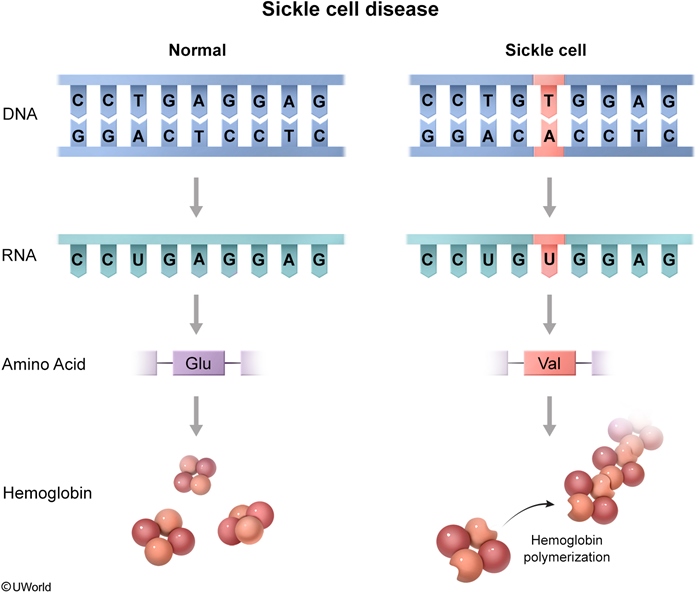
Sickle cell disease (SCD) is an autosomal recessive hemoglobinopathy caused by a point mutation in the β-globin gene that replaces glutamic acid with valine at position 6, producing abnormal hemoglobin S (HbS). When deoxygenated, HbS polymerizes and distorts red cells into a rigid sickle shape, driving the two engines of the disease: vaso-occlusion and chronic hemolysis.
Genetics — genotypes to know
- HbAA — Normal.
- HbAS — Sickle cell trait (heterozygous); usually asymptomatic carrier.
- HbSS — Sickle cell anemia (homozygous); most severe form.
- HbSC — Compound heterozygous (S + C); milder, but more retinopathy and avascular necrosis.
- HbS/β-thalassemia — Severity depends on type: β⁰ (severe, behaves like HbSS) vs β⁺ (milder).
Normal adult hemoglobin is HbA (α₂β₂). Fetal hemoglobin HbF (α₂γ₂) contains no β-chains, so it cannot sickle — this is why infants are protected for ~6 months and why hydroxyurea (which raises HbF) is therapeutic.
| Important – فكرة سؤال | |
The defect is a single-nucleotide substitution GAG → GTG in codon 6 of the β-globin gene (chromosome 11), replacing glutamic acid with valine (Glu6Val / E6V). Valine is hydrophobic — this is precisely why deoxygenated HbS polymerizes. HbF (α₂γ₂) lacks β-chains and cannot sickle, which is why newborns are protected for ~6 months and why raising HbF is therapeutic. |
تذكر |
The dual mechanism of disease
- Vaso-occlusion — rigid sickle cells lodge in capillaries and post-capillary venules. Endothelial adhesion, inflammation, and microthrombi cause ischemic tissue injury → pain crises, dactylitis, organ infarcts, stroke, acute chest syndrome, priapism, avascular necrosis.
- Chronic hemolysis (extravascular > intravascular) — damaged cells are cleared by the spleen and also lyse in circulation, producing normocytic anemia, indirect (unconjugated) hyperbilirubinemia, jaundice, pigment gallstones, ↑ LDH, ↓ haptoglobin, and reticulocytosis.
Repeated splenic infarction in childhood causes functional then anatomic autosplenectomy, leaving patients vulnerable to encapsulated organisms (S. pneumoniae, H. influenzae, N. meningitidis) and Salmonella.
| Mnemonic – Triggers of sickling (HEDDA) | |
Conditions that promote HbS polymerization:
أي شيء يقلل الأوكسجين أو يزيد الحموضة → يزيد تكوّن الخلايا المنجلية. |
جملة تذكرية |
Epidemiology in one line
Most common in people of African, Mediterranean/Middle-Eastern, Indian, and Caribbean descent. The sickle allele persists because HbAS confers partial resistance to Plasmodium falciparum malaria (classic heterozygote advantage). About 8% of African Americans carry the trait; clinical disease emerges after 6 months of age as HbF declines.
Clinical Presentation & Complications
Manifestations begin after ~6 months of age as HbF falls. In infants, the earliest clue is dactylitis (hand-foot syndrome) — painful, symmetric swelling of fingers/toes from microinfarction of small bones (6 months–4 years).
Chronic complications by organ system
- General: chronic fatigue, pallor, scleral icterus, delayed growth and puberty.
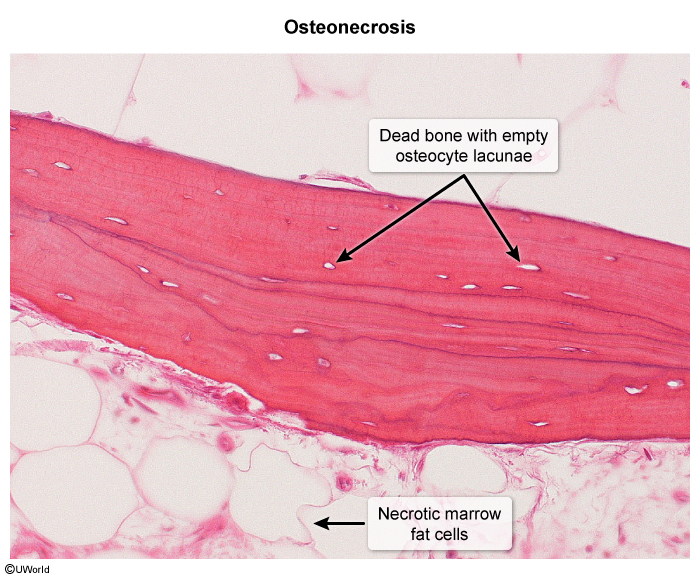
- Bone/joint: recurrent vaso-occlusive bone pain (most common reason for admission); avascular necrosis (AVN) of femoral/humeral head in adults; Salmonella osteomyelitis.
- Spleen: early splenomegaly → autosplenectomy → functional asplenia and encapsulated-organism sepsis.
- Lungs: acute chest syndrome (acute); pulmonary hypertension (late, poor prognosis).
- CNS: stroke (peak risk age 2–10 yr; ischemic in children) and silent infarcts.
- Renal: papillary necrosis → painless hematuria; isosthenuria (loss of concentrating ability); chronic kidney disease.
- Genitourinary: priapism (venous outflow obstruction).
- Hepatobiliary: pigment (bilirubin) gallstones → cholecystitis.
- Eyes: proliferative retinopathy (especially HbSC).
- Skin: chronic leg ulcers (medial malleolus).
- Iatrogenic: transfusional iron overload → cardiomyopathy, liver/endocrine dysfunction (treat with chelation).
| Mnemonic – Organ complications (SICKLE) | |
Splenic sequestration / autosplenectomy Infection (encapsulated organisms, Salmonella osteomyelitis) Crisis — vaso-occlusive pain, acute chest syndrome Kidney — papillary necrosis, isosthenuria Liver/biliary — pigment gallstones Erection (priapism), Eye (retinopathy), Extremities (dactylitis, AVN, leg ulcers) |
جملة تذكرية |
| ملاحظة – Note | |
في مرضى الخلايا المنجلية، السبب الأشهر لالتهاب العظم والنقي (osteomyelitis) هو Salmonella، أما في عموم الناس فيبقى Staphylococcus aureus هو الأكثر شيوعاً. هذه نقطة امتحان متكررة. |
ملاحظة |
Acute crises — recognise and separate them
Patients present to the emergency department with one of several distinct, high-yield crises. The comparative table below is the single reference to anchor your recall.
| Acute Crises in Sickle Cell Disease | ||||
|---|---|---|---|---|
| Crisis | Trigger / cause | Key feature | Reticulocytes | Management |
| Vaso-occlusive (pain) crisis | Hypoxia, dehydration, cold, infection | Severe bone/back/chest pain; dactylitis in infants | Normal or ↑ | IV fluids, O₂, opioids ± NSAIDs |
| Acute chest syndrome | Infection, fat embolism, pulmonary infarct | Fever + NEW pulmonary infiltrate + chest pain/hypoxia | Variable | O₂, fluids, ceftriaxone + azithromycin, exchange transfusion |
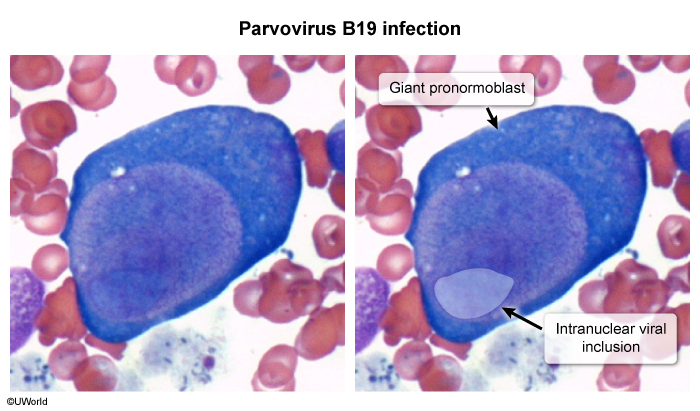
| Aplastic crisis | Parvovirus B19 (infects RBC precursors) | Sudden ↓ Hb, jaundice unchanged | ↓↓ (low) | Transfusion, supportive |
| Splenic sequestration | RBC pooling/trapping in spleen (young children) | Rapidly enlarging spleen + hypovolemic shock | ↑ | Urgent transfusion + fluids; splenectomy if recurrent |
| Hyperhemolytic crisis | Infection, coexisting G6PD deficiency, drugs | ↓ Hb + ↑ jaundice + ↑ LDH | ↑↑ | Treat trigger, transfuse |
The single fastest way to separate aplastic from splenic sequestration crisis is the reticulocyte count. Aplastic crisis follows parvovirus B19, which arrests erythropoiesis — bone marrow shows giant pronormoblasts with intranuclear inclusions.
| ملاحظة – Note | |
فخ امتحاني: الأزمة اللاتنسجية (Aplastic) تتميز بـنقص الشبكيات بسبب توقف إنتاج الكريات الحمراء (فيروس Parvovirus B19)، بينما في أزمة احتجاز الطحال (Sequestration) تزداد الشبكيات بشكل كبير لأن النخاع سليم ويحاول التعويض. |
ملاحظة |
Acute chest syndrome (ACS)
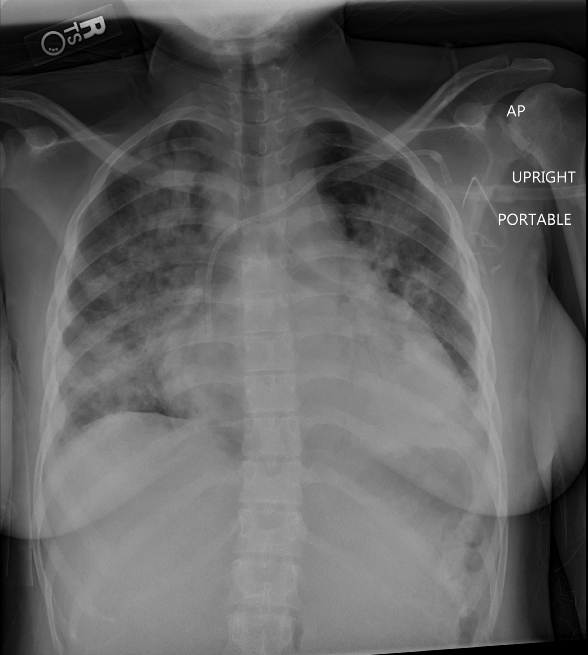
The leading cause of death in adults with SCD. Diagnostic triad: new pulmonary infiltrate on chest X-ray + respiratory symptoms (fever, chest pain, cough, dyspnea, hypoxia) ± a preceding pain crisis.
| Important – فكرة سؤال | |
Acute chest syndrome (ACS) is the leading cause of death in adult SCD. Diagnose with a NEW pulmonary infiltrate + fever/chest pain/hypoxia, often following a pain crisis. Treat empirically with O₂, cautious IV fluids, ceftriaxone + azithromycin (covers S. pneumoniae, Mycoplasma, Chlamydia), and exchange transfusion if severe. |
تذكر |
Diagnostic Approach
Screening
- Newborn screening (universal in many countries) by hemoglobin electrophoresis, HPLC, or isoelectric focusing — detects all major hemoglobinopathies before symptoms appear.
- Prenatal: chorionic villus sampling or amniocentesis when both parents are carriers.
Confirmatory test — hemoglobin electrophoresis (gold standard)
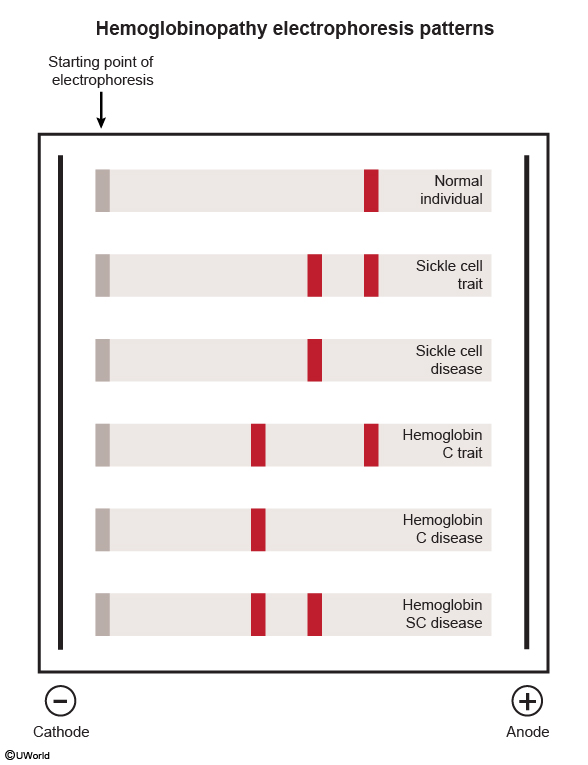
Electrophoresis quantifies hemoglobin fractions and is the definitive test for diagnosis and subtyping. The pattern table below is the master reference for this lesson.
| Hemoglobin Electrophoresis Patterns | |||||
|---|---|---|---|---|---|
| Condition | HbA | HbA₂ | HbF | HbS | HbC |
| Normal (HbAA) | ~97% | 2–3% | <1% | 0 | 0 |
| Sickle cell trait (HbAS) | 55–60% | Normal | <1% | 40–45% | 0 |
| Sickle cell anemia (HbSS) | 0 (absent) | Normal/↑ | ↑ (2–20%) | 85–95% | 0 |
| HbSS on hydroxyurea | 0 | Normal | ↑↑ | ↓ | 0 |
| Hemoglobin SC disease | 0 | Normal | Low | ~50% | ~50% |
Key reading points: HbSS has NO HbA (only HbS + HbF); trait shows both HbA and HbS with HbA > HbS; HbS migrates slower than HbA on alkaline gel because the Glu→Val substitution reduces negative charge.
Routine labs & peripheral smear
- CBC: normocytic, normochromic anemia (Hb ~6–9 g/dL) with reticulocytosis.
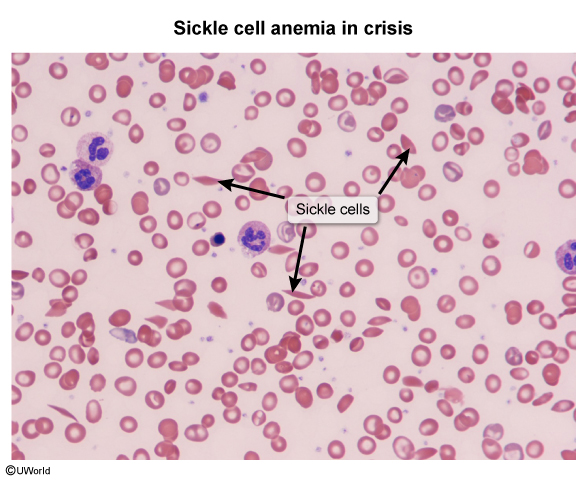
- Smear: sickle cells, target cells, Howell–Jolly bodies (functional asplenia), nucleated RBCs.
- Hemolysis markers: ↑ indirect bilirubin, ↑ LDH, ↓ haptoglobin, ↑ urine urobilinogen.
| Important – فكرة سؤال | |
The old sickle solubility test (Sickledex) turns positive in both HbAS and HbSS — it cannot distinguish trait from disease, and is falsely negative in neonates (high HbF). Always confirm and subtype with hemoglobin electrophoresis (or HPLC). |
تذكر |
Management
Chronic prophylaxis & disease modification
- Hydroxyurea — first-line disease-modifying drug. Oral 15–20 mg/kg/day, titrate to a max of ~35 mg/kg/day. Raises HbF, reducing pain crises, ACS, transfusion need, and mortality. Monitor CBC for myelosuppression.
- Folic acid — oral 1 mg daily, lifelong, to support chronic erythropoiesis.
- Penicillin V prophylaxis — 125 mg PO BID from age 2 months, increased to 250 mg PO BID after age 3, continued until at least age 5 (functional asplenia).
- Vaccinations — pneumococcal (PCV13/PCV15/PCV20 + PPSV23), meningococcal (MenACWY + MenB), H. influenzae type b, annual influenza, hepatitis B.
- Transcranial Doppler (TCD) — annual screening ages 2–16; abnormal velocity → chronic transfusion for primary stroke prevention.
- Chronic transfusions — for stroke prevention or recurrent severe complications; pair with iron chelation (deferasirox oral, or deferoxamine).
- Newer agents — L-glutamine (oral), crizanlizumab (IV P-selectin inhibitor), voxelotor (oral HbS-polymerization inhibitor).
- Hematopoietic stem cell transplant — the only curative option (HLA-matched sibling donor); gene therapy is emerging.
- Patient education — avoid dehydration, cold, high altitude, and strenuous exertion; recognise crisis early.
| Important – فكرة سؤال | |
Hydroxyurea works by raising fetal hemoglobin (HbF). HbF (α₂γ₂) lacks β-chains, so it cannot sickle — this reduces pain crises, ACS, transfusion need, and mortality. Key adverse effect to remember: myelosuppression (monitor CBC). الهيدروكسي يوريا ترفع الهيموجلوبين الجنيني (HbF) الذي يحمي من الانجلال؛ الأثر الجانبي الرئيسي هو تثبيط نخاع العظم. |
تذكر |
| Mnemonic – Encapsulated organisms | |
"Some Killers Have Pretty Nice Capsules" Streptococcus pneumoniae · Klebsiella · Haemophilus influenzae · Pseudomonas · Neisseria meningitidis · Cryptococcus (+ Salmonella, group B strep) هؤلاء يجب الحذر منهم في مرضى الخلايا المنجلية بسبب فقدان وظيفة الطحال (functional asplenia). |
جملة تذكرية |
Acute crisis management
Vaso-occlusive pain crisis — manage in a stepwise fashion:
- Step 1 — Hydration: IV normal saline (avoid overhydration, which precipitates pulmonary edema/ACS).
- Step 2 — Oxygen: supplemental O₂ if hypoxic (SpO₂ < 95%).
- Step 3 — Analgesia: opioids (e.g., morphine) ± NSAIDs; titrate aggressively and do not under-dose.
- Step 4 — Treat the trigger: infection, dehydration, hypoxia, acidosis.
- Step 5 — Transfusion: simple transfusion for severe symptomatic anemia; exchange transfusion for ACS, stroke, multi-organ failure, or priapism not resolving.
Other emergencies: ACS → O₂, fluids, ceftriaxone + azithromycin, analgesia, incentive spirometry, exchange transfusion if severe. Priapism → hydration, analgesia, aspiration, intracavernous phenylephrine. Fever in an SCD child is an emergency — obtain blood cultures and give empiric ceftriaxone for high pneumococcal-sepsis risk.
Sickle Cell Trait (HbAS)
Heterozygous carriers (HbAS) are typically asymptomatic with a normal lifespan, normal hemoglobin, and a normal peripheral smear. Sickling occurs only under extreme hypoxia or osmotic/acidotic stress — conditions met almost exclusively in the renal medulla and at high altitude.
High-yield complications to still know
- Painless hematuria — renal papillary microinfarction (medulla is hypoxic, hyperosmolar, acidic → localized sickling).
- Isosthenuria / hyposthenuria — impaired urinary concentration.
- Renal medullary carcinoma — rare but classic exam association with HbAS.
- Splenic infarction at high altitude (e.g., unpressurized flight, mountaineering).
- Exertional rhabdomyolysis / sudden death in extreme exercise (military recruits, athletes).
- Increased UTI risk in pregnancy — warrants urine culture screening.
Electrophoresis in trait: HbA ~55–60% and HbS ~40–45% — HbA > HbS because the normal β-chain is produced more efficiently than βS.
| Important – فكرة سؤال | |
The renal medulla (low O₂, high osmolarity, low pH) is the one place where even sickle cell trait sickles. Hence trait classically causes painless hematuria (papillary necrosis) and the rare but board-favorite renal medullary carcinoma. Trait can also cause exertional rhabdomyolysis / sudden death in extreme exercise (military recruits, athletes). |
تذكر |
| ملاحظة – Note | |
فرق مهم: حامل الصفة (HbAS) يكون غالباً بلا أعراض مع مسحة دم طبيعية وعمر طبيعي، وعلى الرحلان الكهربائي يكون HbA أكثر من HbS (لأن سلسلة β الطبيعية تُنتج بكفاءة أعلى). أما المرض (HbSS) فيكون فيه HbS هو الغالب مع غياب HbA. |
ملاحظة |
احصل على التجربة الكاملة
اشترك للوصول لفيديوهات الشرح التفصيلي والبطاقات التعليمية التفاعلية وأسئلة الممارسة مع تتبع التقدم.